
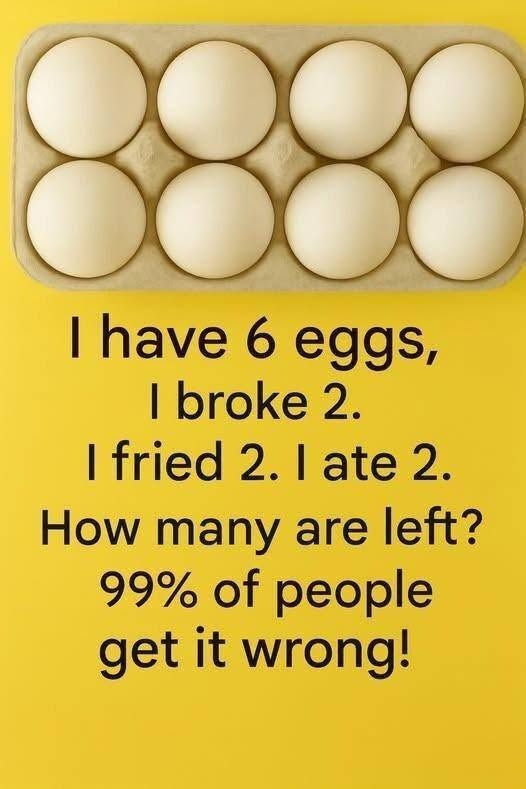
The 6 Egg Riddle — Answer Revealed
Some riddles look like simple math problems, but the trick is often hidden in the wording.
The 6 egg riddle is a perfect example.
The puzzle says:
I have 6 eggs.
I broke 2.
I fried 2.
I ate 2.
How many are left?Can you solve the 6 egg riddle before checking the answer?
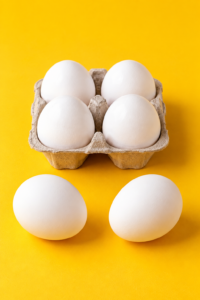
At first, you might be tempted to subtract every number you see.
Six eggs.
Then two are broken.
Two are fried.
Two are eaten.
So you might quickly calculate:
6 − 2 − 2 − 2 = 0
But that’s not the intended answer.
The trick is that the same two eggs can be broken, fried, and eaten.
You don’t necessarily have three separate groups of two eggs.
How Many Balls Are in the Picture? Easy Answer
The answer is: 4 eggs
Here’s why.
You started with six eggs.
You broke two eggs.
Those same two eggs were then fried.
Those same two fried eggs were then eaten.
So you only used two eggs in total.
That leaves:
6 − 2 = 4
The answer is therefore 4 eggs.
But let’s slow down and examine exactly why this little puzzle causes so many people to get it wrong.
Why the 6 Egg Riddle Is Tricky
The puzzle is designed to make you perform a calculation before you carefully interpret the sentences.
That’s the central trick.
When people see:
- Broke 2
- Fried 2
- Ate 2
they often assume each action happened to a different pair of eggs.
But the wording never says that.
It doesn’t say:
“I broke two eggs, then I fried another two eggs, then I ate another two eggs.”
It simply says:
“I broke 2. I fried 2. I ate 2.”
Those statements can all describe the same two eggs.
That’s what changes the answer.
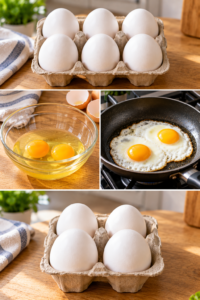
Let’s Break the Riddle Down Step by Step
Imagine that you have six eggs sitting in a carton.
Let’s call them:
Egg 1, Egg 2, Egg 3, Egg 4, Egg 5, Egg 6.
Now you decide to make breakfast.
You take Egg 1 and Egg 2.
Step 1: You Break 2 Eggs
You crack Egg 1 and Egg 2.
Now those two eggs are broken.
You still have four unbroken eggs:
- Egg 3
- Egg 4
- Egg 5
- Egg 6
Nothing else has happened yet.
Step 2: You Fry 2 Eggs
You put the same two broken eggs into a pan.
You fry them.
Notice what happened.
You did not take another two eggs.
You simply cooked the two eggs you already broke.
So you still have four unused eggs.
Step 3: You Eat 2 Eggs
After frying them, you eat those same two eggs.
Now the two eggs you broke and fried are gone.
The four untouched eggs remain.
Therefore:
6 − 2 = 4
That’s the trick.
Why People Answer 0
The incorrect answer of zero usually comes from treating each sentence as a separate event involving separate eggs.
The thought process looks something like this:
Start with 6.
Break 2:
6 − 2 = 4
Fry another 2:
4 − 2 = 2
Eat another 2:
2 − 2 = 0
Mathematically, that calculation is correct if the puzzle says that three different pairs of eggs were used.
But that’s not what the wording says.
The riddle doesn’t establish that the fried eggs were different from the broken eggs.
In fact, the natural interpretation is that the eggs were broken first, then fried, then eaten.