

Natural Remedy for Constipation: Foods and Habits That May Help
Constipation can be uncomfortable, frustrating, and sometimes surprisingly persistent. When bowel movements become less frequent, stools become hard or difficult to pass, or you feel as though you have not completely emptied your bowels, it is natural to look for something simple that may help.
The good news is that everyday habits can play an important role in supporting regular bowel movements.
Vitamin D Deficiency and Bone Pain: 7 Key Facts
A natural remedy for constipation does not have to mean a complicated drink, unusual supplement, or dramatic detox. In many cases, the basics matter most: getting enough fiber, drinking enough fluids, staying physically active, responding to the urge to use the bathroom, and building a regular bathroom routine.
Certain fruits can also be useful because they provide fiber and water. Pears, apples with their skin, oranges, berries, and other fruits are among the foods listed by the National Institute of Diabetes and Digestive and Kidney Diseases as sources of dietary fiber. NIDDK
It is also important to avoid exaggerated claims. No single fruit can guarantee an immediate bowel movement for everyone, and constipation can have many different causes. What works for one person may not work the same way for another.
This guide focuses on practical, evidence-based ways to support bowel regularity while explaining when constipation should be discussed with a healthcare professional.
If you’re searching for a natural remedy for constipation, start with simple habits such as eating more fiber-rich foods, drinking enough fluids, and staying physically active.
What Is Constipation?
Constipation can mean different things to different people.
According to the National Institute of Diabetes and Digestive and Kidney Diseases (NIDDK), symptoms can include having fewer than three bowel movements per week, passing hard or dry stools, experiencing difficulty or pain when passing stool, or feeling that not all stool has passed. NIDDK
Your normal bowel pattern also matters.
Some people naturally have bowel movements more frequently than others. Therefore, a change from your normal pattern can sometimes be more meaningful than a specific number.
Constipation can be temporary.
It may happen after:
- Traveling
- Changing your normal routine
- Eating differently
- Drinking less fluid
- Being less physically active
- Ignoring the urge to use the bathroom
- Starting certain medications or supplements
It can also occur alongside certain medical conditions.
That is why persistent constipation should not always be treated as simply a dietary problem.
Why Fiber Matters for Constipation
If you are looking for a natural remedy for constipation, dietary fiber is one of the most important places to start.
Fiber is found naturally in plant foods and helps add bulk to stool. Depending on the type of fiber and the amount of fluid consumed, it can help make stool easier to pass.
The NIDDK notes that adults generally need around 22 to 34 grams of fiber per day, depending on age and sex. NIDDK
However, increasing fiber dramatically overnight can sometimes cause bloating or gas.
A gradual increase is generally easier for the digestive system to tolerate.
Good sources include:
- Fruits
- Vegetables
- Whole grains
- Beans
- Lentils
- Chickpeas
- Nuts
- Seeds
- Oatmeal
- Bran cereals
-
Adding more fiber to your daily meals is one of the easiest places to start when looking for a natural remedy for constipation.
The Best Fruits to Include
There is no scientifically established single “number one fruit” that works for every person with constipation.
Instead, several fruits can be useful because they provide fiber and fluids.
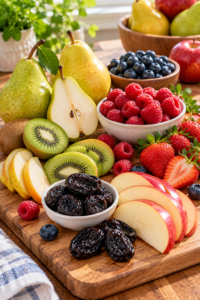
Pears
Pears are naturally sweet and provide dietary fiber.
Eating the skin adds additional fiber, provided the fruit is washed thoroughly and the skin is comfortable for you to eat.
A ripe pear can make an easy snack when you want something naturally sweet while increasing your intake of fiber-rich foods.
These fruits can become part of a simple natural remedy for constipation when combined with an overall balanced, fiber-rich diet.
Apples
Apples are another convenient choice.
Leaving the skin on provides more fiber than eating the flesh alone.
Try slicing an apple and pairing it with a small amount of peanut butter for a satisfying snack.
Berries
Berries can contribute fiber while adding natural sweetness.
Try:
- Raspberries
- Blackberries
- Strawberries
- Blueberries
Add them to oatmeal, yogurt, or a smoothie.
Oranges
Whole oranges provide fiber, while also contributing fluid.
For constipation, whole fruit is generally more useful for fiber than fruit juice because juicing removes much of the fruit’s natural fiber.
Kiwi
Kiwi is another fruit frequently included in discussions about digestive health.
It provides fiber and can easily be added to breakfast or eaten as a snack.
Some people enjoy eating it with the skin after washing it thoroughly, while others prefer to peel it.
Prunes
Prunes, or dried plums, are particularly popular as a traditional food for constipation.
They provide fiber and naturally occurring compounds that can support bowel regularity.
Because dried fruit is concentrated, portion size matters.
Eating a large quantity at once can cause bloating or loose stools in some people.