
What Is This on My Bed? 7 Possible Explanations
Finding something strange on your bed can be surprisingly unsettling.
Especially when the object is small, dark, smooth, and completely unfamiliar.
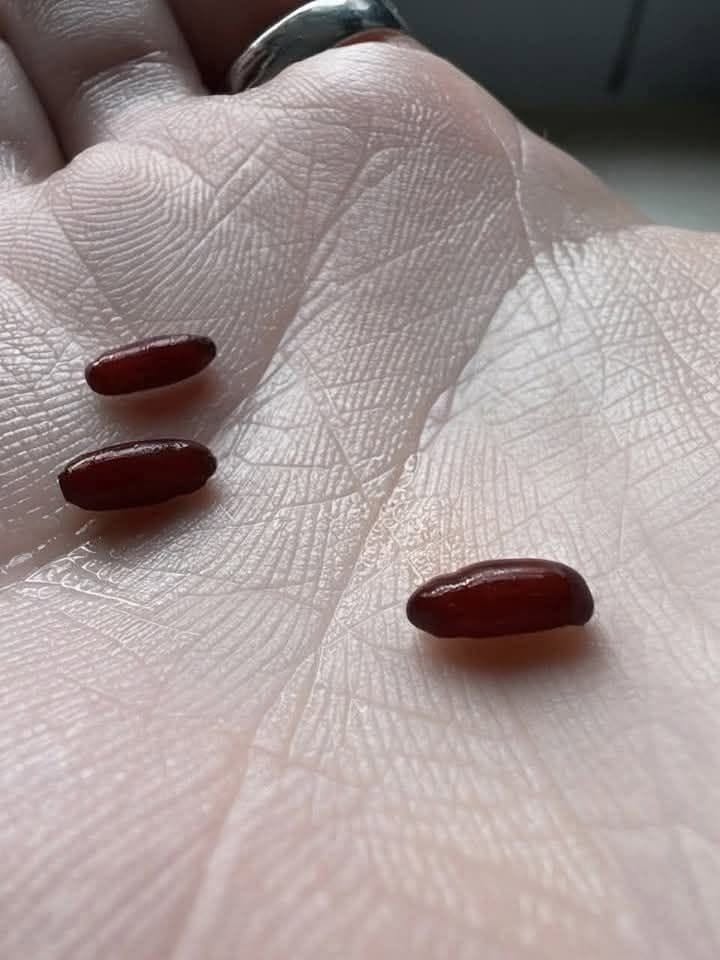
The photograph above shows several small reddish-brown, elongated objects resting on someone’s hand. At first glance, they can easily look like insect eggs, droppings, seeds, or even something much more concerning.
But there is an important point to make before jumping to conclusions:
How Many Dots Puzzle: 20 Dots Challenge
A photograph alone is not enough to identify an unknown object with certainty.
The objects shown in the image do not have enough distinctive features to confidently identify them as a particular insect, parasite, or household pest. Their size, color, smooth surface, and elongated shape can overlap with several harmless objects as well as some pest-related materials.
So if you have found something similar on your own bed, don’t panic.
Instead, look at the object carefully, check the surrounding area, and look for other evidence.
This guide explains what these mysterious objects could potentially be, what they are unlikely to be, and what you should check before deciding that you have an infestation.
Why Finding Something Strange on Your Bed Feels So Concerning
Your bed is one of the last places where you expect to find an unidentified object.
When something unusual appears on bedding, people naturally start thinking about insects, parasites, or other unwanted visitors.
That reaction is understandable.
However, an unfamiliar object on a bed does not automatically mean that insects are living in the mattress.
Objects can be carried into bedrooms on:
- Clothing
- Blankets
- Pets
- Bags
- Shoes
- Laundry
- Children’s toys
- Food packaging
- Outdoor items
- Household products
A small object can also simply fall from somewhere else.
That is why identifying the source is usually more useful than identifying the object from its appearance alone.
What Does the Object in the Photo Look Like?
The objects shown in the photograph appear:
- Small
- Smooth
- Reddish-brown to dark brown
- Oval or elongated
- Solid-looking
- Slightly shiny
- Without obvious legs
- Without visible wings
- Without obvious hairs
- Without an obvious segmented body
Those details are useful.
For example, a typical adult insect would generally have recognizable body structures such as legs, antennae, wings, or a clearly defined head and abdomen.
The objects in this photograph do not obviously show those features.
That makes it difficult to confidently identify them as adult insects.
At the same time, the photograph does not provide enough information to determine exactly what they are.
Could They Be Bed Bug Eggs?
This is one of the first things many people wonder when they find something strange on bedding.
However, the objects shown in the photograph do not look like typical bed bug eggs.
Bed bug eggs are generally very small and pale or whitish rather than dark reddish-brown. They are often attached to surfaces rather than appearing as relatively large, smooth brown objects lying loose on a person’s hand.
So the appearance in this photograph does not strongly match typical bed bug eggs.
That does not mean a room cannot have bed bugs.
It simply means that these particular objects should not automatically be labeled bed bug eggs based on the photograph.
If you are concerned about bed bugs, look for additional evidence rather than relying on one unidentified object.
What Do Bed Bugs Actually Look Like?
Adult bed bugs are small, flat insects with six legs.
They are usually reddish-brown and have a flattened, oval body.
After feeding, they can appear more swollen and darker.
Bed bugs are generally associated with places where people sleep or rest, which is why mattresses, bed frames, headboards, and nearby furniture are commonly inspected when an infestation is suspected.
The Environmental Protection Agency provides consumer information about bed bugs and ways to identify and manage them. EPA Bed Bugs Information
If you suspect bed bugs, look for several clues together rather than assuming that one mysterious object proves an infestation.
Could They Be Bed Bug Droppings?
Bed bug feces are another possibility people often think about.
However, bed bug fecal spotting typically appears as small dark stains or spots, rather than smooth, solid, capsule-shaped objects like the ones shown.
You may notice dark marks on:
- Mattress seams
- Sheets
- Pillowcases
- Bed frames
- Headboards
- Nearby furniture
If you find only a few smooth objects without other evidence, that alone is not enough to conclude that they are bed bug droppings.
Could They Be Cockroach Egg Cases?
Cockroach egg cases, called oothecae, can sometimes be found indoors.
They are capsules containing developing eggs.
However, cockroach egg cases generally have a distinctive capsule-like appearance and can show ridges or seams. They are also typically larger and structurally different from the smooth objects visible in this photograph.
If you find a suspected cockroach egg case, examine it closely rather than assuming every brown capsule is one.
The surrounding evidence matters.
For example, check for:
- Cockroaches
- Droppings
- Shed skins
- Additional egg cases
- Food contamination
- Gaps or cracks where insects could hide
Could They Be Insect Pupae?
Some insects pass through a pupal stage.
Depending on the species, pupae can be brown, reddish-brown, oval, elongated, or relatively smooth.
That means a small brown object can sometimes be an insect life stage without looking like an obvious insect.
However, the photograph does not provide enough detail to identify the objects as pupae.
A genuine insect pupa would normally have characteristics associated with the particular insect species.
Location can also provide clues.
For example, finding several identical objects near a food source, plant material, or an insect hiding place would be more informative than finding a few unexplained objects on clean bedding.
Could They Be Seeds?
This is one of the more harmless possibilities.
Seeds can have surprisingly unusual shapes and colors.
Some are:
- Dark brown
- Reddish
- Smooth
- Glossy
- Oval
- Elongated
A seed can easily be carried into a bedroom on clothing, blankets, bags, pets, or outdoor items.
If the objects feel hard and have a natural seed-like structure, this possibility becomes more interesting.
Try comparing one with seeds from plants or foods commonly found around your home.
Do not taste an unidentified object to determine whether it is a seed.
Could They Be Food Particles?
Small pieces of food can also end up in unexpected places.
Chocolate, dried fruit, seeds, nuts, candy pieces, and other foods can sometimes look strange when photographed close up.
A piece of dried food can become particularly difficult to identify if it has been sitting somewhere for a while.
If you recently ate snacks in bed, had children eating nearby, or had a pet carrying food around the room, consider this possibility before assuming the object is a pest.
Could They Be Pet-Related?
If you have a dog or cat, don’t overlook your pet.
Pets can carry small objects into bedrooms on their fur or paws.
They can also drop pieces of food, plant material, or other debris onto bedding.
If your pet spends time outdoors, the range of things they can accidentally carry indoors becomes much larger.
Check:
- Pet bedding
- Fur
- Paws
- Blankets
- Favorite sleeping areas
- Toys
If the same objects appear around your pet’s sleeping area, that could provide an important clue about their origin.
Could They Be Rodent Droppings?
Rodent droppings can sometimes be found near bedrooms, especially if food is accessible.
However, the objects in the photograph do not provide enough evidence to confidently identify them as rodent droppings.
Typical mouse droppings are often dark, pellet-like, and elongated, but their appearance can vary.
More importantly, rodent droppings usually come with additional evidence if an infestation is present.
Look for:
- Multiple droppings
- Gnaw marks
- Food packaging damage
- Nesting material
- Scratching sounds
- Unusual odors
If you find suspected rodent droppings, avoid handling them directly.
The CDC provides guidance on safely cleaning areas contaminated by rodents and their droppings. CDC Cleaning Up After Rodents
Could They Be Something Completely Harmless?
Absolutely.
This is an important possibility to remember.
Not every mysterious object found on a bed has a biological origin.
It could be:
- A small piece of plastic
- A decorative bead
- A seed
- A piece of dried food
- A fragment of a household item
- A piece of pet food
- A small piece of rubber
- A craft material
- A dried plant fragment
- Something that fell from clothing
Close-up photographs can make ordinary objects appear much more mysterious than they really are.