
Frequently Asked Questions
What is the fastest safe way to whiten teeth?
A professionally supervised in-office treatment is generally the fastest controlled option. The dentist can assess your oral health, protect the gums, and determine whether whitening will address your type of discoloration.
“Fastest” does not mean every patient will achieve the same shade or experience no sensitivity.
Can yellow teeth become white in two minutes?
A two-minute brushing session may remove loose debris or make the mouth feel cleaner, but it cannot safely produce a dramatic, permanent shade change. Genuine bleaching normally requires longer and repeated exposure to an appropriately formulated whitening agent.
Does baking soda whiten teeth?
Baking soda may help polish away some external stains. It does not significantly change the natural color of dentin or resolve internal discoloration.
Use a professionally formulated toothpaste rather than rubbing loose baking soda aggressively onto the teeth.
Is hydrogen peroxide safe for teeth?
Hydrogen peroxide can be safe in properly formulated dental whitening products used according to directions. Strength, contact time, frequency, and gum protection are important.
Do not assume household peroxide is interchangeable with an oral-care product.
Why are my teeth yellow even though I brush them?
Possible explanations include natural dentin color, thin or translucent enamel, aging, medication-related discoloration, dietary staining, tartar, or another dental condition.
Brushing removes plaque but does not change every aspect of natural tooth color.
Can whitening damage enamel?
Approved whitening treatments are generally intended to be used safely according to their instructions. Misuse, excessive treatment, strong unregulated products, acids, and aggressive abrasion may damage dental tissues or irritate the gums.
Why do my teeth hurt after whitening?
Peroxide can temporarily increase tooth sensitivity by passing through the enamel and reaching the dentin. Gum irritation may also occur if the product contacts soft tissue.
Stop the treatment and consult a dentist if pain is severe, localized, or persistent.
Can crowns, veneers, and fillings be whitened?
Most restorations will not whiten like natural teeth. Whitening surrounding teeth may therefore create a color mismatch.
Discuss visible restorations with a dentist before beginning treatment.
Is professional whitening permanent?
No. The result can gradually fade as teeth are exposed to staining foods, drinks, tobacco, and normal aging. Maintenance needs vary from person to person.
Is every homemade teeth whitening trick unsafe?
Not every harmless oral-care habit is dangerous, but untested mixtures should not be treated as proven whitening therapies. Acidic, highly abrasive, concentrated, or non-dental ingredients are particularly concerning.

Final Thoughts
The promise of noticeably whiter teeth in only two minutes is appealing, but dramatic viral results should be viewed with caution. Tooth color is influenced by enamel, dentin, staining, age, dental restorations, and oral health. A single homemade mixture cannot safely solve every type of discoloration.
The most reliable approach is straightforward: maintain good daily oral hygiene, have stains and tartar professionally assessed, and choose an evidence-based whitening product that is appropriate for your teeth.
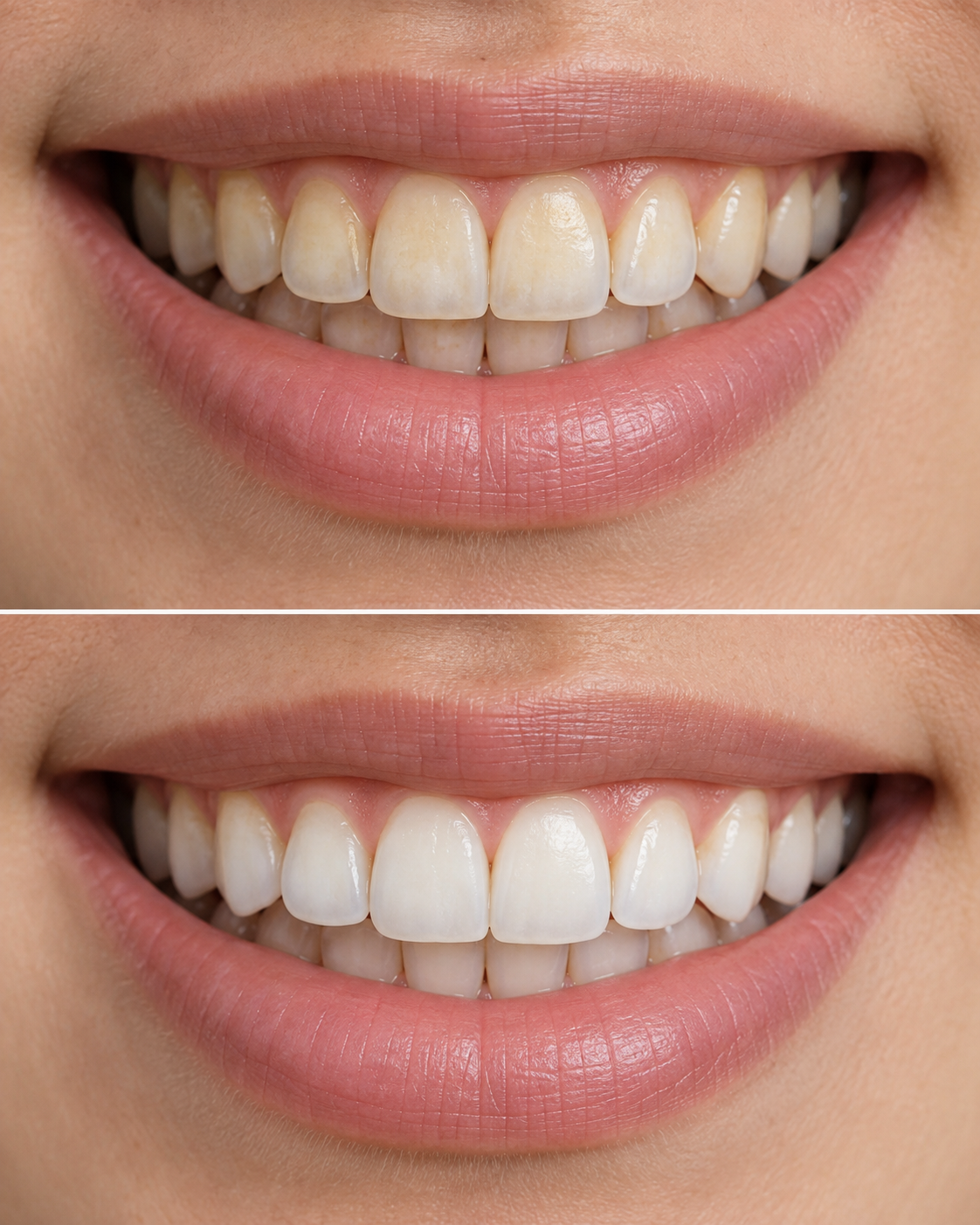
If you want a substantial shade change, a dentist can identify the cause of the discoloration and recommend the safest suitable option. Protecting your enamel and gums is far more important than recreating an edited before-and-after photograph.