
Baking soda mixed with acidic ingredients
Baking soda can help remove some surface staining because it is mildly abrasive. However, it does not dramatically bleach the natural color of teeth.
Combining it with lemon juice or vinegar exposes the enamel to acid while adding mechanical abrasion. That combination may wear the surface rather than safely whitening it.
If you want a baking-soda-based product, select a properly formulated toothpaste instead of preparing a homemade paste.
Salt
Rubbing coarse salt directly on the teeth can irritate the gums and abrade dental surfaces. Salt is not a bleaching agent and will not safely change intrinsic tooth color.
Activated charcoal
Charcoal tooth powders and pastes are often advertised as detoxifying or whitening products. Teeth do not need to be “detoxified,” and charcoal does not draw toxins out of enamel.
Abrasive charcoal products may remove limited surface staining, but frequent or aggressive use can wear the tooth surface. Some charcoal products may also lack fluoride, reducing their value for everyday cavity prevention.
Banana, orange, or lemon peels
Rubbing fruit peel on teeth has not been shown to create meaningful professional-level whitening. Citrus peel can expose teeth to acids, while vigorous rubbing may irritate the gums.
Eating fruit as part of a balanced diet is different from repeatedly holding acidic fruit against tooth enamel.
Bleach or household cleaning products
Never put chlorine bleach, bathroom cleaners, disinfectants, or laundry products in your mouth. These substances can cause poisoning, chemical burns, and serious tissue injury.
If accidental exposure occurs, contact the appropriate poison-control service or seek urgent medical assistance.
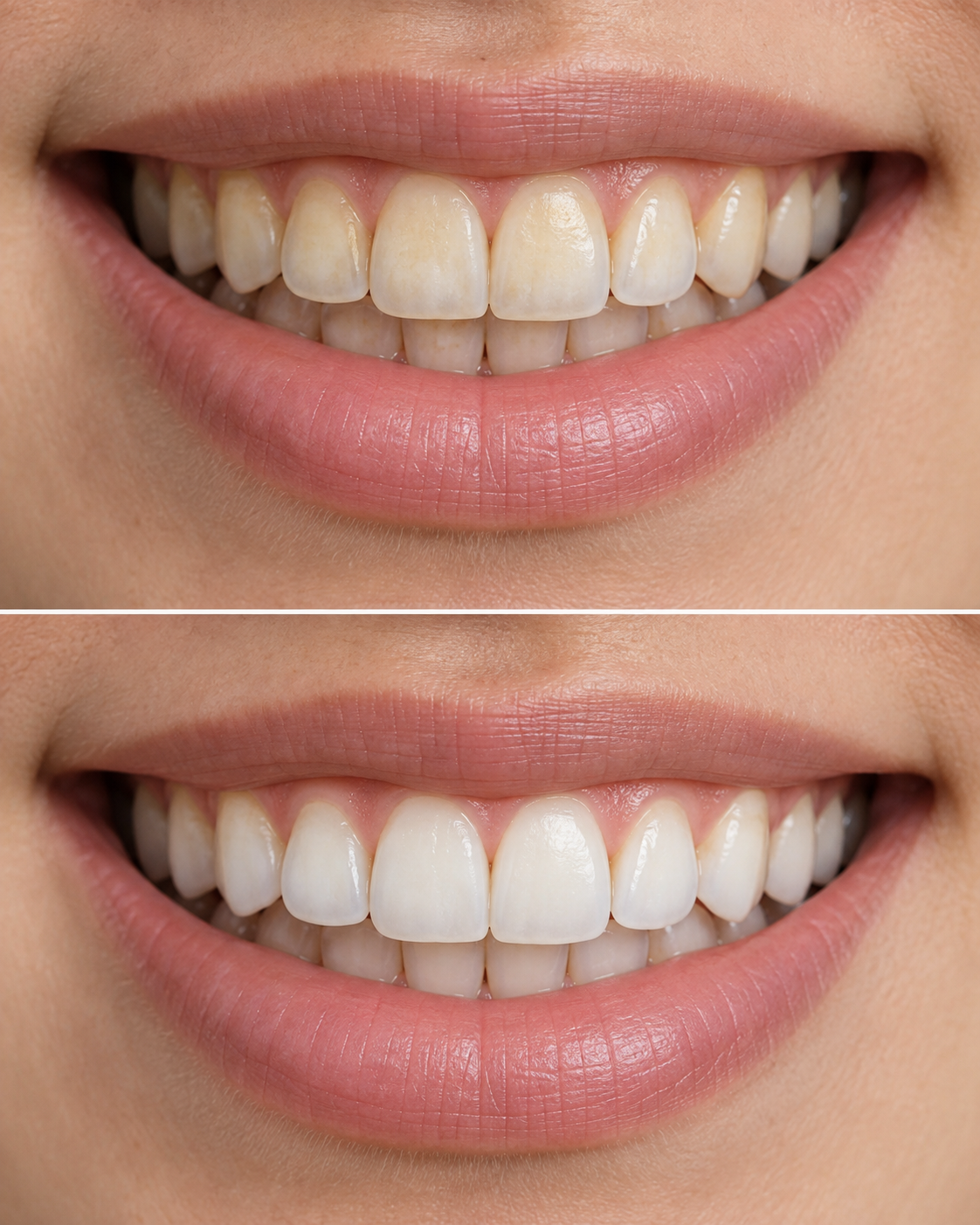
Why Teeth Can Look Whiter Immediately After a Treatment
Sometimes teeth briefly appear brighter after a whitening session because they have become dehydrated. As the teeth rehydrate, part of the apparent color change may fade.
Lighting also matters. Teeth photographed under cool, bright light often look whiter than teeth photographed under warm indoor lighting.
For a fair comparison, before-and-after images should use:
- The same room
- The same lighting
- The same camera
- The same exposure
- The same angle
- No filters or editing
Dramatic social-media comparisons rarely confirm that all these conditions were controlled.
Common Teeth-Whitening Mistakes
Whitening without identifying the cause
A single dark tooth can be associated with trauma, decay, or changes in the tooth’s nerve. It should be examined rather than repeatedly covered with whitening products.
Ignoring cavities or gum disease
Whitening agents may cause discomfort when teeth or gums are not healthy. A dental check is especially valuable if it has been a long time since your last appointment.
Leaving products on for too long
Longer exposure does not guarantee a better result. It may increase sensitivity and gum irritation.
Repeating treatment too frequently
Teeth will not become healthier because they are repeatedly bleached. Follow the recommended treatment schedule and allow time between whitening cycles.
Expecting crowns and fillings to whiten
Whitening agents act on natural tooth structure. Crowns, veneers, fillings, bridges, and implants generally do not change color in the same way.
This can create uneven results if restorations are visible near the front of the mouth. A dentist can help plan whitening around existing dental work.
Brushing aggressively after acidic drinks
Acidic drinks temporarily soften the tooth surface. Rinsing with water is sensible, but aggressive brushing immediately afterward can increase mechanical wear.
Ask your dentist for personalized guidance if acidic beverages are a regular part of your routine or you have signs of enamel erosion.
How to Help Whitening Results Last Longer
Whitening is not permanent, but several habits can help reduce new staining:
- Brush twice a day using fluoride toothpaste.
- Clean between your teeth every day.
- Attend regular dental examinations and cleanings.
- Rinse your mouth with water after coffee or tea.
- Avoid smoking and other tobacco products.
- Limit how frequently teeth are exposed to heavily pigmented drinks.
- Do not sip staining or acidic beverages continuously for hours.
- Follow your dentist’s maintenance recommendations.
- Avoid unnecessary repeated bleaching.
Using a straw may reduce contact between some cold beverages and the front teeth, although it does not eliminate acid exposure or staining completely.
When You Should See a Dentist
Arrange a dental appointment if you notice:
- One tooth becoming darker than the others
- Sudden or unexplained discoloration
- Persistent toothache
- Pain when biting
- Bleeding or swollen gums
- White, brown, or black spots
- Cracks or broken teeth
- Severe or lasting sensitivity
- Discoloration following an injury
- A change in color around an old filling or crown
These signs require proper evaluation. Whitening may mask the appearance temporarily without addressing the underlying cause.