
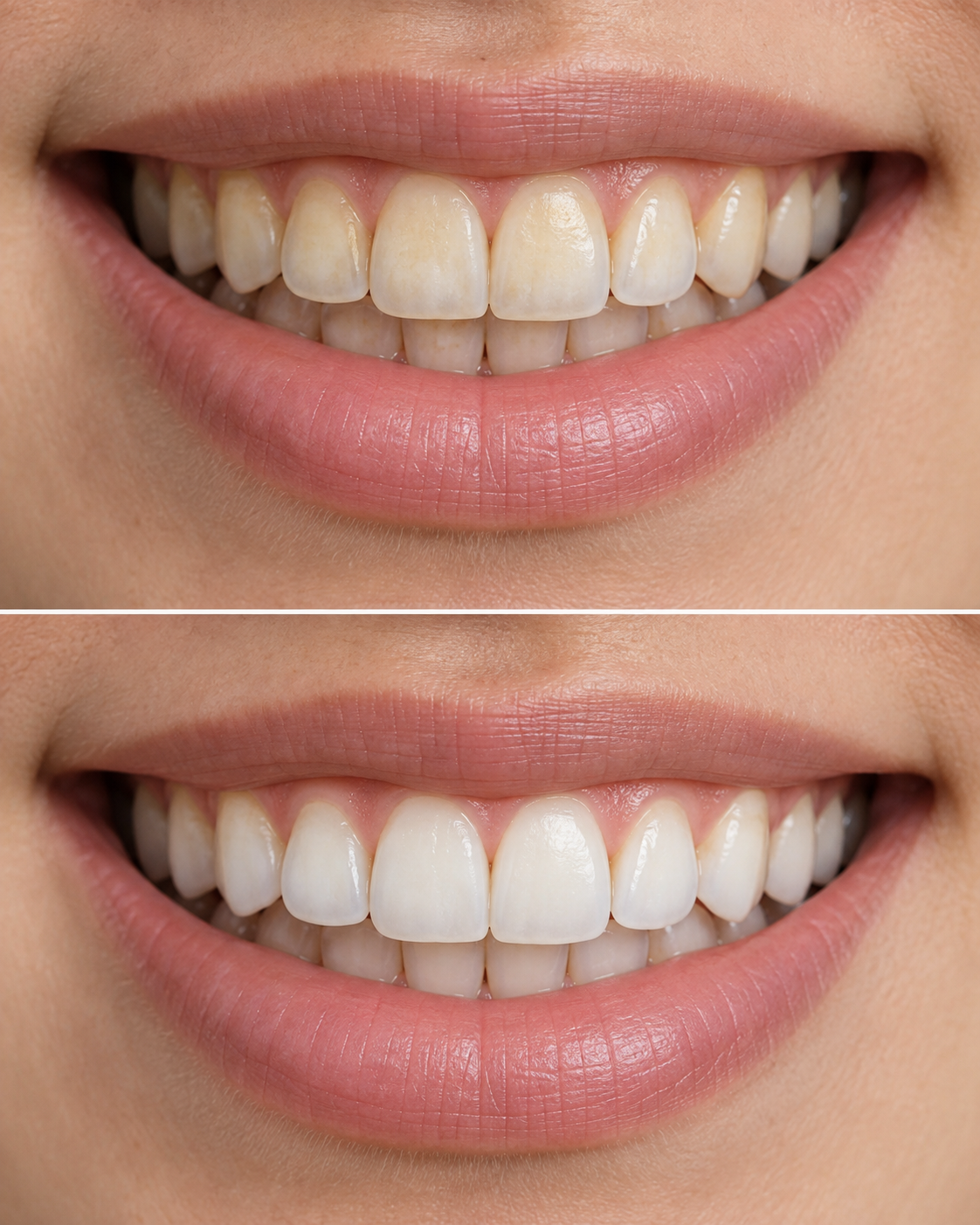
Does This Two-Minute Teeth Whitening Trick Really Work?
A brighter smile can make you feel more confident, which helps explain why dramatic before-and-after whitening images spread so quickly online. One common claim promises that a homemade teeth whitening trick can transform yellow teeth in only two minutes.
It sounds convenient, inexpensive, and almost effortless—but the reality is more complicated.
A quick brushing session may remove some recent surface residue and leave your mouth feeling cleaner. However, it cannot safely change naturally yellow dentin, remove years of deep staining, or produce the dramatic results often shown in edited photographs.
Some viral remedies may even irritate the gums or gradually damage tooth enamel. That is particularly true when acidic ingredients, harsh abrasives, undiluted peroxide, or household cleaning substances are applied directly to teeth.
This guide explains what tooth whitening can realistically accomplish, which popular remedies should be avoided, and how to brighten your smile without putting your enamel at unnecessary risk.
Important: This article provides general educational information and does not replace personalized advice from a dentist. Consult a dental professional before whitening if you have cavities, gum disease, dental restorations, persistent sensitivity, or unexplained tooth discoloration.
The Truth About the Viral Two-Minute Whitening Claim
No homemade mixture can safely whiten every person’s teeth dramatically in two minutes.
The appearance of a rapid transformation may be caused by:
- Different lighting or camera exposure
- Image filters and digital editing
- Dehydration that temporarily changes tooth appearance
- Removal of loose surface debris
- A professional treatment presented as a homemade remedy
- Different camera angles or white-balance settings
- Makeup or skin-tone adjustments that make teeth appear brighter
Real whitening takes time because stains occur at different levels. Surface stains may respond to cleaning or whitening toothpaste, while discoloration inside the tooth generally requires a peroxide-based whitening treatment or another professional solution.
Even professional in-office whitening usually involves a dental examination, gum protection, controlled whitening agents, and more than two minutes of treatment.
Why Teeth Become Yellow or Discolored
To understand why a viral trick may not work, it helps to understand what determines tooth color.
Natural tooth color
Healthy teeth are not always bright white. Enamel is slightly translucent, and the naturally yellowish dentin underneath it influences the visible shade.
Some people simply have warmer or more ivory-colored teeth. This does not automatically mean their teeth are unhealthy or poorly cleaned.
Surface stains
Extrinsic stains develop on the outside of the enamel. Common causes include:
- Coffee
- Black tea
- Red wine
- Cola
- Tobacco
- Dark berries
- Tomato-based sauces
- Strongly pigmented foods
- Inconsistent brushing and flossing
These stains are generally easier to address than discoloration within the tooth.
Internal discoloration
Intrinsic discoloration develops inside the tooth and may be associated with:
- Natural aging
- Dental trauma
- Certain medications
- Excessive fluoride exposure during tooth development
- Changes inside a damaged or non-vital tooth
- Naturally darker dentin
- Developmental enamel conditions
Whitening toothpaste cannot reach these deeper causes. A dentist may recommend professional bleaching, bonding, veneers, crowns, or another treatment depending on the reason for the discoloration.
Plaque and tartar
Plaque can make teeth look dull. If it is not removed, it can harden into tartar, also called calculus.
Tartar cannot be safely brushed or scraped away at home. It should be removed during a professional dental cleaning. Attempting to scrape it off with sharp household tools can injure the gums and scratch tooth surfaces.
Can Teeth Really Be Whitened at Home?
Yes, certain at-home products can gradually whiten natural teeth when they are suitable for the user and applied exactly as directed.
However, “at home” should not be confused with “homemade.” Commercial whitening products are formulated with controlled concentrations and specific application instructions. A random mixture created from kitchen or bathroom ingredients has not necessarily been tested for oral safety.
According to the American Dental Association’s teeth-whitening guidance, whitening products can cause temporary tooth sensitivity, and overusing them may damage the gums or enamel. The ADA advises following product directions and discussing whitening with a dentist.