
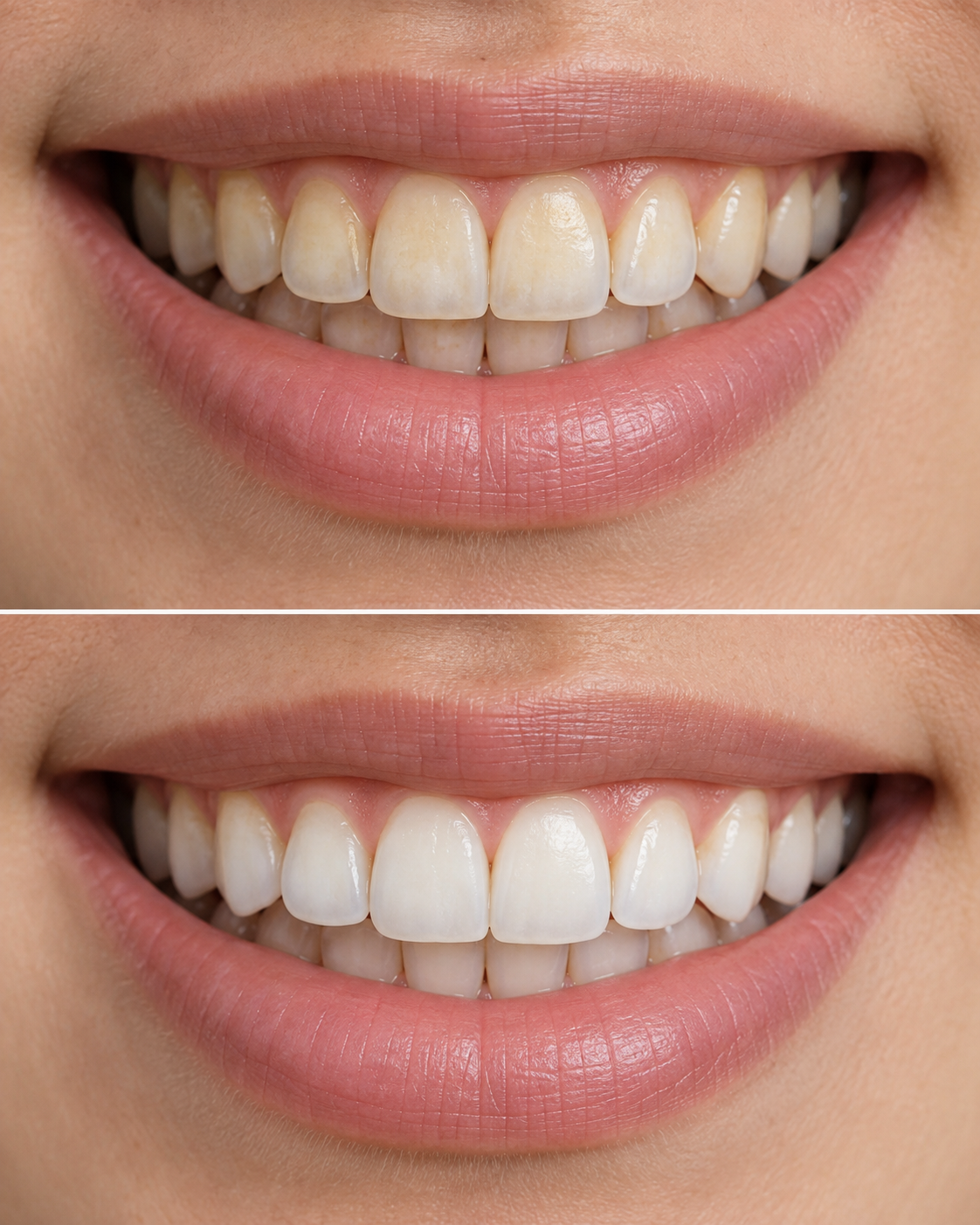
Seven Safer Ways to Brighten Your Smile
1. Schedule a dental examination and cleaning
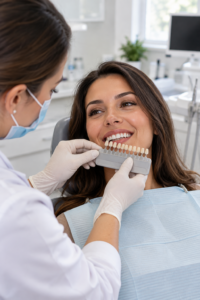
A professional cleaning can remove plaque, tartar, and some external stains. It will not bleach the natural tooth structure, but teeth may appear noticeably cleaner afterward.
An examination is also important because whitening products should not be applied over untreated cavities, leaking fillings, inflamed gums, or other unresolved dental problems.
A dentist can determine whether the discoloration is caused by surface staining, natural tooth color, enamel erosion, trauma, decay, or another condition.
2. Brush twice daily with fluoride toothpaste
Consistent brushing helps prevent new surface stains from accumulating. Use a soft-bristled toothbrush and fluoride toothpaste for approximately two minutes, twice a day.
Apply gentle pressure and clean every tooth surface. Aggressive scrubbing does not make whitening happen faster. Instead, it may contribute to gum recession and enamel wear over time.
Fluoride toothpaste is primarily intended to prevent cavities and strengthen teeth—not to bleach them instantly. Nevertheless, effective daily cleaning supports a healthier, brighter-looking smile.
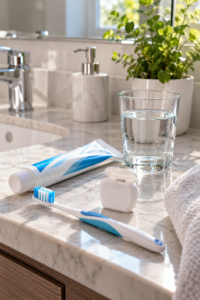
3. Floss or clean between the teeth daily
Even beautifully brushed front surfaces can look less attractive when plaque and food debris remain between the teeth.
Floss, interdental brushes, or another dentist-recommended cleaning tool can reach spaces a toothbrush misses. Cleaning between the teeth also supports gum health and helps prevent decay in these less visible areas.
4. Choose an ADA-accepted whitening toothpaste
Whitening toothpaste generally works by polishing away some surface stains. It does not usually change deep intrinsic tooth color in the same way as peroxide-based bleaching.
Look for a reputable product and follow its directions. Stop using it and speak with a dentist if you develop persistent sensitivity, gum irritation, or discomfort.
Avoid combining multiple abrasive products in the belief that more scrubbing will create faster results.
5. Consider approved whitening strips or gels
Some over-the-counter whitening products contain hydrogen peroxide or carbamide peroxide. These agents can lighten stains within natural tooth structure when used appropriately.
Results are gradual rather than instantaneous. Treatment may require several applications over days or weeks, depending on the product.
Before purchasing a whitening treatment:
- Read the entire label.
- Follow the recommended application time.
- Do not use more frequently than directed.
- Keep the product away from the gums as much as possible.
- Do not sleep with it unless the instructions specifically allow that use.
- Stop if you experience significant pain or irritation.
- Consult a dentist if you have fillings, crowns, veneers, bridges, implants, or sensitive teeth.
6. Ask about a dentist-supervised take-home kit
A dentist may provide custom-fitted trays and a whitening gel selected for your needs. Better-fitting trays can help distribute the gel more evenly while limiting unnecessary contact with the gums.
Treatment usually occurs gradually at home according to the dentist’s instructions.
The UK’s National Health Service guidance on teeth whitening explains that a dentist-supplied kit or treatment performed at a dental practice is the safest whitening approach. The dentist can first check whether your teeth and gums are healthy enough for treatment.
7. Consider professional in-office whitening
In-office whitening may produce faster and more noticeable results than typical home products. The dental team protects the soft tissues and uses a controlled whitening system.
Professional treatment is not appropriate for every person, and it is not necessarily permanent. Coffee, tea, tobacco, aging, and other factors can gradually affect the shade again.
Temporary sensitivity may still occur, even when treatment is professionally supervised.
Popular DIY Whitening Tricks to Avoid
Many household remedies are promoted as natural alternatives. “Natural,” however, does not automatically mean gentle, effective, or safe for teeth.
Lemon juice
Lemon juice is highly acidic. Acid does not safely bleach teeth; it softens and erodes enamel.
As enamel becomes thinner, more yellow dentin may show through, making teeth appear darker over time. Enamel loss can also increase sensitivity and the risk of dental damage.
Do not apply lemon juice directly to your teeth or combine it with baking soda as a whitening paste.
Apple cider vinegar
Apple cider vinegar is also acidic. Repeated exposure can contribute to enamel erosion, particularly when the vinegar is held in the mouth, rubbed onto teeth, or used undiluted.
It is not a safe substitute for a properly formulated whitening product.
Undiluted hydrogen peroxide
Hydrogen peroxide is used in many legitimate whitening systems, but concentration, formulation, exposure time, and tissue protection matter.
Household peroxide should not be poured into the mouth or mixed into untested whitening recipes. Improper use can irritate or burn the gums and increase sensitivity.
Choose a regulated oral-care product or ask a dental professional for guidance.