
White String in Egg? Here’s What It Really Means
Seeing a white string in egg can be surprising, especially when you do not know what it is.
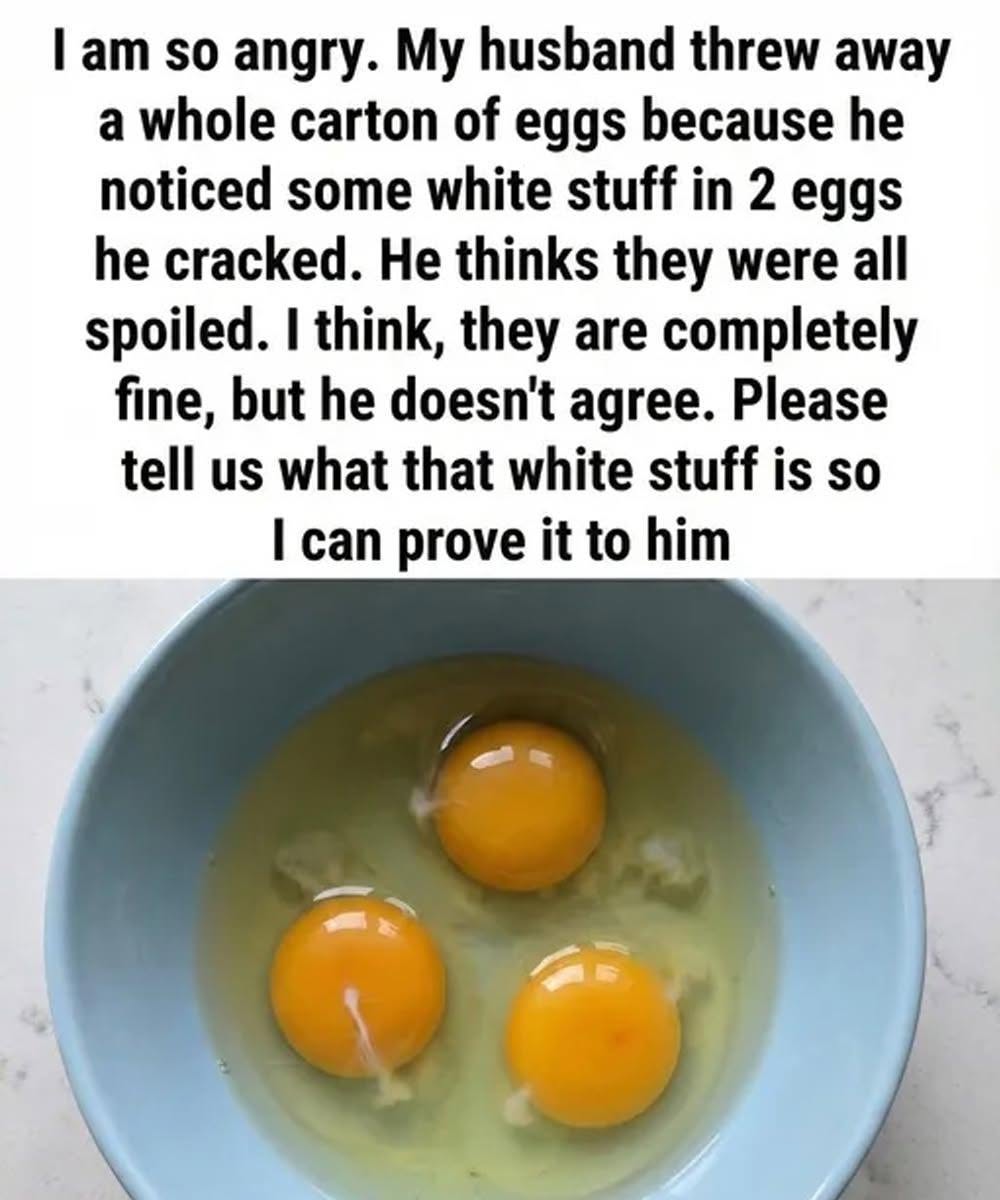
You crack an egg into a bowl and notice a thick, cloudy white strand attached to the yolk. It may look unfamiliar—perhaps like a cord, a small piece of tissue, or something that should not be there.
The good news is that the white string in egg is usually a completely normal part of the egg called the chalaza. It does not ordinarily mean the egg is spoiled, contaminated, fertilized, or unsafe to cook.
In fact, a clearly visible chalaza is often more noticeable in a relatively fresh egg because its structure has not yet weakened significantly with age.
The Egg Yolk That Stopped Me in My Tracks
However, identifying the chalaza does not replace proper food-safety practices. Eggs can carry harmful bacteria even when they look and smell normal. You should still refrigerate, handle, and cook them correctly.
Here is exactly what that mysterious white strand is, why eggs contain it, how it differs from signs of spoilage, and when an egg truly should be discarded.
What Is the White String in an Egg?
In most cases, the white string in egg is simply the chalaza.
The twisted white structure inside a raw egg is called the chalaza, pronounced kuh-LAY-zuh. The plural form is chalazae.
It consists mainly of protein-rich egg white. There are normally two chalazae inside an egg—one extending from each end of the yolk. Depending on the position of the yolk and how the egg was cracked, you may see one, both, or neither.
A chalaza may appear as:
- A twisted white cord
- A cloudy strand connected to the yolk
- A small knot of thick egg white
- A rope-like or tissue-like structure
- A white blob near one end of the yolk
Although its appearance can surprise someone who has never noticed it before, it is a normal anatomical feature of a chicken egg.

What Does the Chalaza Do?
The white string in egg helps hold the yolk in a stable position.
The chalaza helps keep the yolk suspended near the center of the egg.
A yolk does not simply float loosely inside the shell. The two chalazae work like flexible anchors, helping stabilize it within the surrounding albumen, commonly called the egg white.
This structure helps protect the yolk from excessive movement while the egg is handled and transported. It is part of the egg’s natural design, not something introduced during packaging or processing.
Therefore, finding a white string in egg is not evidence that something has entered the shell. It was formed naturally as the egg developed inside the hen.