
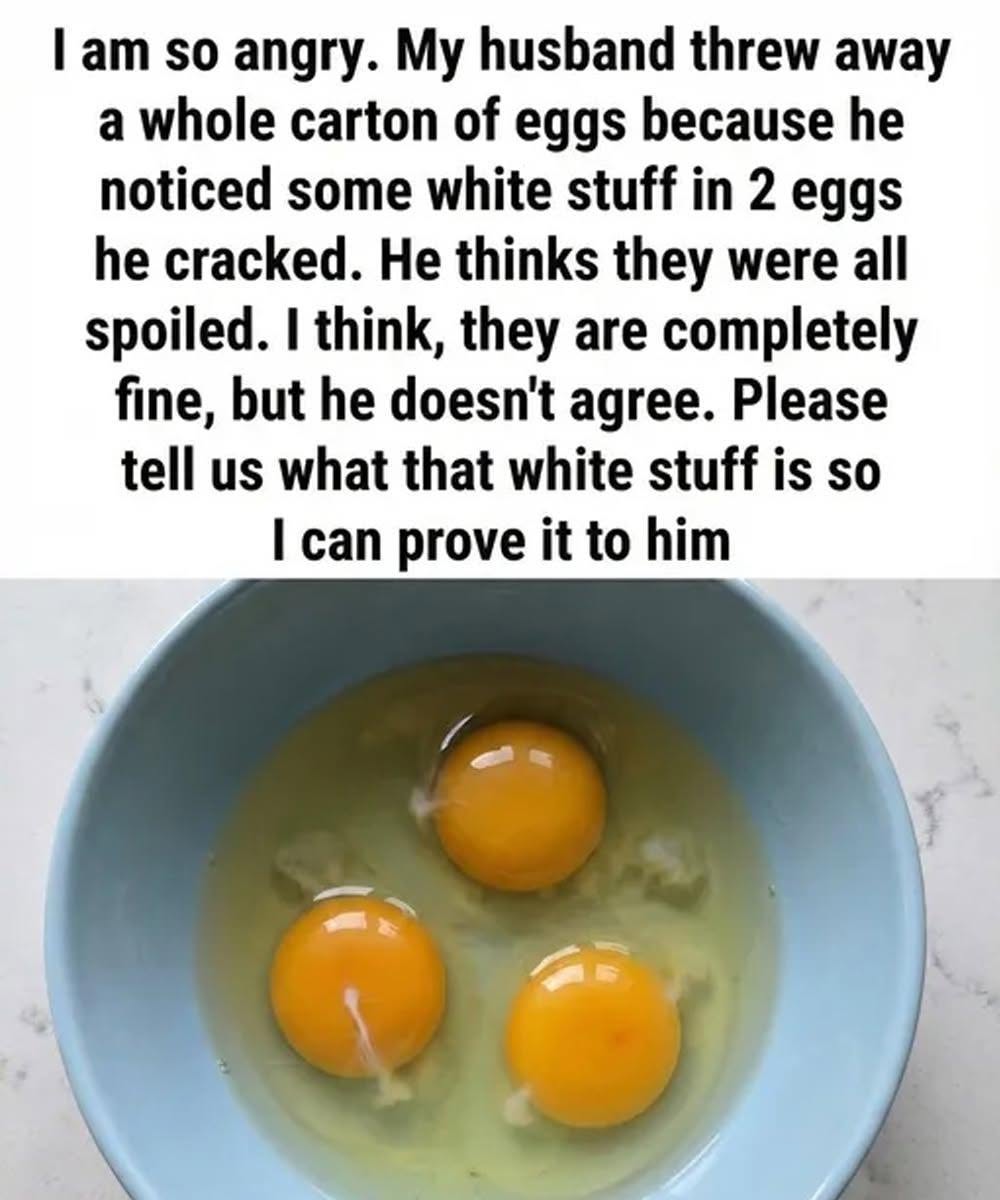
How Can You Tell If an Egg Is Bad?
The white string in egg is normal, but certain other signs mean the egg should be discarded.
1. A Strong, Unpleasant Odor
A spoiled egg often produces a powerful sulfurous or rotten smell. The odor may be obvious immediately after the shell is opened.
If an egg smells bad, discard it. Do not taste it to confirm whether it is spoiled.
This is why cracking eggs separately is useful. If the final egg is bad, you will not have to throw away an entire bowl of otherwise good ingredients.
2. Unusual Discoloration
Do not use an egg if its contents have a suspicious or unusual color, particularly abnormal pink, green, or iridescent discoloration in the white.
Yolk shades naturally vary from pale yellow to deep orange depending largely on the hen’s diet. A darker orange yolk, by itself, is not a sign of spoilage.
Similarly, cloudy egg white is not necessarily bad. It can be caused by carbon dioxide that has not yet escaped from a relatively fresh egg.
3. Slimy or Powdery Shell
A shell with an unusual slimy coating can suggest bacterial contamination. A powdery or mould-like appearance may indicate fungal growth.
Discard eggs with suspicious shells without tasting them.
4. A Leaking or Badly Cracked Shell
Bacteria can enter through damage in the shell. Avoid buying eggs that are cracked or leaking.
If an egg cracks while being transported home, guidance may differ depending on when and how the damage occurred. The safest simple option—especially when the storage history is uncertain—is to discard it.
5. Improper Storage
An egg may look normal but still be risky if it has been left at an unsafe temperature for too long.
In the United States and Canada, commercially washed eggs should remain refrigerated. Storage practices differ in the UK because egg-processing and retail systems differ, so consumers should follow the package instructions and their national food-safety guidance.
Why Smell and Appearance Cannot Guarantee Safety
An egg that contains disease-causing bacteria may not smell or look spoiled. Salmonella contamination, for example, is not reliably detectable by examining a raw egg at home.
That is why you should combine visual inspection with safe storage and proper cooking.
According to the FDA’s egg-safety guidance, eggs in the United States should be stored promptly in a clean refrigerator at 40°F (4°C) or below. The FDA also recommends cooking eggs until both the white and yolk are firm, unless pasteurized eggs are being used for preparations that remain raw or undercooked.
The USDA’s shell-egg guidance provides additional information about buying, refrigerating, preparing, and serving eggs safely.
A visible chalaza is harmless, but it cannot tell you whether invisible bacteria are present.
Safe Ways to Handle Raw Eggs
Correct handling is much more important than removing a normal white strand.
Keep Eggs Refrigerated
For US households, keep eggs in a refrigerator at 40°F or below. Store them in their original carton rather than moving them to the refrigerator-door tray.
The carton helps protect the shells, limits odor absorption, and keeps the package information available. A main refrigerator shelf also provides a more stable temperature than the door, which warms each time it is opened.
Wash Your Hands and Work Surfaces
Wash your hands with soap and water after touching raw eggs or anything contaminated by raw egg.
Clean bowls, utensils, countertops, and cutting boards with hot, soapy water before using them for other foods.
Do Not Wash Store-Bought Eggs Before Storage
Commercial eggs sold in the United States are washed and sanitized before reaching the store. Washing them again at home may splash microorganisms around the sink and kitchen.
Follow the handling directions printed on the carton and guidance applicable to eggs sold in your country.
Crack Eggs Into a Separate Bowl

Rather than cracking an egg directly into cake batter or a hot pan, open it into a clean small bowl first.
This simple method lets you check for:
- Pieces of shell
- An unpleasant odor
- Abnormal colour
- Unexpected contamination
- A broken or unusual yolk
Once the egg appears normal, add it to the recipe.
Cook Eggs Thoroughly
Cook eggs until the white and yolk reach the appropriate doneness for safe consumption. Dishes containing eggs should also be cooked thoroughly.
People at greater risk of severe foodborne illness—including young children, older adults, pregnant people, and those with weakened immune systems—should be particularly careful with raw or undercooked eggs.
Use pasteurized eggs or pasteurized egg products in recipes that will not be fully cooked, such as certain homemade mayonnaise, mousse, eggnog, tiramisu, or raw cookie dough.
What About Other Strange Things Found in Eggs?
Not every unfamiliar feature means an egg has spoiled.
Cloudy Egg White
A cloudy white can be a normal sign of a relatively fresh egg. Carbon dioxide trapped inside the white creates the cloudy appearance and gradually escapes through the shell as the egg ages.
Cloudiness alone is not the same as spoilage.
A Small Blood Spot
A tiny red or brown spot can occur when a small blood vessel breaks during egg formation. It is not necessarily an indication of fertilization or spoilage.
Some people remove the spot for appearance. If the egg has been stored properly and shows no other warning signs, a small blood spot alone does not normally make it unsafe after thorough cooking.
However, widespread or abnormal discoloration is different and should be treated cautiously.
A White Spot on the Yolk
A small pale spot on the yolk is typically the germinal disc, a normal part of the egg. It is separate from the twisted chalaza.
Two Yolks
Double-yolk eggs occur when two yolks are released close together and enclosed within one shell. They are more common among younger hens whose laying cycles are not yet regular.
A double yolk is not ordinarily a spoilage sign.
Watery Egg White
Egg whites naturally become thinner as eggs age. A watery white may therefore indicate reduced freshness or quality, but it is not conclusive proof of dangerous spoilage.
Check the egg’s storage history, package date, odor, colour, and shell condition.