
Is the Egg Float Test Reliable?
The float test can offer a rough indication of an egg’s age, but it cannot confirm food safety.
As an egg ages, moisture and carbon dioxide escape through tiny pores in the shell. The air cell inside becomes larger, increasing the egg’s buoyancy.
Generally:
- A fresher egg tends to sink and lie flat.
- An older egg may stand upright.
- A considerably older egg may float.
However, floating indicates the size of the air cell—not whether harmful bacteria are present. A floating egg may be old without necessarily being rotten, and a sinking egg is not guaranteed to be free of pathogens.
If storage conditions are uncertain, the carton is involved in an active recall, or you have another reason to suspect contamination, do not rely on the float test to declare the egg safe.
Should the Whole Carton Be Thrown Away?
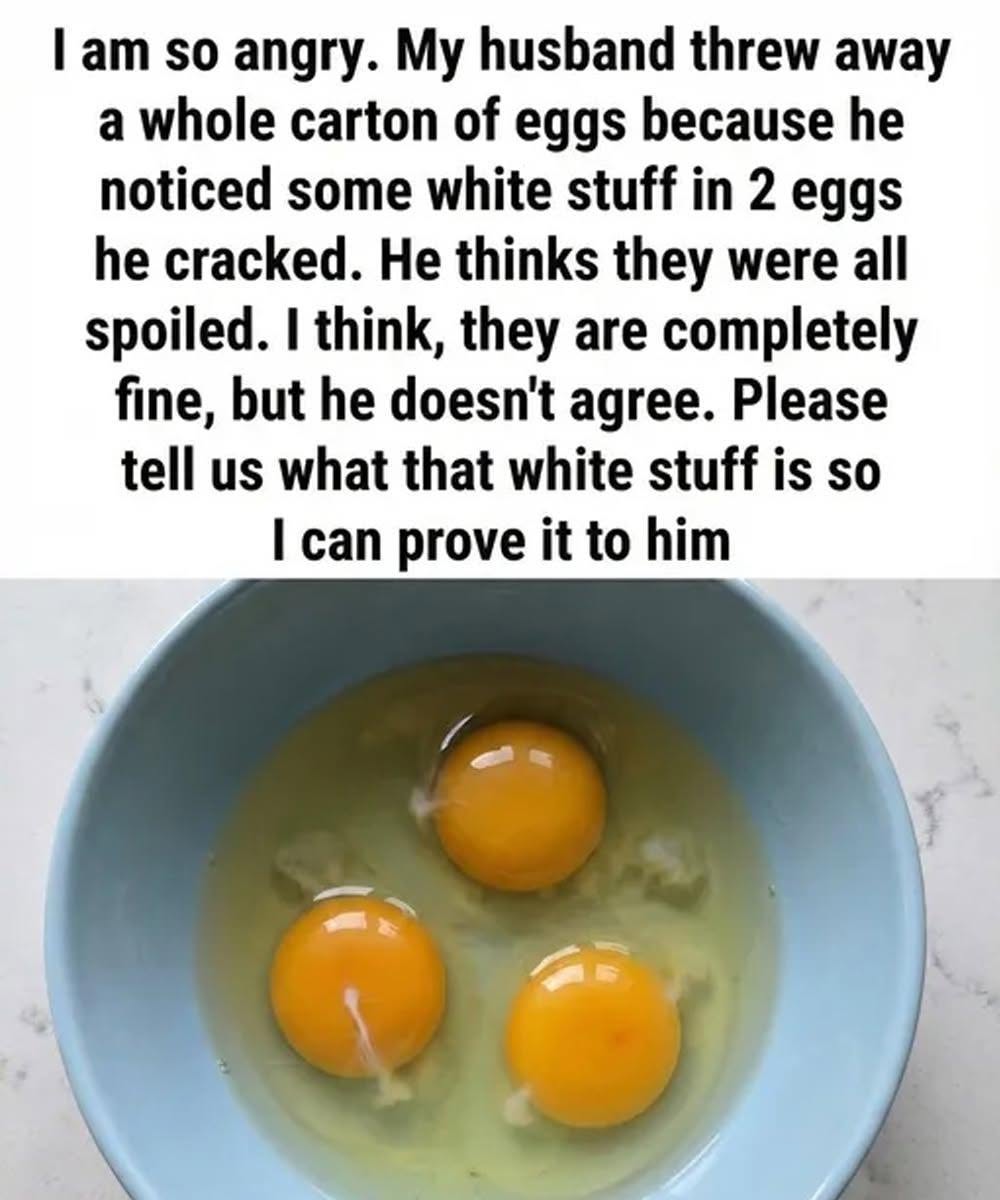
Finding a chalaza in one or several eggs is not a reason to discard the carton. Every normal egg contains chalazae, although they are not always equally visible.
The rest of the carton should be evaluated based on:
- Whether it has remained properly refrigerated
- Whether the shells are intact
- The date and instructions on the package
- Whether the eggs are included in a current recall
- Their condition when cracked
- The absence of spoilage odors
- Proper cooking and handling
If one egg is genuinely spoiled, discard that egg and thoroughly clean any bowl, counter, or utensil it contacted.
If multiple eggs have abnormal odors or colors, or if the carton has been mishandled, discarding the carton may be the safest decision.
Common Myths About the White String in an Egg
Myth: It Is a Worm
The chalaza may look like a pale cord, but it is not a worm or parasite. It is a natural protein structure formed inside the egg.
Myth: It Means the Egg Was Fertilized
The chalaza is found in both fertilized and unfertilized eggs. It is not evidence of a developing chick.
Myth: It Must Be Removed
There is no safety reason to remove a normal chalaza. It is edible and cooks with the egg.
Myth: Every Visible Chalaza Guarantees Freshness
A well-defined chalaza can be more noticeable in a fresh egg, but it does not guarantee safety or provide a precise age.
Myth: No Bad Smell Means the Egg Is Completely Safe
Odor is helpful for detecting spoilage, but dangerous bacteria do not always change an egg’s smell or appearance. Refrigeration, hygiene, and sufficient cooking remain essential.

Frequently Asked Questions
What is the white string attached to an egg yolk?
It is usually the chalaza, a normal cord of thick egg white that helps stabilize the yolk near the centre of the egg.
Is a white string in egg safe to eat?
Yes, a normal chalaza is edible. You can cook it with the rest of the egg or remove it if you prefer a smoother appearance.
Does the chalaza mean the egg is fresh?
A prominent chalaza is often easier to see in a relatively fresh egg, but it is not a guaranteed freshness or safety test.
Is the white strand sperm?
No. The white strand is not sperm, an embryo, or evidence of fertilization. It is a normal structural part of the egg.
Why do some eggs have a bigger white cord?
The visibility and size can vary according to the egg’s freshness, position, internal structure, and how it was cracked.
Can I use an egg with a chalaza in baking?
Yes. The chalaza normally blends into batters and doughs during mixing and cooking. It should not negatively affect most recipes.
Should I remove the chalaza from custard?
You do not have to remove it for safety. However, straining the custard mixture can produce a smoother final texture by catching chalazae and any small pieces of cooked egg.
How do I know when an egg must be discarded?
Discard it if it has a strong unpleasant odor, suspicious discoloration, a slimy or mouldy shell, leakage, or a questionable storage history. Also follow official recall notices.
Final Answer: The White Strand Is Normal
The mysterious white string in egg is generally the chalaza—a natural, edible part of the egg that keeps its yolk stable.
It does not mean the egg is rotten, fertilized, contaminated, or developing into a chick. There is no need to remove it unless you want an exceptionally smooth texture in a delicate recipe.
Still, the presence of a normal chalaza does not prove that an egg is safe. Keep eggs stored according to the carton and local food-safety guidance, avoid eggs with damaged shells or suspicious contents, prevent cross-contamination, and cook them appropriately.
So, in the situation shown in the image, the white material appears consistent with normal chalazae. Throwing away an entire properly stored carton solely because of these strands would generally be unnecessary.