
Compare Replacement Cost
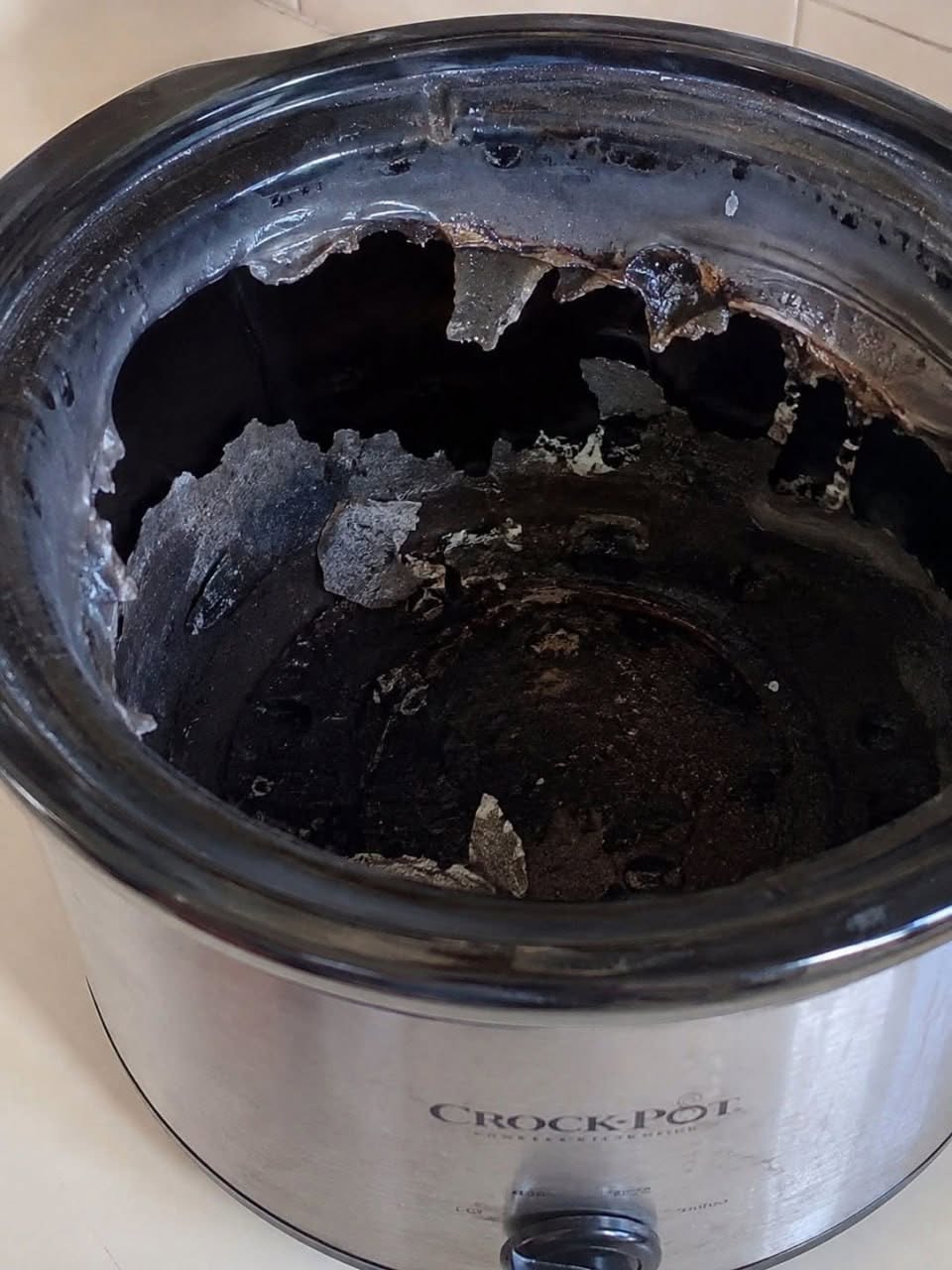
If an approved insert costs nearly as much as a new appliance—or is available only from an uncertain third-party seller—buying a complete new slow cooker may be more practical.
How to Prevent Thermal Shock
Let the Crock Adjust Gradually
Avoid moving a refrigerator-cold insert directly into a hot base unless the manual specifically permits it.
Similarly, do not place a hot crock onto a cold stone, metal, or wet surface. Set it on a dry trivet or heat-resistant board.
Add Ingredients at Similar Temperatures
Pouring ice-cold liquid against very hot ceramic can cause uneven contraction. Follow the recipe and appliance instructions, and avoid extreme temperature differences.
Do Not Preheat an Empty Crock
Many slow cookers are intended to heat with the ingredients already inside. Preheating an empty insert can create unnecessary thermal stress.
Consult the manual because model instructions differ.
Allow It to Cool Before Washing
After cooking, switch the appliance off and let the liner cool naturally.
Do not put hot stoneware into a sink of cool water. Once sufficiently cooled, wash it according to the manufacturer’s instructions.
Store It Carefully
Do not stack heavy cast-iron pans inside the crock. If you store the lid inverted over the insert, place a soft barrier between the pieces to prevent chipping.
Avoid storing the cord, plug, or hard utensils inside where they can strike the glazed surface.
Safe Slow-Cooker Food Practices
Replacing a broken insert solves the structural problem, but correct food handling remains essential.
The USDA advises users to thaw meat and poultry before placing them in a slow cooker and to begin with a clean cooker, clean utensils, and a clean work area. See the USDA’s official guidance on slow cookers and food safety.
Other useful habits include:
- Refrigerate perishable ingredients until cooking begins.
- Avoid overcrowding the crock.
- Use a reliable food thermometer.
- Keep the lid in place as much as possible.
- Do not use the warm setting to cook raw ingredients.
- Refrigerate leftovers promptly.
- Reheat leftovers using an appropriate method rather than relying on a slow cooker to bring cold food rapidly to a safe temperature.
If you have related content, add a natural internal link here:
Before preparing your next meal, review our essential slow-cooker food-safety tips.
Replace the relative address with the URL of an existing article on your website.
Cleaning the Heating Base After a Liner Breaks
Unplug the slow cooker and let it cool completely.
Remove loose ceramic pieces without scratching the base. Wipe accessible surfaces with a lightly dampened cloth, following the manufacturer’s cleaning instructions.
Never immerse the electrical base in water. Do not pour water directly into it.
If food or liquid entered vents, electrical seams, the control area, or the bottom housing, do not simply leave it to dry and assume it is safe. Contact the manufacturer or a qualified appliance technician.
The unit may require replacement if internal contamination cannot be safely removed.
When to Replace the Entire Slow Cooker
Replace the complete appliance when:
- No approved insert is available.
- Liquid entered the electrical housing.
- The heating base is warped or corroded.
- The cord or plug is damaged.
- The appliance produces sparks, smoke, or a burning smell.
- Controls operate inconsistently.
- The unit has been recalled.
- The manufacturer recommends replacement.
- The cost of an exact insert approaches the price of a new appliance.
- You cannot verify that a secondhand replacement is compatible.
Do not donate or sell an unsafe appliance without clearly disabling and disposing of it according to local electronic-waste rules.