
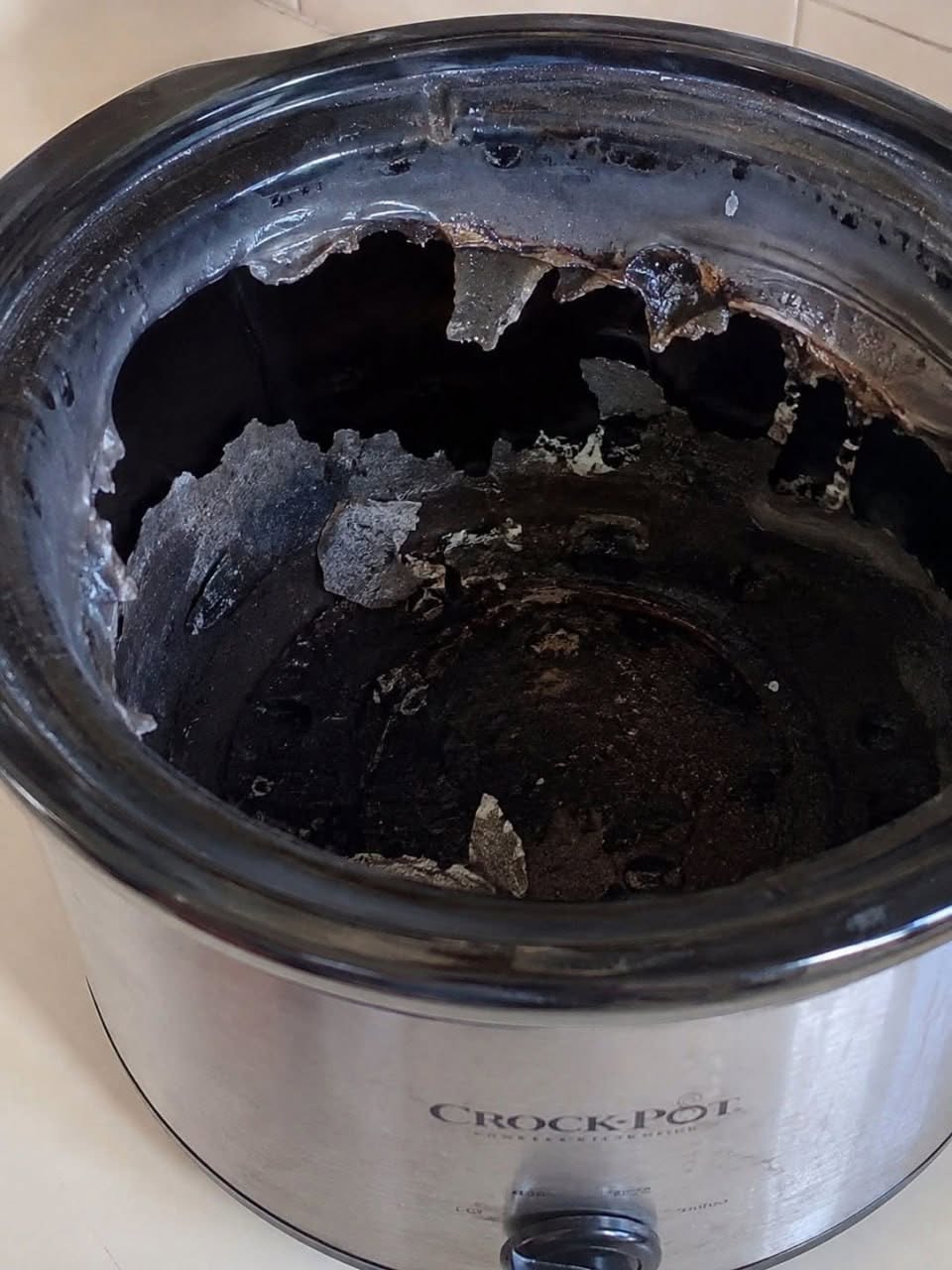
Seven Critical Steps to Take Immediately
1. Switch Off and Unplug the Slow Cooker
Turn the control to the off position and unplug the appliance from the wall.
If liquid has already entered the heating base, do not touch pooled liquid while the unit remains connected to electricity. Disconnect the power only when it is safe to do so. If there is an electrical hazard or you cannot reach the plug safely, switch off the circuit and seek professional help.
2. Allow Everything to Cool
Do not lift or handle the damaged stoneware while it is hot.
Cracked ceramic can shift unexpectedly, and hot fragments can cause serious burns. Leave the appliance undisturbed on a stable, heat-resistant surface until it reaches room temperature.
Do not pour cold water over it to accelerate cooling. That can create additional thermal shock and cause more breakage.
3. Do Not Eat Food From the Broken Insert
Discard food that was cooked in or directly contacted the damaged liner.
Even when ceramic pieces are easy to see, tiny sharp fragments or glaze particles may remain in the food. Straining the contents does not guarantee that every fragment has been removed.
Food may also have leaked into areas that are difficult to clean safely. Saving one meal is not worth the risk of swallowing a sharp fragment.
4. Protect Your Hands and Eyes
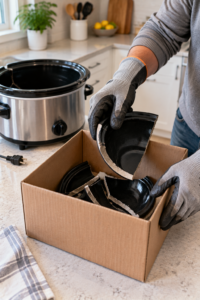
Wear sturdy gloves and closed shoes when removing loose pieces. Safety glasses are sensible if the ceramic is badly fragmented or under tension.
Do not run an unprotected hand around the damaged interior. Some edges may be sharper than they appear.
Keep children and pets away from the area until every fragment has been collected.
5. Collect the Pieces Carefully
Lift large pieces individually and place them in a rigid container, thick cardboard box, or another package that cannot be easily pierced.
Use a brush and dustpan for smaller pieces. Wipe the surrounding surface with a damp disposable paper towel to collect fine particles, then dispose of it.
Do not place loose sharp fragments directly into a thin rubbish bag. They can puncture the plastic and injure anyone handling the bag.
Follow your local waste and recycling rules. Glazed cookware is generally not accepted with ordinary glass recycling because ceramic has different properties, but requirements vary by location.
6. Inspect the Heating Base Without Opening It
Once unplugged and cool, inspect the exterior and accessible interior of the base for:
- Leaked food
- Liquid
- Burn marks
- Warping
- Damaged wiring
- A burnt smell
- Corrosion
- A loose control knob
Do not unscrew or open the electrical housing unless you are qualified to service appliances.
If liquid entered the base, the cord is damaged, or there are scorch marks or electrical odors, stop using the appliance and contact the manufacturer or a qualified repair professional.
7. Check the Model Number Before Ordering a Replacement
Find the model number on the rating label, usually located on the underside or back of the appliance.
Use that exact number when searching for a replacement. A liner that appears to have the same shape and capacity may still fit incorrectly, sit too high, leave a gap, or receive heat unevenly.
Purchase only a replacement identified by the manufacturer as compatible with your exact model. If the appliance is old and no approved liner is available, replacing the complete slow cooker is the safer option.
Why Do Slow Cooker Inserts Crack?
There may be one clear cause, or several forms of stress may have accumulated over time.
Thermal Shock
Thermal shock occurs when different areas of a material change temperature too quickly. One part expands or contracts faster than another, creating internal stress.
Examples include:
- Placing a hot insert on a cold or wet counter
- Adding very cold liquid to a hot crock
- Moving refrigerated stoneware directly into a heated base
- Putting a hot insert into cold washing water
- Using the crock on a stovetop burner
- Heating an empty insert
- Exposing hot stoneware to a cold draught
Not every insert will fail immediately after one temperature change. Repeated stress can create small cracks that become larger later.
Impact Damage
Stoneware may develop an invisible or barely visible crack after being:
- Dropped
- Bumped against the sink
- Struck by another pan
- Stored under heavy cookware
- Knocked against a hard countertop
- Handled roughly in the dishwasher
The insert may continue looking normal until heat expands the existing damage.