
Manufacturing Defect
Occasionally, a flaw in the ceramic body, glazing, firing, or production process may contribute to premature failure.
If a newer liner breaks under normal use, record the model and date information, retain photographs, and contact the manufacturer. Do not discard the entire appliance until the manufacturer tells you whether it needs to be inspected or returned.
Wear and Age
Repeated heating, cooling, washing, and handling can weaken stoneware over time. Fine crazing in the glaze does not always mean the entire crock is about to collapse, but deeper cracks or changes that can be felt with a fingernail require caution.
A liner that has leaked, made a new cracking sound, or developed a visible structural line should no longer be used.
Incorrect Heating Method
A slow cooker insert is not automatically safe for:
- A stovetop burner
- A grill or broiler
- An open flame
- A microwave
- A conventional oven
- A freezer
- Preheating while empty
Some manufacturers approve certain inserts for limited oven or microwave use, while others do not. The instructions for the exact model are the deciding authority.
Never assume that all stoneware behaves the same way.
Insufficient or Excessive Filling
The proper fill level depends on the model and recipe. Very small quantities may heat differently, while overfilling can cause spills and unsafe cooking.
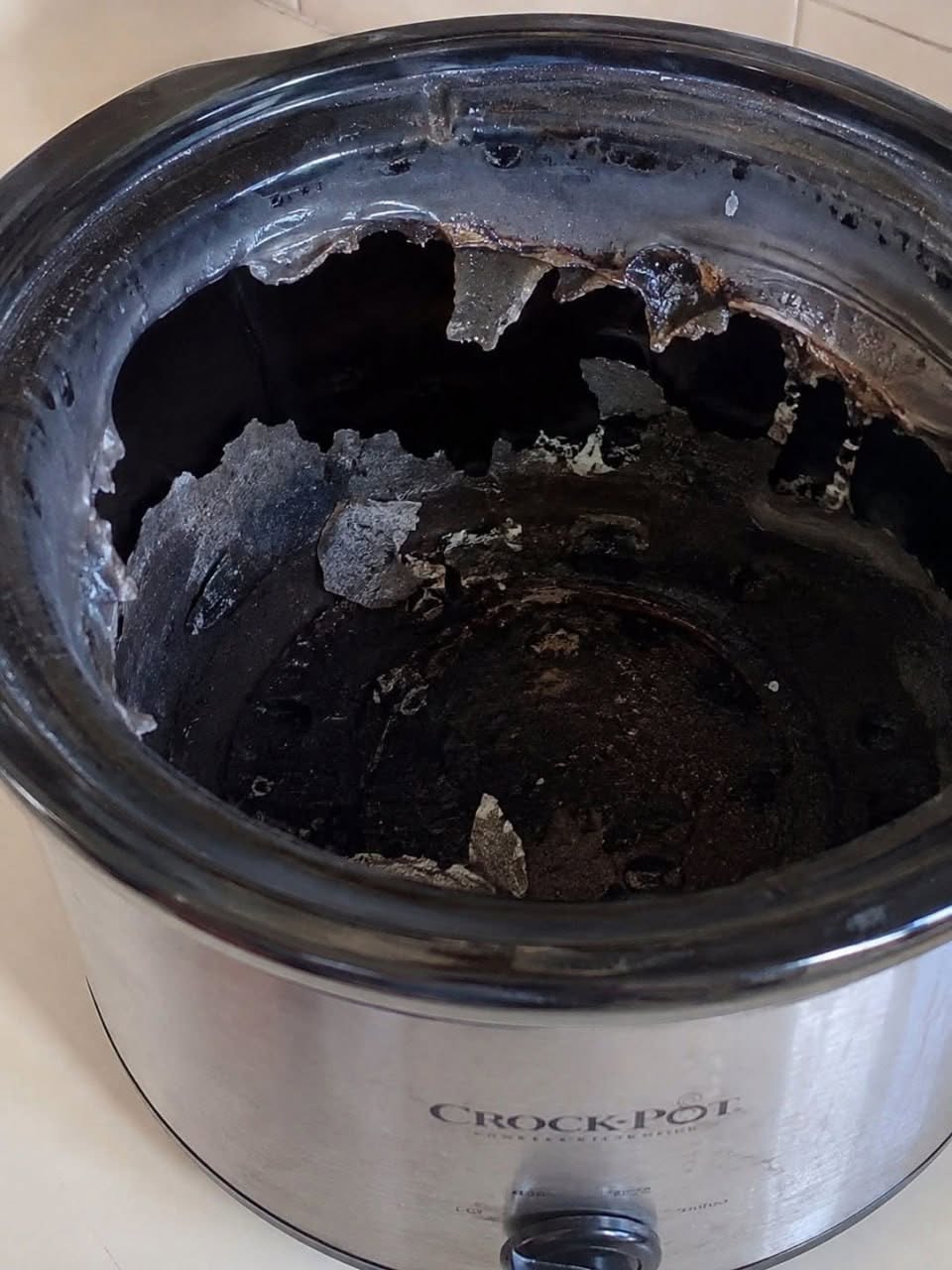
This may not directly explain the dramatic breakage in the photograph, but following the manual reduces stress and supports proper cooking performance.
Could the Damage Be Only Peeling Coating?
The interior shown in the image does not look like a removable non-stick coating peeling from a metal pot. Crock-Pot liners of this style are typically made from glazed stoneware.
The large jagged openings and thick detached pieces suggest structural ceramic failure or severe spalling rather than ordinary surface wear.
A photograph cannot reveal the exact cause, but the distinction does not change the recommendation: the liner is no longer safe to cook in.
Can a Cracked Slow Cooker Insert Be Repaired?
A cooking insert with structural damage should not be repaired for food use.
Do not use:
- Super glue
- Epoxy resin
- Ceramic repair adhesive
- Silicone sealant
- Cement
- Tape
- Metal staples
- A plastic liner as structural support
A product described as food-safe at room temperature is not necessarily suitable for prolonged heating, repeated washing, acidic foods, grease, or thermal cycling.
A visible repair may also hide continuing cracks. Even if it holds water while cold, it can fail when heated.
The correct solution is an exact approved replacement insert or a replacement appliance.
Can You Use the Heating Base Without the Ceramic Insert?
No. Do not put food directly into the metal heating base.
The base contains electrical and heating components and is not designed as a food vessel. It may not be watertight, food-safe, or washable by immersion.
Do not substitute:
- A random ceramic bowl
- A metal saucepan
- A glass baking dish
- A Dutch oven
- A smaller crock surrounded by water
- Disposable foil pans
- A plastic slow-cooker liner without the stoneware
Slow-cooker bags are designed to line an intact, compatible cooking insert. They are not replacements for broken stoneware and cannot provide structural support.
How to Find the Correct Replacement Insert
Locate the Appliance Information
Photograph the rating label and record:
- Brand
- Complete model number
- Capacity
- Voltage
- Serial or date code
- Country of purchase
Two slow cookers with the same advertised capacity may use different insert dimensions.
Contact the Manufacturer
Give customer support the exact model number and explain that the stoneware has experienced structural failure.
Ask whether:
- A replacement crock is available
- The model is covered by a warranty
- The entire appliance needs replacement
- The incident should be reported
- The product has any active safety notice or recall
Verify the Fit
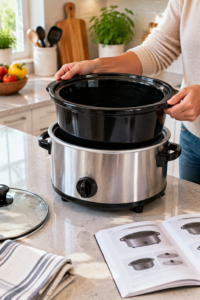
A correct liner should sit in the base as intended, without being forced or wobbling excessively.
Do not grind, sand, or modify a replacement crock to make it fit. Altering the ceramic could weaken it and release dust.