
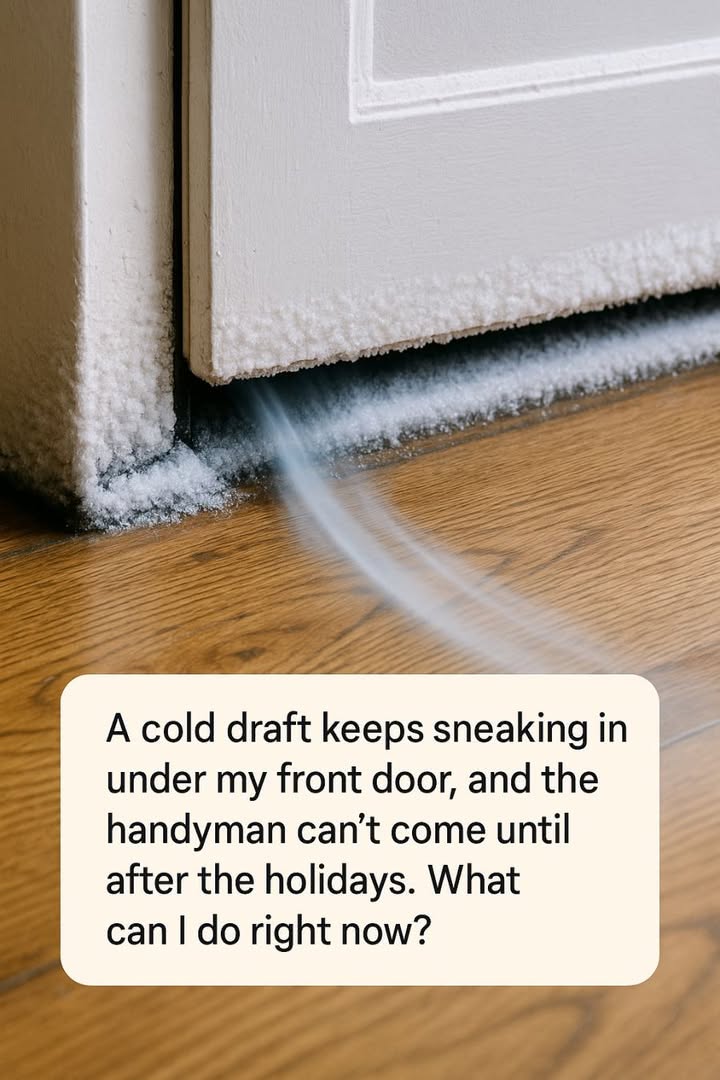
Cold Draft Under Front Door? Easy Fixes You Can Try Right Now
A cold draft under front door can make an otherwise comfortable home feel noticeably colder, especially when the weather outside drops. You may feel a stream of cold air around your feet, notice curtains or lightweight fabrics moving slightly, or simply find that the room near the entrance never seems to warm up properly.
The good news is that you don’t necessarily have to wait for a handyman to solve the problem.
If you’re dealing with a cold draft under front door and professional help isn’t available yet, there are several temporary solutions you can use today. Some take only a few minutes and require items you may already have at home.
The most important thing is to determine where the air is actually entering. If the gap is underneath the door, blocking that opening is usually the quickest temporary solution. If the air is coming around the sides or top, however, you’ll need a different approach.
The U.S. Department of Energy recommends sealing air leaks around doors and windows and notes that draft stoppers can help prevent air from entering or escaping beneath doors. The Department of Energy’s Energy.gov
Let’s look at the easiest ways to deal with the problem right now.
Why a Cold Draft Under Front Door Happens
A draft usually means there is an opening that allows air to move between the inside and outside of your home.
The gap may be caused by:
- A worn door sweep
- Damaged weatherstripping
- A door that no longer sits correctly
- A threshold that is too low
- An uneven floor
- A poorly sealed door frame
- An old or warped exterior door
- A gap created by years of normal wear
Sometimes the opening is so small that you cannot see it easily. However, even a relatively small gap can be noticeable when outdoor air is cold and moving through it.
Doors and windows are among the most accessible places to check for air leaks, and ENERGY STAR specifically lists drafts around doors as a common sign that air sealing or weatherstripping may be needed. ENERGY STAR
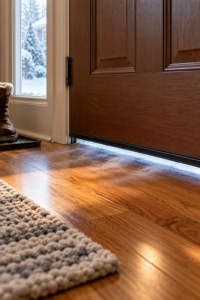
First, Find Exactly Where the Air Is Coming From
Before buying anything, take a minute to locate the leak.
Close the front door completely and slowly move your hand around:
- The bottom edge
- Both vertical sides
- The top edge
- The corners
- The area around the frame
- The threshold
You may immediately feel the cold air.
If you don’t, try a simple visual test.
Place a very lightweight piece of tissue or thin paper near the suspected gap while keeping it away from flames and other heat sources. If the paper moves noticeably, you’ve probably found an airflow path.
Another option is to inspect the door carefully in daylight. Look for visible gaps between the door and frame.
ENERGY STAR recommends checking doors and windows for drafts and gaps as part of locating air leaks. ENERGY STAR
Once you know where the air is coming from, choosing a temporary fix becomes much easier.
The Fastest Temporary Fix: Use a Draft Stopper
If your main problem is a cold draft under front door, one of the quickest solutions is a draft stopper.
A draft stopper is designed to sit along the bottom of a door and reduce the amount of air passing underneath it.
You can buy one specifically designed for doors, or make a temporary version yourself.
Simple DIY Draft Stopper
If you need a solution immediately, roll up:
- A thick towel
- A blanket
- A small fleece throw
- A long piece of fabric
- A pair of thick clothes
Place the rolled material tightly against the bottom edge of the closed door.
For a better seal, make sure it extends across the entire width of the door rather than covering only the middle.
This isn’t necessarily a permanent repair, but it can make the room more comfortable while you wait for proper maintenance.
The Department of Energy specifically recommends draft stoppers at the base of doors as a simple way to reduce air entering or escaping a home. The Department of Energy’s Energy.gov