
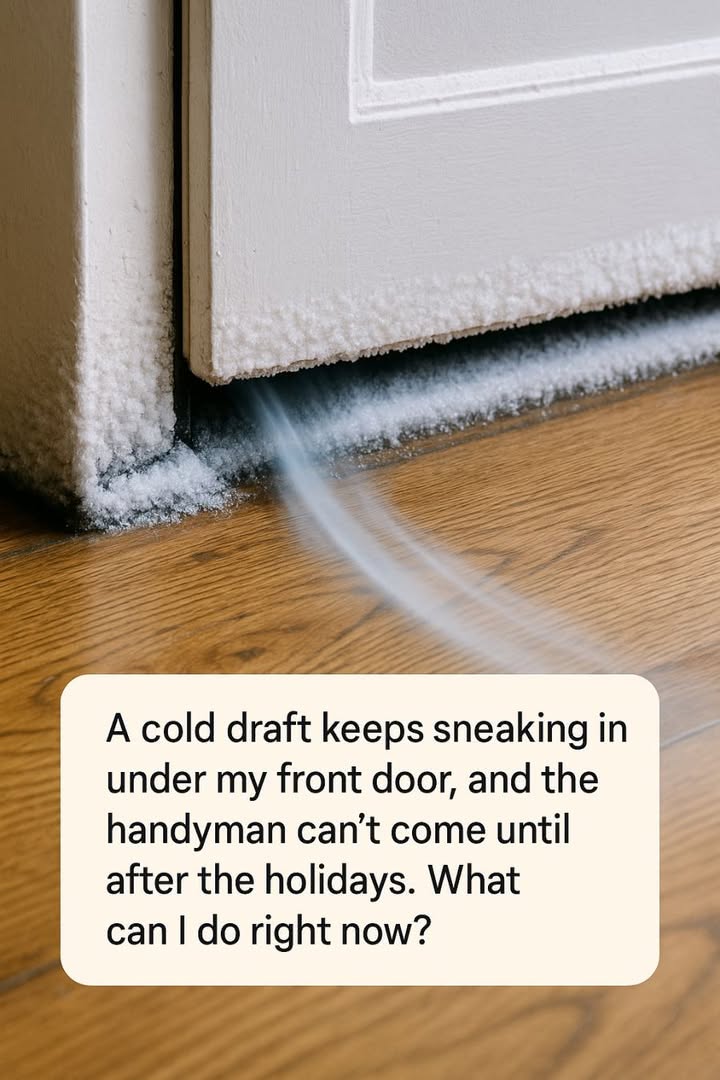
Try a Pair of Thick Towels
Another simple solution is to use two towels.
Roll each towel tightly and place one on each side of the doorway’s bottom edge, overlapping them slightly in the center.
This can work better than one thin towel because it creates more thickness and weight.
If you have a long bath towel, that may work especially well.
Again, this is a temporary solution rather than a substitute for repairing a damaged door seal.
What Not to Put Under the Door
Avoid using anything that could create a safety hazard.
Don’t block the doorway with:
- Heavy furniture
- Sharp objects
- Glass
- Loose electrical cables
- Flammable materials
- Objects that prevent emergency exit
The temporary barrier should be soft, stable, and easy to remove.
You also don’t want something that creates a tripping hazard in a frequently used entrance.
Keep the Door Fully Closed
This sounds obvious, but a door that doesn’t fully latch can create a much larger air leak.
Make sure:
- The door is fully closed
- The latch catches
- The hinges aren’t loose
- The door isn’t being held open by a rug
- Nothing is preventing the door from sealing
If the door can be pushed inward or outward slightly after it is closed, the latch or alignment may need attention.
Check the Floor Around the Door
Sometimes the door is fine but the floor beneath it is uneven.
Look for:
- A raised section
- Damaged flooring
- A gap between threshold and floor
- Missing trim
- Cracks
- Water damage
A damaged threshold or floor can create an opening that weatherstripping alone won’t completely solve.
If you see moisture, rot, or significant deterioration, mention it to the handyman.
Could Moisture Be Part of the Problem?
Air leaks and moisture problems can sometimes occur together.
If the door area has:
- Condensation
- Damp wood
- Peeling paint
- Soft flooring
- Mold-like growth
- Water stains
don’t treat the problem as just a draft.
There may be a water-intrusion issue that needs to be addressed.
The Department of Energy notes that air leaks can allow moisture to enter and potentially contribute to damage and mold under certain conditions. The Department of Energy’s Energy.gov
Why Fixing the Draft Can Make the Room Feel Better
A draft doesn’t just affect the temperature of the air.
Moving cold air across your feet can make the room feel significantly less comfortable even if the thermostat says the temperature is acceptable.
Stopping the airflow can therefore improve comfort without necessarily changing the thermostat setting.
That doesn’t mean a door draft is always the biggest source of energy loss in a home. ENERGY STAR notes that larger hidden leaks can occur in attics, basements, and other areas. ENERGY STAR
But a drafty front door is easy to access and often straightforward to improve.
Could a Draft Increase Your Heating Bill?
It can contribute to energy waste because heated indoor air can escape while outdoor air enters.
The Department of Energy recommends sealing gaps and cracks around doors and windows as part of reducing air leakage. The Department of Energy’s Energy.gov
However, don’t assume that the front door is automatically responsible for a large percentage of your energy bill.
Every home is different.
The condition of the building envelope, insulation, windows, attic, basement, heating system, and climate all affect energy use.
If You Rent Your Home
If you’re renting, you may not be allowed to permanently modify the door.
In that case, temporary solutions are particularly useful.
Try:
- A removable draft stopper
- A towel or blanket
- Removable weatherstripping, if permitted
- A temporary door sweep
- Closing curtains near the entrance if appropriate
Avoid drilling holes or making permanent modifications without permission.
The Department of Energy specifically recommends simple measures such as draft stoppers for renters dealing with drafts. The Department of Energy’s Energy.gov
If You Own the Home
If you own the property, you have more options.
You can consider:
- Replacing worn weatherstripping
- Installing a quality door sweep
- Adjusting the threshold
- Sealing stationary gaps
- Repairing the door frame
- Replacing a damaged exterior door
- Improving surrounding insulation
Start with the simplest problem first.
There’s no reason to replace an entire door if a $10–$30 seal solves the issue.
The Best Permanent Solution Depends on the Leak
There isn’t one universal fix for every cold draft under front door.
If the gap is underneath:
Use a door sweep or adjust the threshold.
If the gap is around the sides:
Replace the weatherstripping.
If the frame has cracks:
Seal the stationary gaps appropriately.
If the door is warped:
The door may need repair or replacement.
If the frame has shifted:
A professional should inspect it.
Correctly identifying the source prevents you from wasting money on the wrong product.
A Quick Temporary Fix You Can Do Tonight
If you need a solution immediately, follow these steps.
Step 1: Close the Door
Make sure it is completely closed and latched.
Step 2: Find the Draft
Run your hand around the bottom and sides.
Step 3: Clean the Area
Remove dust and debris from the floor and threshold.
Step 4: Roll a Thick Towel
Make it long enough to cover the entire width of the door.
Step 5: Push It Against the Door
Make sure it touches the bottom edge without preventing the door from closing.
Step 6: Check Again
Feel around the edges.
If the cold airflow has decreased significantly, you’ve confirmed that the gap is contributing to the problem.
Step 7: Plan the Permanent Repair
When the handyman arrives, explain exactly where you felt the airflow.
This can save time during the inspection.
What to Buy for a More Permanent Fix
If you want to solve the problem yourself, you may need only a few basic items:
- Door sweep
- Weatherstripping
- Measuring tape
- Cleaning cloth
- Mild household cleaner
- Scissors or utility knife, depending on the product
- Appropriate screwdriver if the sweep requires screws
Always follow the instructions supplied with the specific product.
Different doors require different types of seals.
Measure Before You Buy
Don’t guess the size.
Measure:
- The width of the door.
- The approximate gap underneath.
- The thickness of the existing sweep, if there is one.
- The condition of the threshold.
A product that’s too thick can make the door difficult to close.
A product that’s too thin may leave a gap.
The ideal seal reduces airflow while allowing the door to operate normally. DOE weatherization guidance specifically emphasizes maintaining proper door operation when installing weatherstripping and door sweeps. The Department of Energy’s Energy.gov
Don’t Over-Seal Your Home Without Thinking About Ventilation
Sealing unwanted leaks can improve comfort, but a home also needs appropriate ventilation.
This is especially important in homes with combustion appliances.
ENERGY STAR warns that extensive air sealing can sometimes affect combustion safety or indoor air quality, depending on the home and equipment. ENERGY STAR
So sealing a small door gap is one thing.
Aggressively sealing every opening in an older home without understanding the ventilation and combustion setup is another.
If you have a fuel-burning water heater, furnace, fireplace, or other combustion appliance, professional advice can be worthwhile before major air-sealing work.
When You Should Call the Handyman
Since your handyman is already scheduled, keep the appointment if the problem is more than a simple worn seal.
Ask for an inspection if:
- The door is visibly crooked.
- The frame is damaged.
- The threshold is loose.
- There is water damage.
- The door doesn’t latch.
- The gap is unusually large.
- The door is difficult to open or close.
- You see cracks around the frame.
- You suspect structural movement.
A professional can determine whether the issue is simply weatherstripping or something more significant.
Don’t Replace the Whole Door Too Quickly
A draft does not automatically mean you need a new front door.
Sometimes the solution is as simple as replacing:
- A bottom sweep
- Weatherstripping
- A threshold
- A small section of damaged seal
ENERGY STAR lists weatherstripping doors among accessible home air-sealing projects, while also recognizing that larger or more complex problems may require additional work. ENERGY STAR
Start with the least expensive reasonable repair.
What If the Door Is Old?
Older doors can develop several problems over time.
The seal may compress.
The frame may shift.
The hinges may loosen.
The threshold may wear down.
The door itself may warp.
If you have several of these problems simultaneously, a replacement could eventually make sense.
But you can still use a temporary draft stopper while deciding what to do.
What If the Draft Is Very Strong?
A strong airflow deserves more attention.
If you can clearly hear whistling, see curtains moving, or feel a strong stream of air even when the door is closed, inspect the entire doorway.
There may be a significant gap.
Check the top, bottom, sides, and threshold.
If you discover a large opening around the frame, don’t simply stuff random materials into it.
Have the underlying problem assessed.
What If You Can’t Feel a Draft but the Floor Is Cold?
That’s slightly different.
The floor near the doorway may simply be colder because the door, threshold, and surrounding materials are exposed to outdoor temperatures.
A cold surface doesn’t automatically mean there is an air leak.
This is why it’s useful to distinguish between:
cold surface and moving air.
If you feel actual airflow, you’re likely dealing with an air leak.
If the area is simply cold but still, insulation or thermal bridging may be part of the issue.
A Draft Stopper Is Not a Structural Repair
This is worth remembering.
A towel, blanket, or door snake can reduce airflow temporarily.
But it won’t repair:
- A damaged frame
- Rot
- A warped door
- A poorly installed threshold
- Structural movement
- A large cavity around the frame
Use temporary fixes for what they are: temporary fixes.
Simple Maintenance Can Prevent Future Drafts
Once the handyman fixes the problem, inspect the door periodically.
Look at the weatherstripping every few months.
Check whether the sweep still touches the threshold.
Make sure the hinges are secure.
Keep the threshold clean.
Watch for new gaps.
Small maintenance issues are easier to address before they become major comfort or energy problems.
Don’t Forget Other Drafty Areas
If you fix the front door and the house still feels unusually drafty, the door may not be the main problem.
Check:
- Windows
- Attic access
- Basement
- Crawlspace
- Electrical penetrations
- Plumbing penetrations
- Fireplace areas
- Exterior wall openings
ENERGY STAR notes that some of the largest air leaks can actually be hidden in attics and basements rather than around doors and windows. ENERGY STAR
So think of the front door as one part of the home’s overall air-sealing picture.
Frequently Asked Questions
How do I stop a cold draft under front door immediately?
The quickest temporary solution is to place a thick rolled towel, blanket, or draft stopper tightly against the bottom of the closed door.
What is the best permanent fix?
For a gap underneath the door, a properly fitted door sweep or threshold adjustment is often appropriate. If air is coming around the sides or top, weatherstripping may be needed.
Can I use a towel under my door?
Yes. A thick towel can work as a temporary draft blocker while you wait for a permanent repair.
Why is cold air coming under my front door?
Common causes include worn weatherstripping, a damaged door sweep, an improperly adjusted threshold, door misalignment, or a gap around the frame.
Should I replace the entire door?
Not necessarily. A worn seal, sweep, or threshold may be the actual problem and can often be repaired separately.
How can I tell where the draft is coming from?
Close the door and carefully check the bottom, sides, top, and corners for moving air. You can also inspect for visible gaps.
Does weatherstripping really help?
Yes. Properly installed weatherstripping can reduce unwanted airflow around a door. The DOE includes weatherstripping and door sweeps among common air-sealing measures. The Department of Energy’s Energy.gov
Can I use caulk under the door?
Caulk is generally intended for stationary cracks and gaps rather than the moving edge beneath a door. A door sweep is usually more appropriate for a gap underneath a moving door.
Is expanding foam safe around doors?
It can be appropriate for certain stationary rough-opening gaps when the correct low-expansion product is used, but it should not be used casually around the moving portion of the door. Building Science Education
Why is my door drafty even though it looks closed?
A door can be fully closed while still having gaps around the seal. The weatherstripping, sweep, threshold, or frame may not be making proper contact.
Can a draft increase heating costs?
Air leakage can increase heating or cooling demand, although the impact varies considerably from one home to another. Sealing unwanted air leaks is one way to improve comfort and reduce energy waste. The Department of Energy’s Energy.gov
What if the draft comes from the sides?
Check the weatherstripping around the door frame. If it is cracked, compressed, missing, or damaged, it may need replacement.
What if the door is hard to close after adding weatherstripping?
The seal may be too thick or incorrectly positioned. Remove or adjust it rather than forcing the door closed.
Can renters fix a drafty door?
Renters can often use removable solutions such as draft stoppers, but permanent modifications should be approved by the landlord or property manager.
Should I keep my handyman appointment?
Yes, especially if the door has a large gap, damaged frame, water damage, alignment problems, or difficulty closing and latching.
Final Thoughts
A cold draft under front door can be annoying, but you don’t have to live with freezing air around your feet while waiting for a handyman.
Start with the simplest solution.
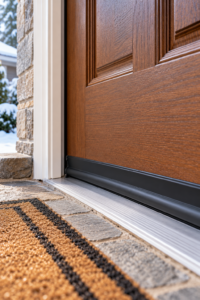
Close the door and locate the exact leak. If the air is coming from underneath, a thick towel, blanket, or draft stopper can provide immediate temporary relief. If the problem is more persistent, a properly fitted door sweep may provide a better solution.
If the air is coming around the sides or top, inspect the weatherstripping instead.
And if the door is crooked, damaged, difficult to close, or surrounded by moisture or deteriorated materials, let the handyman investigate the underlying problem rather than trying to cover it up.
The goal isn’t simply to block cold air for one night. It’s to identify why the gap exists and fix the source properly.
For broader home weatherization information, the U.S. Department of Energy recommends addressing air leaks and using appropriate weatherstripping and sealing methods to improve comfort and reduce unwanted air infiltration. The Department of Energy’s Energy.gov
For now, though, a simple draft stopper may be all you need to make the room noticeably more comfortable until the proper repair can be made.