
Garlic Herb Bread with a Golden Crust
A loaf of garlic herb bread has a way of making a simple meal feel complete. Cut into the warm crust and you get a soft interior, the aroma of garlic and herbs, and slices ready to serve beside soup, pasta, or a salad.
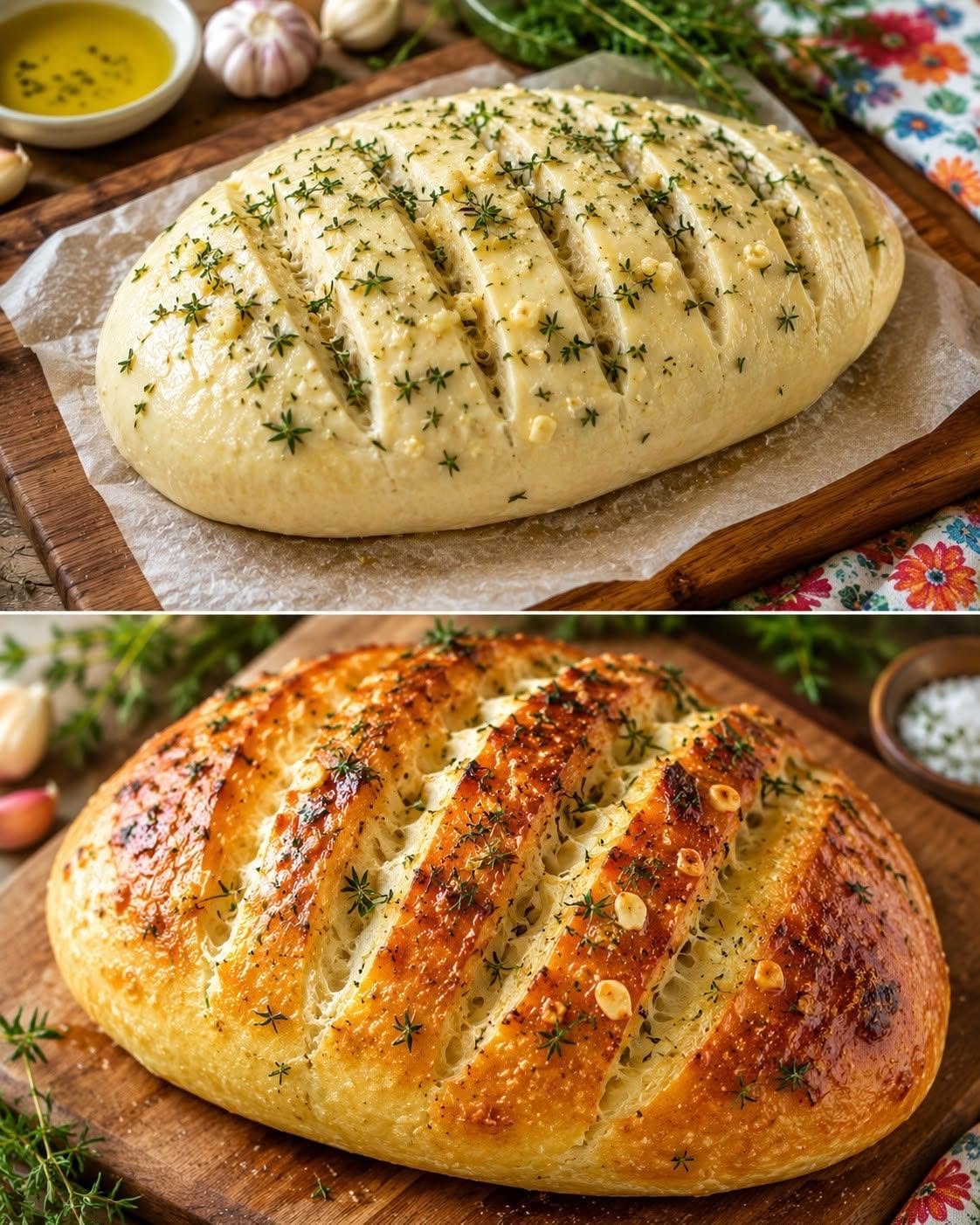
The supplied image shows the same oval loaf at two stages: pale dough with several deep cuts before baking, then a golden loaf with those cuts opened across the top. Garlic and small herb leaves are visible on its surface. The image does not provide an ingredient list or confirm how the dough was made. This is an original recipe developed to create a similar loaf, with thyme in the dough and a garlic-herb finish.
7 Secrets for Festive Twisted Bread Success
You do not need specialist equipment to make it. A large bowl, a baking sheet, and a sharp knife are enough. The dough needs time to rise, but most of that time is hands-off. The steps that deserve your attention are shaping the loaf firmly, letting it become puffy again, and scoring it just before it goes into the oven.
Why You’ll Love This Recipe
- It makes one generous loaf. Slice it for the table or tear off pieces while it is warm.
- The garlic flavor stays fresh. Some garlic goes into a finishing butter after baking, where it remains fragrant rather than burning on the crust.
- The herbs work throughout the bread. Thyme flavors the dough as well as the surface.
- The scoring gives it character. The cuts open in the oven and create the rustic look shown in the photo.
- It fits everyday meals. Serve garlic herb bread with tomato soup on a weeknight or put the whole loaf on a dinner table.
What Makes This Loaf Special?
This is a yeast bread shaped free-form on a baking sheet. Unlike a loaf baked inside a tin, it can expand across the sheet and develop a rounded, golden exterior. Its oval shape also gives you room to make the bold diagonal scores visible in the reference image.
The recipe uses olive oil in the dough for a tender crumb. Fresh thyme adds a gentle herbal note without taking over. Before baking, the loaf gets a light brushing of olive oil and herbs. Once it comes out of the oven, you brush it with warm garlic butter for the glossy finish.
Keeping most of the minced garlic out of the oven is deliberate. Tiny pieces on the surface can darken before the bread is fully baked. Adding garlic at the end gives you its aroma while the bread is still hot enough to absorb some of the butter.
Ingredients
Yield: 1 oval loaf, about 10–12 slices
Hands-on time: About 25–30 minutes
First rise: Approximately 60–90 minutes
Second rise: Approximately 35–50 minutes
Bake time: Approximately 30–35 minutes
For the bread dough
- 4 cups (500 g) bread flour, plus a little more for handling
- 2 teaspoons (about 6 g) instant yeast
- 2 teaspoons fine salt
- 1 teaspoon granulated sugar
- 1¼ cups plus 1 tablespoon (315 ml) lukewarm water
- 2 tablespoons (30 ml) olive oil
- 2 teaspoons finely chopped fresh thyme leaves, or ¾ teaspoon dried thyme
For the surface
- 1 tablespoon olive oil
- 1 teaspoon fresh thyme leaves
- A small pinch of flaky salt, optional
For the garlic butter finish
- 3 tablespoons (42 g) unsalted butter
- 3 garlic cloves, finely minced
- 1 teaspoon finely chopped fresh thyme or parsley
Ingredient Notes
Bread flour: Its higher protein content helps the loaf hold its shape and gives the slices a pleasant chew. All-purpose flour can work, but the dough may feel a little softer and the finished loaf may spread more.
Instant yeast: You can mix it directly with the dry ingredients. Check its use-by date, especially if the packet has been open for some time.
Water: Lukewarm water helps the dough come together comfortably. It should feel warm, not hot. Yeast dough rises according to its temperature and environment, so use the appearance of the dough as your main guide.
Fresh thyme: The small leaves resemble those visible in the image. Strip them from the woody stems before measuring. Dried thyme is stronger by volume, which is why the dough needs less of it.
Garlic: Finely mince the cloves so they spread evenly through the finishing butter. The warm bread will pick up their flavor when brushed.