
Common Identification Mistakes
Confusing It With Chinese Water Chestnut
This is the most common error. Chinese water chestnuts are rounded corms without horns. Their white interior remains noticeably crisp after cooking.
Assuming “Natural” Means Safe
Wild foods can be poisonous, contaminated, spoiled, allergenic, or incorrectly identified. A natural origin is not a guarantee of safety.
Treating Every Trapa Species as Identical
The genus contains multiple species and cultivated forms. Shape, legal status, traditional use, and preparation may differ.
The Kew Science Plants of the World Online entry for Trapa provides authoritative botanical information about the genus and its classification.
Planting a Pod to See What Grows
This can accidentally introduce an invasive aquatic plant. Do not plant or release a water caltrop unless its identity and legal status have been confirmed by the appropriate local authority.
Assuming Dry Pods Are Harmless
Dry fruits may be more dangerous underfoot because their woody horns remain rigid and can be hidden easily in soil or vegetation.
Storage and Disposal
If you purchased a labelled edible product, follow the storage directions printed on its packaging. Fresh and dried products may have different requirements.
Do not eat fruits that have:
- Visible mould
- A sour or rotten smell
- Soft, leaking shells
- Evidence of insects
- Unknown storage history
- Contact with polluted water
Unknown specimens should be kept away from food and from areas accessible to children or pets.
Because viable water caltrops may spread invasive plants, do not compost them or discard them in natural water. Seal them in a sturdy container and consult the local invasive-species authority for disposal instructions.
Frequently Asked Questions
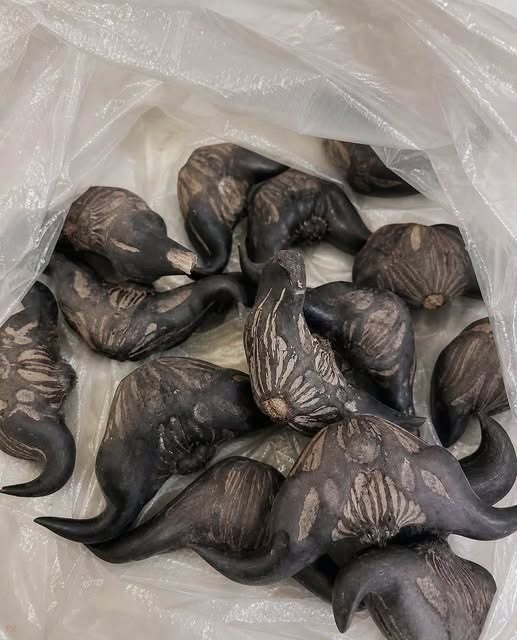
What are the black horned objects in the photograph?
They most likely are mature water caltrop fruits from a plant in the genus Trapa. Their exact species and suitability for eating cannot be verified from the photograph alone.
Is a water caltrop the same as a water chestnut?
The name “water chestnut” is applied to both, but they are different plants. Water caltrops are Trapa fruits with hard horned shells. The familiar crunchy ingredient used in stir-fries usually comes from the corm of Eleocharis dulcis.
Why does the fruit have horns?
The horns are natural extensions of the fruit. Their size and number vary among species and varieties.
Can I eat the pods shown in the image?
There is not enough information to determine that safely. Do not eat them unless their identity, food-grade origin, condition, and correct preparation method have been confirmed.
What does cooked water caltrop taste like?
The edible kernel is generally described as mildly flavoured and starchy, with a texture closer to a cooked chestnut or potato than to the crisp Chinese water chestnut.
Can I grow water caltrop at home?
Check local regulations first. Certain Trapa species are invasive and their possession, transportation, sale, or cultivation may be prohibited. Never introduce one into an outdoor pond or natural waterway without official confirmation that doing so is legal and environmentally safe.
Are the horns dangerous?
Yes. Mature shells may be hard enough to puncture skin, footwear, tyres, or thin bags. Handle them carefully and keep them away from children and pets.
How can I confirm the identification?
Take clear photographs of the fruit from multiple angles, including measurements and any packaging. Contact a local agricultural extension service, herbarium, university botany department, environmental agency, or qualified plant-identification specialist.
Final Thoughts
The striking black objects in the image are very likely water caltrop fruits, possibly a two-horned form associated with Trapa bicornis. Their bull-like horns explain names such as buffalo nut, bat nut, and devil pod.
Some cultivated water caltrops are traditional foods, but appearance alone cannot establish edibility. Exact species, origin, storage history, preparation requirements, contamination risk, and local invasive-plant laws all matter.
Treat unidentified pods as botanical specimens rather than snacks. Handle the sharp horns carefully, never plant or release them into water, and use them as food only when they come from a reputable supplier with clear labelling and preparation directions.