
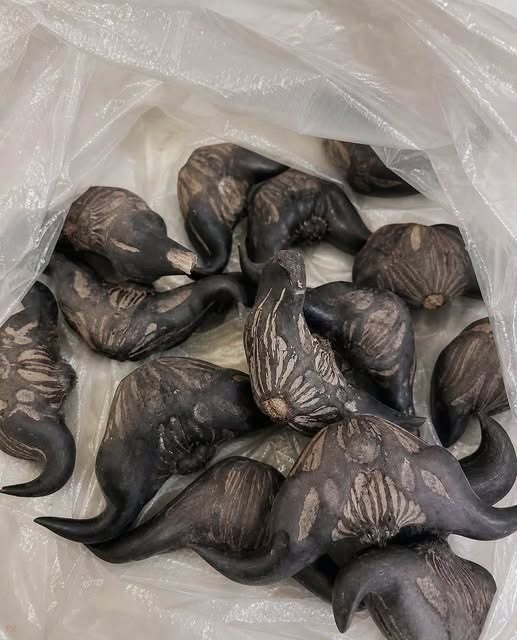
3. It Is Not the Familiar Crunchy Water Chestnut
The term “water chestnut” causes considerable confusion because it is used for two botanically different foods.
The crisp white pieces found in many stir-fries are typically Chinese water chestnuts from Eleocharis dulcis. That plant is cultivated for an underground structure called a corm. It does not produce the dramatic horned fruit shown in the photograph.
A water caltrop, by contrast, belongs to the genus Trapa. Its edible portion—when dealing with an established edible variety—is a seed enclosed inside a hard, horned shell.
Here is the practical difference:
| Feature | Water caltrop | Chinese water chestnut |
|---|---|---|
| Botanical group | Trapa species | Eleocharis dulcis |
| Edible part | Seed inside a woody fruit | Underground corm |
| Outer appearance | Dark shell with horns or spines | Rounded brown corm |
| Typical texture | Starchy after cooking | Crisp and juicy |
| Growing habit | Floating aquatic plant | Sedge growing in wet soil |
They should not be treated as interchangeable ingredients. A recipe that calls for canned sliced water chestnuts almost always means the crisp corm of Eleocharis dulcis, not a horned water caltrop.
Readers interested in avoiding similar ingredient mix-ups may also find this food identification guide useful.
4. Some Varieties Have a Long Culinary History
Edible water caltrops have traditionally been consumed in parts of China, India, and other areas of Asia. Depending on the region and variety, the seed may be boiled, steamed, roasted, dried, or milled into flour.
The cooked kernel is generally described as dense and starchy rather than watery and crisp. Its texture may be compared with chestnuts, potatoes, or other cooked starchy foods.
In some traditions, the fruit is associated with seasonal celebrations. Water caltrop flour may also be used in regional breads, snacks, desserts, or fasting dishes.
This history does not mean that every horned pod found in the wild is suitable for cooking. Edibility depends on correct identification, the variety, growing conditions, freshness, processing, and local public-health guidance.
5. The Shell Can Cause Painful Injuries
The horns or spines can remain sharp after the fruit has dried. Pods hidden in mud, grass, or shallow water may puncture bare feet. They can also injure hands during collection or preparation.
Avoid reaching blindly into a bag of water caltrops. If the fruits have been purchased as food from a reliable source, use sturdy gloves or kitchen tongs when necessary.
Keep intact pods away from:
- Children
- Pets
- Bare feet
- Thin rubbish bags
- Areas where someone may sit or kneel
- Bicycle tyres and inflatable equipment
Do not attempt to break the shell by pressing it in your palm. Use an appropriate tool and a stable surface only if you have a verified culinary product and reliable preparation instructions.
6. Water Caltrop Can Be an Invasive Plant
Some Trapa species spread aggressively outside their native or cultivated range. Dense surface growth can reduce light, crowd out native aquatic plants, lower habitat quality, and obstruct waterways.
The hard fruits may remain viable and contribute to future infestations. For that reason, possessing, transporting, selling, or planting certain water caltrops may be restricted in some regions.
For example, the Michigan Invasive Species Program describes water chestnut as an aquatic invasive plant and warns about its hard fruits with sharp barbed spines. Australia’s NSW WeedWise also identifies water caltrop species as prohibited matter in New South Wales.
Regulations differ by country, state, province, and territory. Check your local agriculture, natural resources, or invasive-species authority before transporting, cultivating, or discarding viable fruits.
Never place unknown water caltrops in a pond, stream, aquarium, drainage system, or garden water feature.