
Common Mistakes to Avoid
Overcooking the shrimp
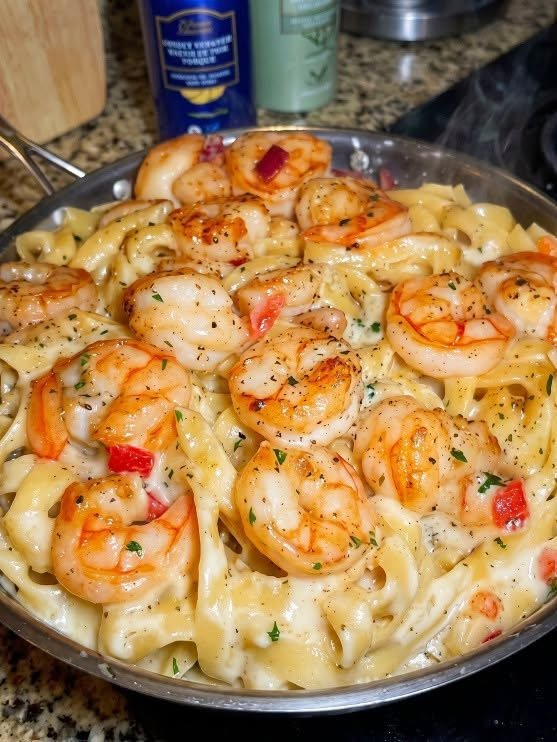
Perfectly cooked shrimp form a loose “C” shape. Shrimp that curl tightly into an “O” shape are often overcooked.
Remove them from the skillet as soon as they become opaque.
Adding wet shrimp to the pan
Excess water prevents browning. It may also cause hot oil to splatter.
Burning the garlic
Garlic cooks rapidly. Add it only after the bell pepper has softened, then stir continuously for approximately 30 seconds.
Boiling the sauce aggressively
A hard boil can cause cream to reduce too quickly and cheese to separate. Maintain gentle heat.
Using shelf-stable Parmesan powder
Powdered Parmesan may not melt into a smooth sauce. A block of real Parmesan provides better flavor and texture.
Forgetting to save pasta water
Plain water can thin the sauce, but starchy pasta water does a better job of helping it cling to the noodles.
Adding all the salt at the beginning
Shrimp, pasta water, and Parmesan all contribute saltiness. Taste the finished dish before making the final adjustment.
Variations and Substitutions
Cajun shrimp pasta
Replace the Italian seasoning and smoked paprika with one to two teaspoons of Cajun seasoning.
Check the salt level of your seasoning blend before adding extra salt.
Creamy lemon shrimp pasta
Add one teaspoon of finely grated lemon zest to the sauce. Finish the dish with one to two tablespoons of fresh lemon juice after removing it from the heat.
Shrimp and spinach pasta
Stir two or three handfuls of fresh baby spinach into the sauce before adding the pasta. Cook only until wilted.
Shrimp and mushroom pasta
Sauté eight ounces of sliced mushrooms in the skillet after removing the shrimp. Allow their moisture to evaporate before adding the garlic and cream.
Tomato cream shrimp pasta
Add two tablespoons of tomato paste with the garlic. Cook it for one minute before pouring in the cream.
Broccoli shrimp pasta
Add small broccoli florets to the pasta water during the final three minutes of cooking. Drain them with the pasta and add both to the sauce.
Gluten-free variation
Use your preferred gluten-free pasta and confirm that all seasonings and packaged ingredients are certified gluten-free when necessary.
Gluten-free pasta water can become especially starchy, so add it gradually.
Lighter variation
Replace part of the heavy cream with broth or half-and-half. The sauce will be less rich and slightly thinner.
Do not boil a lower-fat dairy sauce aggressively because it may separate.
What to Serve With Creamy Garlic Shrimp Pasta
This recipe is rich, so fresh or lightly seasoned side dishes create a pleasant balance.
Try serving it with:
- A simple green salad with lemon vinaigrette
- Roasted asparagus
- Steamed broccoli
- Garlic bread
- Roasted green beans
- Sautéed zucchini
- Tomato and cucumber salad
- Roasted Brussels sprouts
- Crusty bread for collecting the remaining sauce
For a complete seafood-themed meal, naturally link this section to a relevant Easy Seafood Dinner article on your website. If you have a bread category, “garlic bread” is also an excellent contextual link to your homemade garlic bread recipe.
Storage Instructions
Allow the pasta to cool slightly, but do not leave it at room temperature for more than two hours.
Transfer leftovers to a shallow airtight container and refrigerate promptly. For the best texture, eat them within three days.
The sauce will thicken in the refrigerator because the pasta continues absorbing moisture.
If the shrimp develops an unpleasant odor, slimy texture, or other signs of spoilage, discard the leftovers rather than tasting them.
How to Reheat Creamy Shrimp Pasta
The stovetop is the best reheating method.
Place the pasta in a skillet over low heat and add a small splash of milk, cream, or broth. Cover and warm gently, stirring occasionally, until heated through.
Avoid high heat because it can split the cream sauce and overcook the shrimp.
To use a microwave, place one serving in a microwave-safe dish and add a small splash of liquid. Cover loosely and heat in short intervals, stirring between each interval.
Only reheat the amount you intend to eat.
Can You Freeze Creamy Garlic Shrimp Pasta?
Freezing is possible, but it is not recommended for the best quality.
Cream-based sauces may separate after thawing, while cooked shrimp can become rubbery and pasta may soften excessively.
If you decide to freeze it, cool the pasta promptly and place it in an airtight freezer-safe container. Thaw overnight in the refrigerator and reheat gently with additional cream or milk.
For better meal preparation, freeze raw shrimp separately and prepare the pasta and sauce fresh.
Frequently Asked Questions
Can I use precooked shrimp?
Yes, but add precooked shrimp only during the final minute or two. They need to be warmed, not cooked again.
Raw shrimp generally produce a better texture and allow the seasoning to adhere more effectively.
Should I remove the shrimp tails?
That is a personal preference. Tail-on shrimp create an attractive presentation, while tail-off shrimp make the finished pasta easier to eat.
Can I use milk instead of heavy cream?
Whole milk can be used, but it will produce a thinner sauce. A small amount of flour may be needed to thicken it.
Heavy cream creates a richer and more stable result.
Why did my sauce become grainy?
The heat may have been too high when the Parmesan was added, or the cheese may not have melted smoothly.
Remove the pan from direct heat, add a small amount of warm pasta water, and stir gently. Always add finely grated cheese gradually.
Why is my sauce too thick?
Add reserved pasta water, warm milk, or cream one tablespoon at a time until the sauce loosens.
Why is my sauce too thin?
Allow the sauce to simmer gently before adding the pasta. It will also thicken as the Parmesan melts and the pasta absorbs some moisture.
Do not add excessive cheese all at once, as this can make the sauce heavy or grainy.
How do I know when shrimp are cooked?
Cooked shrimp should be opaque, pearly, and firm. They typically curl into a gentle “C” shape.
Do not rely exclusively on cooking time because shrimp size and skillet temperature vary.
Can I make this recipe spicy?
Yes. Increase the red pepper flakes or season the shrimp with Cajun seasoning. Start with a small amount and adjust after tasting.
Can I prepare it in advance?
You can peel the shrimp, grate the Parmesan, chop the vegetables, and measure the seasonings in advance.
For the best sauce and shrimp texture, cook and assemble the pasta shortly before serving.
What pasta shape works best?
Fettuccine, linguine, and tagliatelle are excellent for creamy sauces. Penne and rigatoni are useful alternatives because their hollow centers capture the sauce.
Final Thoughts
This creamy garlic shrimp pasta delivers the comfort of a rich restaurant pasta without requiring complicated preparation. The combination of seared shrimp, fresh garlic, Parmesan, cream, bell pepper, and tender fettuccine creates a satisfying dinner that can be on the table in approximately 30 minutes.
The key is to avoid overcooking the shrimp and to keep the heat gentle when preparing the Parmesan sauce. Reserve your pasta water, add the cheese gradually, and serve the dish while it is freshly prepared and silky.
Once you master the basic recipe, try adding spinach, mushrooms, broccoli, Cajun seasoning, or fresh lemon to create your own variation.
Creamy Garlic Shrimp Pasta Recipe Card
Preparation Time: 15 minutes
Cooking Time: 15 minutes
Total Time: 30 minutes
Servings: 6
Course: Main course
Cuisine: American-Italian inspired
Ingredients
- 12 ounces fettuccine
- 1½ pounds large raw shrimp, peeled and deveined
- 1 tablespoon olive oil
- 3 tablespoons unsalted butter, divided
- 1 teaspoon smoked paprika
- 1½ teaspoons Italian seasoning, divided
- ½ teaspoon salt, plus more for the pasta water
- ¼ teaspoon black pepper, plus more to serve
- 5 garlic cloves, minced
- ½ small red bell pepper, diced
- 1 cup heavy cream
- ¾ cup freshly grated Parmesan
- ½ cup reserved pasta water, plus more as needed
- ¼ teaspoon red pepper flakes, optional
- 2 tablespoons chopped parsley
- 1 tablespoon lemon juice, optional
Instructions
- Season the dried shrimp with paprika, ½ teaspoon Italian seasoning, salt, and pepper.
- Cook the pasta in salted water until al dente. Reserve one cup of pasta water, then drain.
- Heat olive oil and one tablespoon butter in a large skillet over medium-high heat.
- Cook the shrimp for one to two minutes per side. Transfer to a clean plate.
- Reduce the heat to medium. Add the remaining butter and bell pepper. Cook for three to four minutes.
- Add the garlic and optional red pepper flakes. Stir for 30 seconds.
- Add the cream and remaining Italian seasoning. Simmer gently for two to three minutes.
- Reduce the heat and gradually stir in the Parmesan.
- Add ¼ cup pasta water, followed by the drained pasta. Toss well.
- Return the shrimp and cook for approximately one minute.
- Add parsley and optional lemon juice. Adjust the seasoning and serve immediately.