
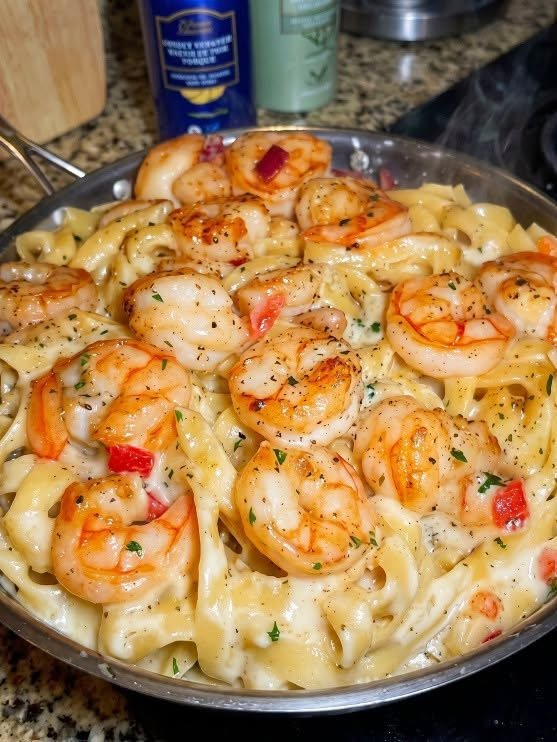
How to Thaw Frozen Shrimp Safely
The simplest method is to thaw frozen shrimp overnight in the refrigerator.
For a faster option, keep the shrimp in a sealed bag and submerge the bag in cold water. Change the water as needed until the shrimp are thawed. Do not leave seafood at room temperature for an extended period.
Once thawed, pat the shrimp dry with paper towels. This step is essential because dry shrimp sear more effectively.
Avoid thawing shrimp in hot water. The exterior may begin cooking while the center remains frozen, resulting in an uneven texture.
How to Make Creamy Garlic Shrimp Pasta
Step 1: Prepare the shrimp
If the shrimp still have shells or tails, remove them according to your preference. Leaving the tails attached can create an attractive presentation, but removing them makes the pasta easier to eat.
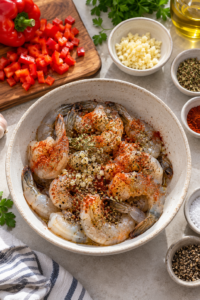
Pat the shrimp dry with paper towels. Place them in a bowl and season with Italian seasoning, smoked paprika, salt, and black pepper. Toss until evenly coated.
Step 2: Cook the pasta
Bring a large pot of generously salted water to a boil. Add the fettuccine and cook until al dente according to the package directions.
Before draining, carefully reserve at least one cup of pasta water. You may not need all of it, but having extra gives you more control over the sauce.
Drain the pasta without rinsing it. Rinsing removes surface starch that helps the cream sauce adhere to the noodles.
Step 3: Sear the shrimp
While the pasta cooks, heat the olive oil and one tablespoon of butter in a large skillet over medium-high heat.
Arrange the shrimp in a single layer. Avoid crowding the skillet; cook them in two batches if necessary.
Sear for approximately one to two minutes on the first side. Turn and cook for another one to two minutes, just until the shrimp are opaque and lightly golden.
Transfer the shrimp to a clean plate. They will warm through again when added to the finished sauce.
For seafood safety, cook shrimp until the flesh is firm, pearly, and opaque. You can review the U.S. government’s safe minimum internal temperature guidance for additional food-handling information.
Step 4: Sauté the bell pepper
Reduce the heat to medium. Add two tablespoons of butter to the same skillet.
Stir in the diced red bell pepper and cook for three to four minutes, or until slightly softened.
Scrape the flavorful browned bits from the bottom of the skillet with a wooden spoon. They will add more depth to the sauce.
Step 5: Add the garlic
Add the minced garlic and optional red pepper flakes. Cook for approximately 30 seconds, stirring constantly.
The garlic should smell fragrant but should not become dark brown. If the skillet is extremely hot, reduce the heat before adding it.
Step 6: Build the cream sauce
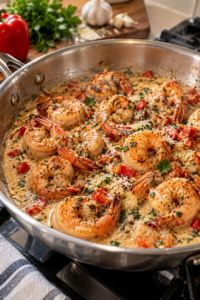
Pour in the heavy cream and add the Italian seasoning. Stir gently and bring the mixture to a low simmer.
Do not allow the cream to boil rapidly. A gentle simmer helps the sauce remain smooth.
Cook for two to three minutes, stirring occasionally, until it begins to thicken slightly.
Step 7: Add the Parmesan
Reduce the heat to low. Add the grated Parmesan in small amounts, stirring well after each addition.
Continue stirring until the cheese has melted and the sauce is smooth. Add approximately ¼ cup reserved pasta water to loosen the consistency.
The sauce may appear slightly thin at this stage, but it will thicken as it coats the pasta and cools.
Step 8: Combine the pasta and sauce
Add the drained fettuccine to the skillet. Use tongs to toss the pasta until every strand is coated in the cream sauce.
Add more pasta water, one or two tablespoons at a time, until the sauce reaches your preferred consistency.
Step 9: Return the shrimp
Add the cooked shrimp and any juices collected on the plate. Gently toss and cook for one additional minute, just until the shrimp are warmed through.
Avoid simmering them for too long because they have already been cooked.
Step 10: Finish and serve
Remove the skillet from the heat. Add the chopped parsley and optional lemon juice.
Taste before adding more salt, since Parmesan is naturally salty. Finish with freshly ground black pepper and additional Parmesan.
Serve immediately while the sauce is creamy.
- Link “simple green salad” in the serving section to your salad category or a specific side-salad recipe.
- Link “garlic bread” to your homemade garlic bread recipe.
- Link “easy seafood dinner” to a seafood recipe collection.
- Link “30-minute dinner” in the introduction to your quick-dinner category.
- Link “Cajun shrimp pasta” to a related Cajun pasta article if you publish one.
Important Tips for the Best Results
Dry the shrimp thoroughly
Wet shrimp steam instead of sear. Patting them dry promotes better browning and prevents excess water from diluting the sauce.
Do not overcrowd the skillet
When too many shrimp are placed in a small pan, they release moisture and lower the skillet’s temperature. Cook them in batches when necessary.
Grate your own Parmesan
Freshly grated cheese melts more consistently than pre-shredded cheese. Use the fine side of a grater so it incorporates quickly.
Keep the heat low when adding cheese
High heat can make a cream-and-cheese sauce separate or become grainy. Reduce the heat before stirring in the Parmesan.
Reserve more pasta water than you think you need
Cream sauces continue thickening after the pasta is combined with them. A splash of warm pasta water can restore the silky texture before serving.
Serve the pasta promptly
This dish is best directly from the skillet. As it sits, the noodles continue absorbing the sauce.
If necessary, loosen the pasta with another splash of pasta water or warm cream.