
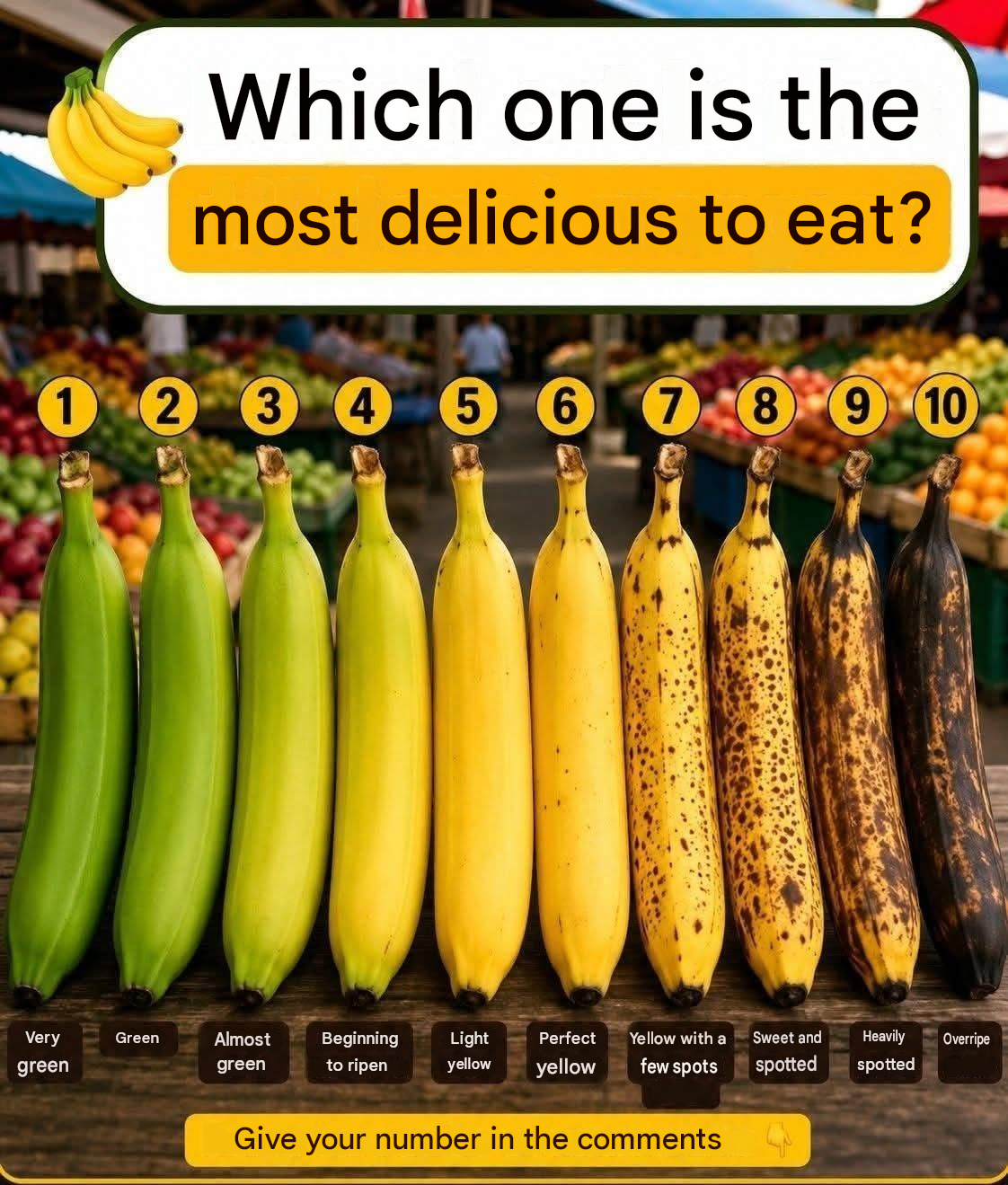
A Simple Way to Choose Your Banana
Next time you’re at the grocery store, don’t automatically reach for the greenest or most perfectly yellow banana.
Ask yourself what you’ll use it for.
Planning to eat it tomorrow?
Choose yellow.
Want bananas that will last several days?
Choose greener ones.
Making banana bread this weekend?
Spotted bananas may be perfect.
Looking for a less sweet, firmer fruit?
Try one that is still partly green.
This simple approach can reduce food waste because you can buy bananas at different stages and use them as they ripen.
What About People With Diabetes?
People with diabetes don’t necessarily need to eliminate bananas.
Bananas contain carbohydrates, so portion size and overall meal composition matter.
The ripeness of the banana may also influence how quickly its carbohydrates are available because starch changes during ripening.
However, individual blood glucose responses can differ substantially.
If you have diabetes, use the advice of your healthcare professional and, when appropriate, your own glucose measurements to understand how different foods affect you.
Don’t rely on viral posts claiming that green bananas “cure” diabetes or that ripe bananas are dangerous.
Neither statement is supported by good evidence.
Frequently Asked Questions
Which banana ripeness is healthiest?
There is no single healthiest ripeness for everyone. Green bananas contain more resistant starch, while ripe bananas are sweeter and softer. Your best choice depends on your nutritional needs and preference. PubMed
Are green bananas healthier than yellow bananas?
Not necessarily. Green bananas have more resistant starch, while yellow bananas are easier to eat and provide naturally occurring sugars. Both can fit into a healthy diet.
Are bananas with brown spots safe to eat?
Usually, yes, if the banana has no mold, rotten smell, leaking liquid, or other signs of spoilage.
Do ripe bananas contain more sugar?
As bananas ripen, some of their starch is converted into simpler sugars, which makes them taste sweeter. PubMed
Which banana is best for smoothies?
Very ripe bananas are often ideal because they are soft, sweet, and blend easily.
Which banana is best for banana bread?
Bananas with substantial brown spotting are usually excellent for baking because they are soft and naturally sweet.
Can bananas help digestion?
Bananas can contribute carbohydrates and, depending on ripeness, resistant starch. However, digestive responses vary from person to person.
Should I avoid bananas if I have diabetes?
Not automatically. Bananas can be included in many eating patterns for people with diabetes, but carbohydrate portions and individual glucose responses matter.
Can I eat an overripe banana?
If it is simply very soft and brown but has no signs of spoilage, it can still be used. If it has mold or an unpleasant rotten smell, discard it.
Final Verdict: Which Banana Should You Choose?
So, which of these bananas is best for you and your health?
There isn’t one answer for everybody.
If your priority is resistant starch, a greener banana may be the better choice.
If you want a sweet and convenient snack, choose a yellow banana.
If you’re preparing smoothies or banana bread, go for a ripe or spotted banana.
The biggest lesson is that ripeness changes the banana—it doesn’t turn a nutritious fruit into a bad food.
Bananas at different stages provide different textures, sweetness levels, and carbohydrate characteristics. Research confirms that ripening changes the starch composition of bananas, particularly the amount and behavior of resistant starch. PubMed
So instead of asking whether green or ripe bananas are “good” or “bad,” choose the stage that fits your needs.
And remember: no single fruit can replace a balanced diet.
For reliable nutrition information, you can check the USDA FoodData Central database for detailed food composition information. USDA FoodData Central
If you enjoy practical food and nutrition tips, you can also read our [healthy breakfast ideas] for more simple ways to include nutritious foods in your daily routine.