
Drinking Water in the Morning and Heart Health: What the Evidence Says
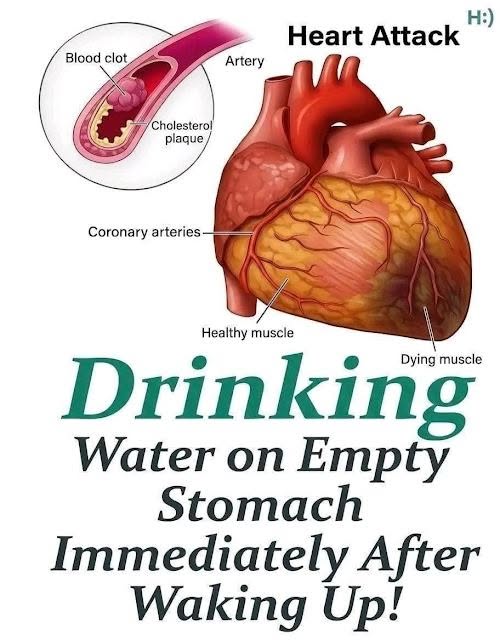
A glass of water after waking can be a pleasant way to start the day. After several hours without a drink, you may feel thirsty, and water is a simple way to respond. That everyday habit is the subject of a much bigger claim in the image you shared: its heart attack diagram appears beside the instruction to drink water on an empty stomach immediately after waking.
Drinking water in the morning has not been shown to prevent a heart attack because of the time you drink it or because your stomach is empty. Adequate hydration matters for normal body function, including circulation. It does not clear a blocked coronary artery, replace heart disease prevention, or treat symptoms of a heart attack. The distinction is essential when an image presents a familiar habit next to a medical emergency. The American Heart Association describes hydration as helpful for the body and heart’s normal work; its hydration guidance does not present a morning glass as heart attack protection. www.heart.org

Vitamin D Deficiency and Bone Pain: 7 Key Facts
This article explains what drinking water in the morning can reasonably offer, why the claim in the image is misleading, and which steps deserve attention if you want to care for your heart. It also covers the warning signs that call for immediate medical help.
If you or someone with you may be having a heart attack, call the local emergency number now. Do not wait to drink water, finish reading, or see whether the symptoms pass. In the US and Canada, call 911; in the UK, call 999 or 112. heart.org
What the Image Claims—and What It Leaves Out

The image contains two very different pieces of information. Its diagram illustrates a coronary artery affected by plaque and a blood clot, with part of the heart muscle labeled as damaged. Beneath that medical illustration, large text urges the reader to drink water immediately after waking, on an empty stomach.
The placement suggests a connection between the morning-water instruction and the heart attack diagram. Yet the graphic offers no study, clinical guideline, or explanation establishing that this timing prevents a clot or protects the heart muscle.
A heart attack happens when blood flow to part of the heart muscle is severely reduced or blocked. It requires urgent medical assessment and treatment. A glass of water cannot reopen an obstructed artery. The NHS explanation of heart attacks describes the condition and directs people with possible symptoms to seek emergency help. www.nhs.uk
That does not mean water is unimportant. It means the claim must be kept in proportion. Drinking water in the morning may help you meet your fluid needs across the day. The image gives readers reason to believe it has a specific effect on heart attacks that the cited medical guidance does not establish.
Does Drinking Water in the Morning Help Your Heart?
Water helps the body maintain normal circulation and regulate temperature. The American Heart Association explains that staying adequately hydrated helps the heart pump blood through the body. This supports the everyday case for drinking enough fluids, particularly when you are thirsty, active, or spending time in hot weather. www.heart.org
The evidence cited there concerns hydration, rather than a requirement to drink at one precise hour. You can drink water when you wake up, with breakfast, later in the morning, and throughout the day according to your needs. A single morning glass is one part of your daily fluid intake.
Some people find a glass by the bed or kitchen sink useful because it helps them remember to drink. Others prefer water with breakfast. Both are reasonable routines. There is no need to force yourself to drink a large amount immediately upon waking in pursuit of a heart benefit.
The “empty stomach” part of the image also deserves scrutiny. It may make the instruction sound more scientific, but the image supplies no evidence that water needs an empty stomach to support hydration or prevent a heart attack.