
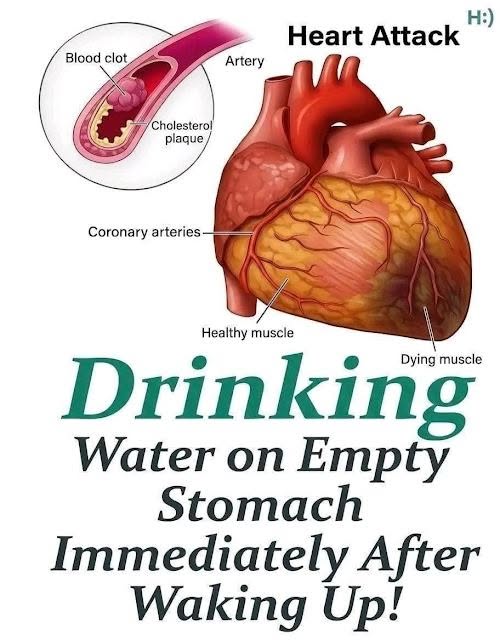
Five Vital Facts About Morning Water and Heart Health
1. Staying Hydrated Is Useful; the Timing Is Flexible
Your body needs fluids throughout the day. A morning drink can contribute to that need, especially if you wake up thirsty. Water is a practical choice because it hydrates without added sugar.
Needs differ with activity, weather, body size, diet, medications, and medical conditions. That is one reason a blanket instruction to drink a fixed amount immediately after waking is unhelpful. Pay attention to your circumstances and to any guidance from your healthcare professional.
A simple approach is to make water readily available and drink regularly over the day. If drinking water in the morning makes that easier, you can keep the habit for that reason.
2. Water Does Not Treat a Heart Attack
The diagram in the image shows a serious interruption of blood flow. If someone has possible heart attack symptoms, drinking water must not delay an emergency call.
Medical teams can assess the cause of symptoms and start appropriate treatment. The sooner help arrives, the sooner that assessment can begin. The American Heart Association urges people who notice heart attack warning signs to call emergency services. heart.org
Even if symptoms start shortly after waking, the response is the same: seek emergency help. Morning timing does not make water an emergency remedy.
3. Heart Risk Is Bigger Than One Daily Habit
Long-term heart health involves several connected factors. The American Heart Association’s Life’s Essential 8 includes nutrition, physical activity, avoiding tobacco, sleep, weight, cholesterol, blood sugar, and blood pressure. heart.org
A person can drink water every morning and still have high blood pressure or cholesterol that needs attention. Likewise, missing a morning glass does not determine whether that person will have a heart attack. It is more useful to understand your health factors, discuss them with a clinician when appropriate, and follow an individual care plan.
4. More Water Is Not Always Better
The image gives an unconditional instruction, yet some people have been told to limit their fluid intake. Certain people living with heart failure, for example, may receive a specific daily fluid limit from their care team. NHS patient guidance notes that these limits are individualized.
If a clinician has given you a fluid restriction, follow that plan instead of an instruction in a social media graphic. The same applies if you have another condition or take medication that affects how you manage fluids.
5. Recognizing Symptoms Can Save Crucial Time
The most useful response to a heart attack graphic is to learn what symptoms may look like and what to do if they appear. Chest discomfort is common, but symptoms can include discomfort in the arms, back, neck, jaw, or stomach; shortness of breath; and other concerning signs.
Women can also experience symptoms such as unusual tiredness, upset stomach, or upper-back discomfort. These symptoms are not a reason to dismiss possible heart trouble because they do not resemble a dramatic movie scene. heart.org
If you suspect a heart attack, call emergency services. An online checklist cannot safely rule it out.
What Are the Warning Signs of a Heart Attack?
Possible warning signs include:
- Pressure, squeezing, fullness, pain, or other discomfort in the center of the chest.
- Pain or discomfort in one or both arms, the back, neck, jaw, or stomach.
- Shortness of breath, which may occur with or without chest discomfort.
- Other concerning symptoms such as a cold sweat, nausea, or lightheadedness.
Symptoms may last more than a few minutes, or they may ease and return. Not everyone experiences the same combination. The American Heart Association provides a fuller guide to heart attack warning signs. heart.org
A person might be tempted to explain chest discomfort away as indigestion, fatigue, or dehydration. Symptoms have many possible causes, but guessing at home can cost time when the cause is serious. Seek urgent medical help if a heart attack is possible.
Do not drive yourself to the hospital if you think you are having a heart attack. The NHS specifically advises calling emergency services rather than driving yourself. www.nhs.uk