
Slow Cooker Corn on the Cob with Butter and Herbs
When the stove is already busy, corn on the cob is an easy side dish to hand over to the slow cooker. Add fresh ears, a little water, butter, and seasoning; put on the lid; and let the corn cook while you prepare the rest of dinner.
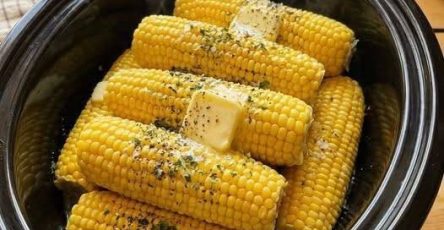
The photo you shared shows bright yellow corn arranged in a slow cooker with pats of melting butter and a scattering of herbs and pepper. It is a simple, appealing way to serve corn, especially when several people are coming to the table. The exact quantities and cooking settings cannot be determined from a photograph, so the measured recipe below is an image-inspired version of the dish.
Easy Amish Beef and Bean Casserole Recipe – Hearty Oven-Baked Comfort Food
This slow cooker corn on the cob comes out tender and buttery without needing a large pot of boiling water. Cutting the ears in half, as shown in the photo, helps them fit into the cooker and makes them easier to serve. Leave them whole if your cooker is large enough and you prefer full-length ears.
Why You’ll Love This Recipe
- It frees up a burner. Your stovetop stays available for the main dish and other sides.
- The preparation is quick. Shuck the corn, arrange it in the cooker, and add a few simple ingredients.
- It is easy to serve a group. Half ears fit neatly on plates, and guests can take one or two pieces.
- The flavor is flexible. Keep it buttery and simple or add garlic, lemon, or a little spice.
- It works with everyday dinners. Corn is at home beside grilled food, baked fish, chicken, or a bean-based meal.
The slow cooker is especially helpful when your meal has several moving parts. Once the corn is tender, you can move on to seasoning and serving without draining a heavy pot.
What Makes This Slow Cooker Corn on the Cob Special?
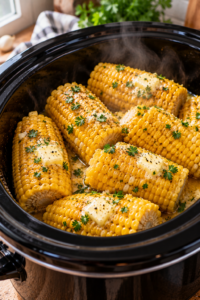
The photograph’s appeal is its simplicity: plump yellow kernels, visible butter, and herbs scattered over the top. This recipe keeps those features while giving you specific amounts and a reliable way to check doneness.
A small amount of water in the bottom of the cooker creates a moist cooking environment. The corn does not need to be submerged. Butter melts over the ears as they warm, and a final toss coats the kernels more evenly before serving.
Unlike a pot of rapidly boiling water, slow cookers vary considerably in temperature and size. That is why the cooking times below are ranges. Begin checking at the early end, then remove the corn when the kernels are hot and tender to your liking. This protects its pleasant bite.
Ingredients
Yield: 6 servings
Equipment: 5- to 6-quart slow cooker
- 6 fresh ears of corn, husks and silk removed
- ½ cup (120 ml) water
- 4 tablespoons (57 g) unsalted butter, divided
- ½ teaspoon fine salt, plus more to taste
- ¼ teaspoon freshly ground black pepper
- 1 teaspoon dried parsley or 1 tablespoon finely chopped fresh parsley
- Optional: ½ teaspoon dried thyme or a few fresh thyme leaves
For serving, you may also want a little extra butter or a lemon wedge. Those additions are optional; the corn has plenty of flavor with the basic seasoning.
Choosing Good Corn
Fresh ears should feel full along their length, with kernels that are closely packed. Husks are usually a useful clue when you buy corn still wrapped: look for husks that appear fresh and ears that do not feel unusually dry or light.
You do not need to pull back every husk in the shop. Once home, shuck the corn and remove the silk as thoroughly as you can. A few fine strands are harmless but can be annoying to eat. A clean, slightly damp towel can help catch any stubborn threads.
Corn is at its most enjoyable when cooked soon after purchase. If you need to wait, keep the unshucked ears refrigerated until you are ready to prepare them.
Why Use Unsalted Butter?
Unsalted butter lets you control the final seasoning. If you only have salted butter, use it and reduce the added salt at first. Taste a cooked piece before adding more.
The butter in the photo appears in distinct pats on top of the corn. You can arrange it that way for the same look, then toss the ears gently just before serving so every piece gets a little.
Fresh or Dried Herbs?
Dried parsley is convenient and matches the speckled finish in the reference image. Fresh parsley gives a brighter flavor when sprinkled on at the end. If using thyme, keep the amount modest so it complements the sweet corn rather than taking over.