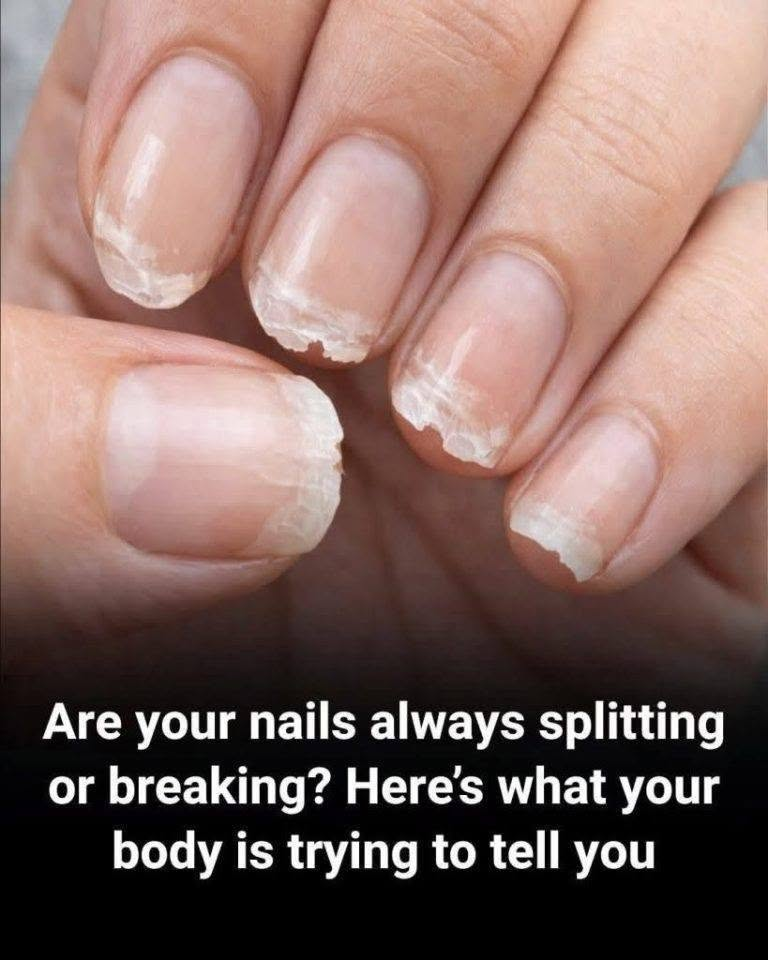
When your fingernails continually peel, split, or break at the tips, it is easy to assume that your body must be warning you about a vitamin deficiency or serious illness. However, splitting and breaking nails are more commonly caused by repeated water exposure, household chemicals, nail treatments, physical trauma, or simple dryness.
Nails can sometimes reflect an underlying health condition, but their appearance alone cannot diagnose one. A single photograph, social-media post, or online checklist cannot determine whether you have anemia, thyroid disease, a fungal infection, or a nutritional deficiency.
The encouraging news is that many cases of brittle nails improve with consistent protection and gentle nail care. Because fingernails grow slowly, though, visible improvement usually requires patience. This guide explains the possible causes, practical ways to protect your nails, common mistakes to avoid, and signs that should be evaluated by a healthcare professional.
Important: This article provides general information and is not a diagnosis. Persistent, painful, discolored, or suddenly changing nails should be assessed by a qualified medical professional.
Examine persistent peeling, cracking, or discoloration before covering the nails with polish.
What Do Splitting and Breaking Nails Look Like?
Brittle nails do not always look the same. You may notice:
Thin layers peeling from the free edge
Small cracks developing along the nail tip
Nails that bend and tear easily
Rough, frayed, or uneven edges
Vertical splits extending farther into the nail
Nails that feel unusually soft or dry
Repeated breakage before the nails can grow
Changes affecting one nail or several nails
Horizontal peeling at the tip is sometimes called onychoschizia, while lengthwise splitting may be described as onychorrhexis. Both patterns can occur together.
The location and number of affected nails matter. Damage involving one nail may follow a local injury, picking, or infection. Similar changes across several nails may be related to repeated exposure, a skin condition, medication, aging, or—less commonly—an underlying health issue.
Are Splitting Nails Always a Sign of a Deficiency?
No. Splitting nails do not automatically mean that you are deficient in iron, calcium, biotin, or another nutrient.
Nutrition can influence nail health, particularly when someone has a confirmed deficiency, a highly restrictive diet, difficulty absorbing nutrients, or another medical condition. However, everyday environmental damage is a much more frequent explanation.
Avoid diagnosing a deficiency based only on your nails or taking high-dose supplements without medical advice. Blood tests and a review of your symptoms are more reliable than nail appearance alone.
Biotin supplements are often marketed for stronger nails, but the evidence is limited, particularly for people who are not deficient. High doses can also interfere with some laboratory test results. Tell your doctor or laboratory staff about every supplement you take before having blood work.