
Can You Eat Steak Immediately After Cooking?
You can, but allowing it to rest is generally useful.
Resting gives the meat time to settle after cooking.
The USDA’s food-safety recommendation is to allow beef steaks, chops, and roasts to rest for at least three minutes after reaching 145°F.
From a culinary perspective, resting can also make the eating experience better by reducing the amount of moisture immediately escaping during slicing.
What About Ground Beef?
Ground beef is different from a whole steak.
Grinding meat distributes surface bacteria throughout the product.
For that reason, the USDA recommends cooking ground beef to 160°F (71.1°C) as measured with a food thermometer.
This is important because people sometimes apply steak rules to burgers.
A pink burger should not be judged by color alone.
For ground beef, temperature is particularly important.
What About Mechanically Tenderized Steak?
Mechanically tenderized beef can require particular attention because the process can move surface bacteria deeper into the meat.
The USDA states that mechanically tenderized beef steaks should reach the same minimum internal temperature of 145°F and receive a three-minute rest.
If you are unsure whether a packaged steak has been mechanically tenderized, check the label or ask the butcher.
The Simple Answer to the Viral Steak Question
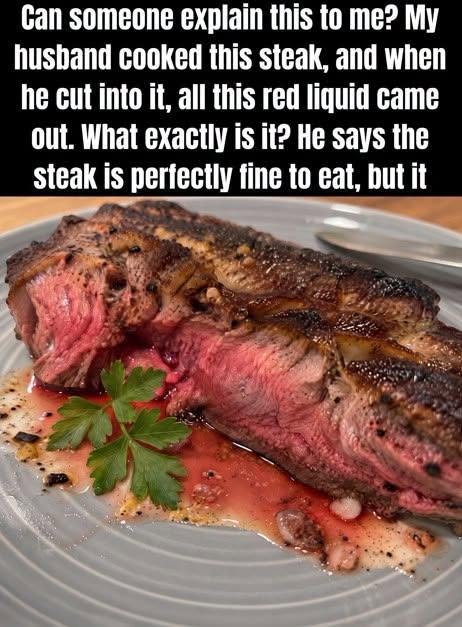
So, if you cut into a steak and red liquid comes out, what are you seeing?
In most cases, you’re seeing natural moisture from the meat colored by myoglobin and related meat pigments, rather than a plate full of blood.
The appearance is normal and can be especially noticeable in steaks cooked to lower levels of doneness.
But that does not mean the steak’s safety can be judged by its appearance.
The most important practical step is to use a food thermometer.
For whole cuts of beef, the USDA recommends at least 145°F (62.8°C) followed by a three-minute rest.
Frequently Asked Questions
Is the red liquid in steak blood?
No. The red liquid is generally natural moisture from the meat combined with proteins and pigments such as myoglobin. The USDA specifically explains that the liquid associated with fresh beef is not simply blood.
What makes steak red?
Myoglobin is the primary protein responsible for much of the red color in meat. Oxygen exposure changes the form of the pigment and therefore changes the appearance.
Is red juice in steak normal?
Yes. Red or pink liquid can naturally appear when steak is cut, particularly when it has been cooked to a lower internal temperature.
Does red liquid mean steak is raw?
Not necessarily. The color of the liquid and the meat cannot reliably determine whether a steak has reached a safe temperature.
What temperature should steak reach?
The USDA recommends that whole beef steaks, chops, and roasts reach a minimum internal temperature of 145°F (62.8°C), followed by at least three minutes of rest.
Why does rare steak have more red liquid?
A steak cooked to a lower internal temperature retains more of its original muscle characteristics and moisture, making reddish or pink liquid more noticeable.
Why does steak sometimes look purple?
Beef that has not been exposed to much oxygen can have a purplish-red appearance because of the state of its myoglobin. Exposure to oxygen can make it appear brighter red.
Does brown beef mean it is spoiled?
Not automatically. Color changes can occur naturally. However, unpleasant odors, slimy or tacky texture, and other spoilage signs should be taken seriously.
Is pink steak always unsafe?
No. Pink color alone is not a reliable indicator of safety. Use a food thermometer to determine whether the steak has reached the recommended temperature.
What temperature should ground beef reach?
The USDA recommends an internal temperature of 160°F (71.1°C) for ground beef.
Why should steak rest after cooking?
Resting allows the steak to sit after reaching the cooking temperature and can reduce the amount of moisture released immediately when it is sliced. The USDA also recommends a three-minute rest for food-safety purposes after whole beef cuts reach 145°F.
Conclusion
The next time you cut into a steak and see red liquid spreading across your plate, there is no need to automatically assume that you are looking at blood.
The red appearance is largely connected to myoglobin, a natural protein found in muscle tissue. The liquid itself is primarily natural moisture from the meat combined with proteins and pigments.
The most important lesson, however, is that color is not a reliable food-safety test.
A steak can look pink and still have reached an appropriate temperature, while appearance alone cannot guarantee that meat has been cooked safely. For whole cuts of beef, the USDA recommends reaching at least 145°F (62.8°C) and resting the meat for three minutes.
So the mysterious red liquid is much less mysterious once you understand myoglobin and meat chemistry.
And if you ever see someone staring nervously at the red juices on their steak, you now know exactly what is happening.