Red Liquid in Steak: The Truth That May Surprise You
Introduction
- “Many people wonder what the red liquid in steak actually is.”
- ## What Does the Red Liquid in Steak Really Mean?
- ## Is the Red Liquid in Steak Actually Blood?
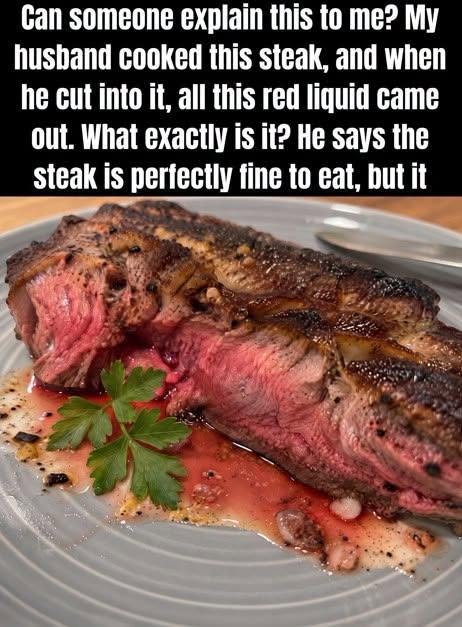
Have you ever cut into a beautifully cooked steak and noticed a pool of red liquid spreading across the plate?
For many people, the first thought is simple: Is that blood?
It can certainly look like blood, especially when the steak is cooked to a rare or medium-rare level. The reddish liquid may collect underneath the meat, run onto the plate, or appear when the steak is sliced. This can make some people wonder whether the steak is undercooked or whether something unusual happened during cooking.
The good news is that the red liquid in steak is generally not blood.
The main reason for the red color is a protein called myoglobin, which is naturally present in muscle tissue. According to the U.S. Department of Agriculture’s Food Safety and Inspection Service (USDA FSIS), myoglobin is responsible for most of the red color associated with meat.
Understanding this difference can make the appearance of a steak much less confusing.
However, there is another important point: the color or amount of red liquid cannot tell you by itself whether a steak is safe to eat. Food safety depends on the internal temperature reached during cooking, not simply on whether the center looks pink or red. The USDA recommends cooking beef steaks, chops, and roasts to a minimum internal temperature of 145°F (62.8°C) and allowing them to rest for at least three minutes.
So what exactly is happening when that red liquid comes out?
What Is the Red Liquid in Steak?
The red liquid in steak is primarily a mixture of water and natural meat proteins, with myoglobin playing an important role in the color.
Beef contains a large amount of water. During cooking, heat changes the structure of muscle proteins and causes some moisture to move out of the meat.
Because myoglobin is naturally present in muscle tissue, the moisture can appear red, pink, or reddish-brown depending on the steak, its exposure to oxygen, and its cooking stage.
The USDA explains that the red liquid found in fresh beef is commonly mistaken for blood. Blood is removed from cattle during slaughter, although a small amount remains within muscle tissue. Much of the liquid associated with fresh beef is natural moisture combined with protein.
That is why seeing red liquid on your plate does not automatically mean you are eating blood.
What Is Myoglobin?
Myoglobin is a protein found in muscle tissue.
Its role is related to storing and transporting oxygen within muscle cells. The amount of myoglobin present contributes significantly to the color of different meats.
Beef generally contains more myoglobin than poultry, which is one reason beef is classified as red meat.
The USDA explains that myoglobin gives meat much of its characteristic red coloration. When meat is exposed to oxygen, myoglobin can form oxymyoglobin, producing a brighter red color.
This chemistry explains why meat can appear different shades of red, purple, pink, and brown without those colors necessarily indicating spoilage.