
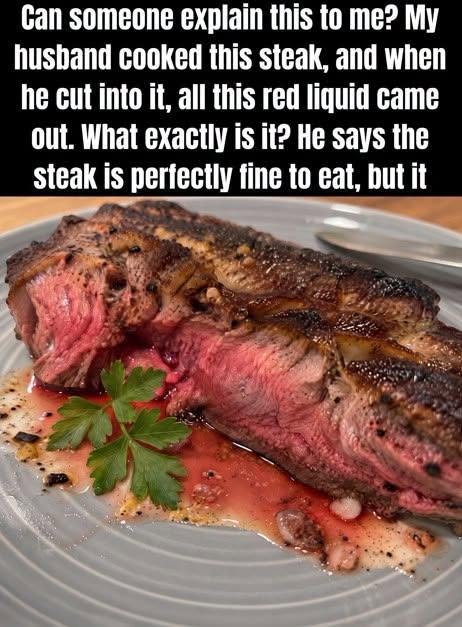
Why Steak Can Stay Pink
A steak can remain pink even after it has been cooked substantially.
The color of meat is influenced by myoglobin and chemical changes that occur during cooking.
The USDA notes that meat color can be affected by several factors, including the amount of myoglobin and the chemical state of that protein.
This means that two steaks cooked to similar temperatures may not necessarily look identical.
One may look pinker than another.
One may release more liquid.
Another may appear darker.
That does not automatically mean one is unsafe.
Why Some Steaks Have More Juice Than Others
The amount of visible liquid can vary significantly.
Factors include:
Steak Thickness
A thick steak may retain more moisture in its center.
Cooking Temperature
Higher heat can change the surface and interior differently depending on cooking time.
Cooking Time
Longer cooking generally changes the proteins and moisture distribution.
Cut of Beef
Different cuts contain different amounts of fat, connective tissue, and muscle structure.
Resting Time
Allowing meat to rest before slicing can influence how much liquid immediately appears on the plate.
Slicing Technique
Cutting into the steak immediately can release moisture rapidly.
These factors can all contribute to the appearance of the liquid.
Why Should You Let Steak Rest?
Resting steak after cooking is common culinary practice.
When meat comes off the heat, its temperature and internal moisture distribution continue changing.
Allowing it to rest before slicing can help reduce the amount of liquid immediately escaping when you cut into it.
The USDA also specifically recommends a three-minute rest after a beef steak reaches its minimum safe internal temperature.
Resting can therefore have both food-safety and eating-quality relevance.
Does More Red Liquid Mean Better Steak?
Not necessarily.
The amount of red liquid is not a reliable measurement of steak quality.
A high-quality steak may release very little visible juice.
Another perfectly normal steak may release more.
What matters for quality includes factors such as:
- Cut
- Freshness
- Marbling
- Cooking technique
- Seasoning
- Temperature
- Resting
- Personal preference
Therefore, judging a steak solely by the amount of red liquid on the plate can be misleading.
What Does Myoglobin Do?
Myoglobin has an important biological function.
It helps muscle tissue store oxygen.
Because muscles that are used more actively require more oxygen, they can contain different concentrations of myoglobin.
This is one reason different muscles and different animals can have different colors.
The USDA notes that muscle activity and the age of the animal can influence myoglobin levels and therefore meat color.
This is why beef does not always have exactly the same shade.
Why Beef Is Called Red Meat
Beef is commonly classified as red meat because it contains more myoglobin than meats such as chicken or fish.
The USDA explains that myoglobin concentration contributes to the red color of meat.
The term “red meat” therefore has a biological explanation rather than simply describing how the meat looks after cooking.
What Happens to Myoglobin When Meat Meets Oxygen?
Oxygen changes the appearance of myoglobin.
In meat that has not been exposed to oxygen, myoglobin can give the muscle a darker purplish-red appearance.
When oxygen reaches the protein, it forms oxymyoglobin, which produces a brighter red color.
With continued oxidation, another pigment called metmyoglobin can develop, giving meat a brownish-red appearance.
These changes are part of normal meat chemistry.
They are one reason why meat color can change during storage and preparation.
Does Brown Beef Always Mean It Is Spoiled?
No.
Color alone is not enough to determine whether beef has spoiled.
The USDA explains that changes in color can occur naturally during storage and do not automatically indicate spoilage.
However, other warning signs matter.
Beef that has developed an unusual odor, a sticky or tacky texture, or a slimy surface should not be used.
In other words, color should be considered alongside other signs and proper storage history.
How to Tell If Beef May Have Spoiled
When checking raw beef, consider several factors.
Odor
An unpleasant or unusual smell can be a warning sign.
Texture
Sticky, tacky, or slimy meat may indicate spoilage.
Storage
Meat should have been kept at appropriate refrigeration temperatures.
Packaging
Damaged or leaking packaging can raise concerns.
Date Information
Package dates can provide useful information about quality and handling, but they should not be treated as the only measure of safety.
When in doubt about meat that appears questionable, it is safer not to consume it.
Red Liquid in Steak vs. Raw Beef Juice
It is useful to distinguish between liquid appearing from a cooked steak and liquid found in packaged raw beef.
In packaged fresh beef, the liquid may be a combination of natural moisture and proteins.
During cooking, additional moisture can leave the muscle as heat changes the structure of the meat.
In both cases, the red appearance can be strongly influenced by myoglobin.
That is why the liquid can look much more dramatic than people expect.
Does Freezing Change Beef Color?
Yes.
Freezing and storage can cause changes in meat color.
The USDA explains that color changes in frozen meat are normal and, by themselves, do not necessarily indicate that the meat has become unsafe.
Proper packaging can help minimize some changes associated with exposure to air.
Freezer burn can also affect appearance and quality.
While freezer-burned areas may become dry and unpleasant in texture, the USDA notes that freezer burn does not automatically make properly frozen meat unsafe.
Why Steak Looks Different After Slicing
A whole steak can look relatively dark on the outside and noticeably red inside.
Once you slice it, the interior is exposed to oxygen.
The color can change as myoglobin reacts with oxygen.
This is another normal chemical process.
It is one reason a steak can look different only a few minutes after being cut.
Why Restaurants Ask About Steak Doneness
When ordering steak, restaurants commonly ask customers how they want it cooked.
Common descriptions include:
- Rare
- Medium rare
- Medium
- Medium well
- Well done
These terms describe preferred levels of doneness and texture.
However, they should not be treated as precise food-safety measurements.
Cooking equipment, steak thickness, and cooking techniques vary.
A food thermometer is more reliable for determining whether the steak has reached the recommended minimum internal temperature.
Should You Avoid Pink Steak?
The answer depends on what you mean by “pink.”
Pink color itself is not a reliable indicator of safety.
A steak can remain pink for several reasons.
What matters from a food-safety standpoint is whether the meat reached the recommended internal temperature.
The USDA advises consumers not to rely on color alone when determining doneness.
If you want to follow USDA recommendations, use a thermometer and cook whole cuts of beef to at least 145°F, followed by a three-minute rest.
Why a Food Thermometer Is So Useful
A thermometer removes much of the guesswork.
Instead of asking:
“Does this look cooked?”
you can ask:
“Has the center reached the recommended temperature?”
That is a much more reliable food-safety question.
Visual appearance can be affected by myoglobin, oxygen exposure, cooking method, and many other factors.
Temperature provides a measurable number.
Common Myths About Red Steak Juice
Myth 1: The Red Liquid Is Blood
The liquid is generally not simply blood. Natural moisture and proteins, particularly myoglobin-related coloration, are responsible for much of the appearance.
Myth 2: Red Juice Means the Steak Is Unsafe
Not necessarily.
The liquid’s color cannot determine safety by itself.
Myth 3: Brown Steak Is Always Safe
Not necessarily.
Color is not a reliable safety test.
Myth 4: Pink Steak Is Always Unsafe
Again, color alone does not determine safety.
Myth 5: More Juice Means Better Quality
There is no simple rule connecting the amount of visible juice with steak quality.
How to Cook Steak More Consistently
If you want a predictable result, focus on temperature and technique.
Start with a properly prepared steak.
Season according to your preference.
Use a suitable cooking surface such as a pan, grill, or oven.
Cook until the steak reaches your desired level while monitoring its internal temperature.
Then allow it to rest before slicing.
This approach gives you much more control than relying on color alone.
Tips for Better Steak at Home
Pat the Surface Dry
Removing excess surface moisture can help the steak brown more effectively.
Preheat Your Cooking Surface
A properly heated pan or grill can improve browning.
Avoid Constant Flipping
You can turn the steak as needed, but constant movement can make browning more difficult.
Use a Thermometer
This is one of the easiest ways to improve consistency.
Rest Before Slicing
Give the steak a short resting period before cutting.
Slice Against the Grain
This can improve tenderness depending on the cut.