
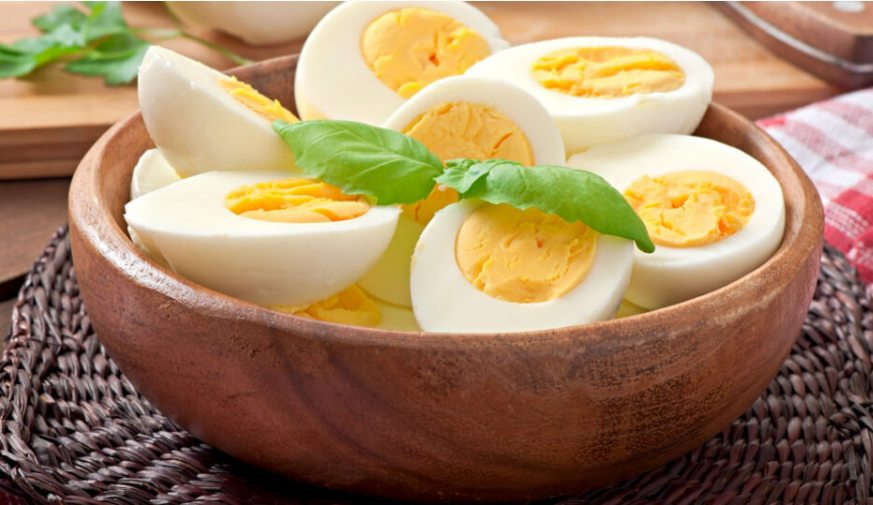
Can You Freeze Hard-Boiled Eggs?
Freezing whole hard-boiled eggs is not recommended. The whites can become rubbery, watery, and unpleasant after thawing. USDA storage guidance similarly indicates that hard-cooked eggs do not freeze well.
Because the eggs remain suitable for up to one week in the refrigerator, preparing a manageable weekly batch is a better option.
How to Reheat Hard-Boiled Eggs Safely
Hard-boiled eggs are normally served cold or at room temperature, but you can warm an unpeeled egg gently.
Place the egg in a heatproof bowl, cover it with hot—not violently boiling—water, and let it sit for approximately five minutes. Dry and peel it before serving.
Do not microwave a whole hard-boiled egg, whether peeled or unpeeled. Pressure can build inside and cause it to burst. If you want to warm a peeled egg in the microwave, cut it into small pieces first and heat it very briefly, although gentle hot-water warming generally gives better results.
Frequently Asked Questions
How long does it take to make Perfect Hard Boiled Eggs?
Once the water reaches a boil, the covered eggs need approximately 10 to 12 minutes in the hot water. They should then cool in an ice bath for at least five minutes.
Why are my hard-boiled eggs difficult to peel?
Extremely fresh eggs are commonly more difficult to peel. Insufficient cooling can also contribute to sticking. Try eggs that have been refrigerated for several days, cool them thoroughly, and peel them beneath cool running water.
Can I make Perfect Hard Boiled Eggs ahead of time?
Yes. They are an excellent make-ahead option. Refrigerate the cooked eggs in a covered container and use them within one week.
Should I peel the eggs before refrigerating them?
Either option works, but unpeeled eggs generally stay protected from drying and refrigerator odours. If you peel them in advance, keep them in an airtight container.
Why did an egg crack in the saucepan?
Cracking may happen when a cold egg experiences a sudden temperature change or when eggs knock against the pan during vigorous boiling. Starting with cold water and avoiding prolonged aggressive boiling can help.
If an egg develops a small crack during cooking and the white becomes fully cooked, it may still be usable. Discard an egg if it has an unusual odour or appearance after peeling.
Is the grey-green ring dangerous?
No. It typically indicates overcooking or slow cooling rather than spoilage. The egg may still be edible, but its texture and appearance will be better when the cooking time is controlled and the egg is chilled promptly.
Can I cook more than six eggs?
Yes. Use a sufficiently large saucepan and keep the eggs in one layer. Add enough water to cover them by about one inch.
Can I use this method with medium or extra-large eggs?
Yes, but the time may need a slight adjustment. Medium eggs may finish earlier, while extra-large eggs may need approximately one additional minute.
How can I tell whether an egg is raw or cooked?
Place the egg on a flat surface and spin it carefully. A cooked egg generally spins smoothly, while a raw egg often wobbles because the liquid inside continues moving. Labeling the cooked-egg container is still the most reliable way to avoid confusion.
Final Thoughts
Learning to make Perfect Hard Boiled Eggs is a small kitchen skill with a surprisingly large payoff. The eggs require minimal preparation, store well in the refrigerator, and can become anything from a quick snack to the foundation of a full meal.
The most important details are simple: cover the eggs with cold water, remove the saucepan from direct heat once the water boils, use a timer, and cool the eggs immediately in ice water. Follow those steps and you will get tender whites and attractive golden yolks without unnecessary guesswork.
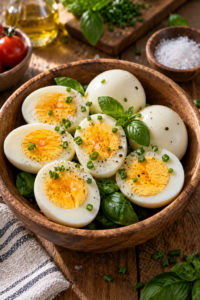
Place Image 3 here: Immediately after this conclusion and directly before the recipe card. It should show the finished peeled and halved eggs arranged for serving.
Perfect Hard Boiled Eggs Recipe Card
Prep Time: 5 minutes
Cooking and Resting Time: 12 minutes
Cooling Time: 10 minutes
Total Time: 27 minutes
Servings: 6 eggs
Course: Breakfast, Snack
Cuisine: American, British, Canadian
Method: Stovetop
Ingredients
- 6 large eggs
- Cold water, enough to cover the eggs by 1 inch
- Ice, for cooling
- Salt and pepper, optional for serving
- Fresh herbs, optional for serving
Instructions
- Arrange the eggs in a single layer in a medium saucepan.
- Add enough cold water to cover them by approximately one inch.
- Set the uncovered saucepan over medium-high heat and bring the water to a full rolling boil.
- Immediately remove the pan from the heat and cover it with a lid.
- Leave the eggs in the covered hot water for 10 to 12 minutes. Use 12 minutes for fully set yolks.
- Meanwhile, fill a large bowl with ice and cold water.
- Transfer the cooked eggs immediately to the ice bath.
- Cool for 5 to 10 minutes.
- Gently crack and roll each egg, then peel from the wider end.
- Rinse away any shell fragments, pat dry, and serve.
Recipe Notes
- Eggs that are several days old may peel more easily than extremely fresh eggs.
- Store cooked eggs in the refrigerator and use them within one week.
- Do not leave cooked eggs at room temperature for more than two hours.
- Avoid microwaving a whole cooked egg because it may burst.
- Whole hard-boiled eggs are not suitable for freezing.