You will need six large eggs for this recipe. You can cook fewer or more eggs, provided they fit comfortably in a single layer in the bottom of the saucepan.
Eggs that have been refrigerated for several days often peel more easily than extremely fresh eggs. USDA guidance also notes that older eggs can be better candidates for hard cooking.
Cold water
Use enough cold water to cover the eggs by approximately one inch, or 2.5 centimetres. Starting with cold water allows the eggs and water to warm together, reducing the sudden temperature change that can sometimes cause shells to crack.
Ice and additional cold water
An ice bath stops the cooking process quickly. Prepare it before the eggs finish cooking so you can transfer them immediately.
Optional seasonings
The eggs do not need seasoning while they cook. After peeling, you can serve them with:
Fine sea salt
Freshly ground black pepper
Smoked paprika
Red pepper flakes
Chopped chives
Fresh parsley or basil
Everything bagel seasoning
A small spoonful of mustard
Equipment You Will Need
Medium saucepan with a lid
Large bowl
Slotted spoon or kitchen tongs
Timer
Ice
Water
Choose a saucepan large enough to hold the eggs in one layer. Stacking the eggs can cause uneven cooking and increases the possibility of cracking as the water moves.
How to Make Perfect Hard Boiled Eggs
Step 1: Arrange the eggs in the saucepan
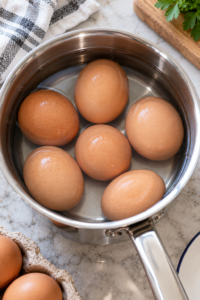
Place the eggs carefully in the bottom of a medium saucepan. Keep them in a single layer rather than piling them on top of one another.
Pour in enough cold water to cover the tops of the eggs by approximately one inch. If some eggs float or are not completely covered, add a little more water.
Arrange the eggs in one layer and cover them with approximately one inch of cold water.
Step 2: Bring the water to a boil
Place the uncovered saucepan over medium-high heat. Allow the water to reach a full rolling boil.
Avoid leaving the eggs at a vigorous boil for an extended period. Strong bubbling can knock the eggs against the sides of the pan, potentially cracking the shells and producing tougher whites.
Step 3: Cover and remove from the heat
As soon as the water reaches a full boil, remove the saucepan from the burner and cover it with a tight-fitting lid.
Leave the covered eggs in the hot water for 10 to 12 minutes.
10 minutes: Firm whites with slightly softer, creamier centres.
11 minutes: Mostly firm, golden yolks.
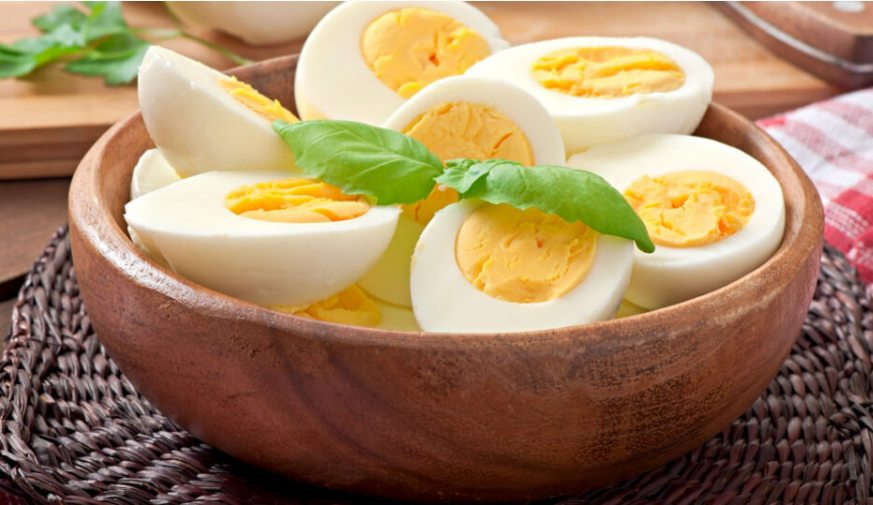
12 minutes: Fully set yolks like the eggs shown in the reference image.
Because burners, saucepans, egg sizes, and starting temperatures can vary, you may need to adjust the resting time by approximately one minute after testing your first batch.
Step 4: Prepare an ice bath
While the eggs are resting, fill a large bowl halfway with ice. Add enough cold water to create a very cold bath.
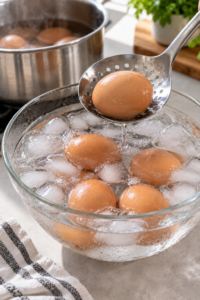
When the timer ends, use a slotted spoon to move every egg from the saucepan into the ice water. Let the eggs cool for at least five minutes, although ten minutes is preferable if you plan to peel them immediately.
Transfer the cooked eggs directly into ice water to stop the cooking process.
Step 5: Crack the shells
Remove one cooled egg from the ice bath. Tap it gently against a firm, flat surface to create small cracks across the shell.
Roll the egg lightly beneath your palm to loosen the shell without pressing hard enough to damage the white.
Begin peeling at the wider end, where there is usually a small air pocket beneath the shell.
Step 6: Peel under cool water
Slide your fingers beneath the thin membrane that sits between the shell and the egg white. Once that membrane lifts, larger sections of shell should come away more easily.
If the shell remains stubborn, peel the egg beneath a gentle stream of cool water or dip it repeatedly into the bowl. The water can work beneath the membrane and help separate it from the egg.
Step 7: Dry, slice, and serve
Pat the peeled eggs dry with a clean paper towel. Serve them whole, cut them in half, or slice them into rounds.
For a presentation similar to the reference photograph, arrange the egg halves in a shallow wooden bowl with the yolks facing upward. Garnish with fresh basil, parsley, or chives.