
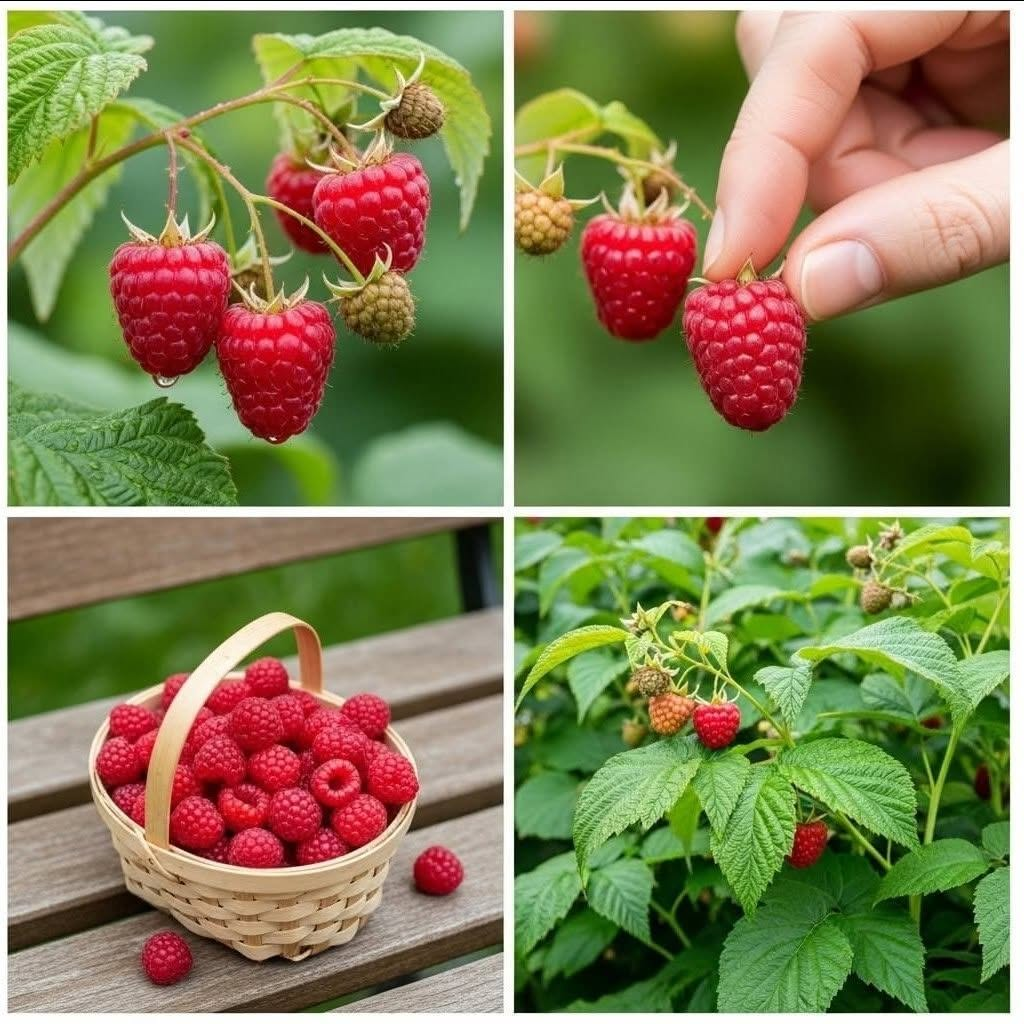
How to Pick Raspberries, Step by Step
1. Wait until the fruit is dry
If possible, pick after rain or morning dew has dried. Wet raspberries spoil more quickly and are harder to store well. A dry part of the morning can be a comfortable time to work before the day becomes hot, but the condition of the fruit matters more than a strict hour on the clock.
If rain has left the canes wet, give them time to dry when circumstances allow. Check especially carefully after prolonged wet weather, since ripe fruit may deteriorate faster.
2. Move through the canes slowly
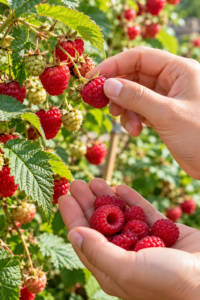
Begin where you can see the fruit clearly. Lift leaves gently and look beneath them; ripe berries are easy to miss from one angle. Move around the plant if you can reach it safely, rather than pulling canes sharply toward you.
As you work, compare neighboring berries. Pick the ready ones and leave the pale fruit behind. One cane can reward you on several visits.
3. Hold one berry lightly
Use your fingertips to support the raspberry without pressing its sides. You do not need to grasp the whole cluster or twist the cane. If the fruit is awkward to reach, reposition your hand before pulling. A hurried grab is more likely to squash it.
4. Pull gently and check for release
Give the berry a slight pull. A ripe raspberry should slip off its core. If it does, place it directly into your container. If it resists, leave it alone and move to the next one.
Do not use more force to make an unripe berry come off. The easy-release test becomes more reliable as you practise, and it helps you pick fruit with less damage.
5. Lay berries in a shallow layer
Drop nothing from a height. Set each handful into the container gently and avoid piling fruit into a deep mound. If the basket begins to fill, start another container.
This step can feel slow, especially when a cane is loaded with ripe fruit. It pays off when you get home: berries that still hold their shape are easier to rinse, serve, freeze, and use as a garnish.
6. Check the patch again
Come back as more fruit ripens. Oregon State University Extension gives a general picking interval of every three to four days, depending on the cultivar and weather, and advises checking more often during warmer or wet conditions. Treat that as a guide; the berries on your plant are the final cue. OSU Extension Service
7. Cool your harvest promptly
Take the raspberries out of the sun and refrigerate them as soon as practical. Keep them dry for storage and rinse them when you are ready to prepare or eat them. If you have harvested more than you can use soon, set aside sound berries for freezing.
The Most Important Picking Tips
Use both color and release. A berry’s appearance helps you find likely candidates, while a gentle pull tells you more about readiness. This is particularly useful when your variety does not match the deep red raspberries commonly pictured in recipes.
Pick into the container you will carry home. Repeatedly transferring raspberries gives them more chances to be bruised. When possible, pick into a clean, shallow box or basket that can go straight to the kitchen.
Keep fruit out of direct sun after picking. A basket left beside the patch while you continue gardening can warm up quickly. Move filled containers into a cool place.
Sort as you go. Separate damaged fruit from berries you want to store. At home, check the container once more before refrigerating it.
Plan around the weather. Dry fruit is easier to keep in good condition. After rainy weather, inspect the plants more often and prioritize ripe berries once they are dry enough to pick.
These small habits matter more than speed. If you are teaching someone how to pick raspberries, let them practise on a few easy-to-reach berries and show them what a berry looks like after it separates from the core.
Common Mistakes to Avoid
Pulling a berry that resists
This is the simplest sign to stop. Forcing the fruit can damage it and the plant. Leave that berry for a later visit.
Picking every red berry in one sweep
Berries on the same cane do not necessarily ripen together. Look at each one, especially around the top and underside of a cluster.
Squeezing fruit to test firmness
A raspberry does not need a firm pinch. It is easy to bruise a ripe berry while trying to decide whether it is ready. Use appearance and gentle release instead.
Filling a deep container to the brim
The weight of the top layers can crush those below. Use shallow containers and change to a fresh one when needed.
Washing before refrigeration
Rinsing is important before eating, but added moisture during storage can shorten the useful life of delicate berries. Store them dry, then wash them just before use.
Keeping spoiled fruit with the harvest
A visibly moldy or rotten berry should be discarded. Inspect the remaining fruit and use sound berries promptly. The FDA advises throwing away produce that looks rotten. FDA
How to Store Freshly Picked Raspberries
Fresh raspberries are best enjoyed soon after harvesting. To give them the best chance of staying appealing, sort them gently and remove any fruit that is leaking, crushed, or visibly spoiled. Put the sound berries into a clean, shallow container and refrigerate them promptly.
Keep them unwashed while storing. Water caught between berries encourages faster deterioration. When you are ready to eat them, rinse the amount you need under running water and handle them carefully afterward.
For food safety, keep perishable produce in a clean refrigerator at 40°F (4°C) or below. The FDA’s guidance on selecting and serving produce safely also recommends washing produce under running water before preparing or eating it, including fruit grown at home. It advises against washing produce with soap or detergent. FDA
A practical routine is to pick, sort, chill, and then rinse only what you are about to use. Check the stored berries each day. Storage time depends on how ripe they were when picked and how gently they were handled, so let their condition guide you rather than relying on a fixed deadline.
Can You Freeze Fresh Raspberries?
Yes. Freezing is a useful way to keep a generous harvest for smoothies, sauces, and baking. Choose sound berries and discard any that are spoiled. Rinse the fruit before freezing, then let excess water drain and dry the berries gently.
Spread them in a single layer on a tray so they freeze separately. Once firm, transfer them to a freezer-safe container or bag, label it, and return it to the freezer. Freezing individually first makes it easier to take out a small amount later.
Frozen raspberries often soften as they thaw, so they are especially useful in dishes where their shape is less important. Add them to a saucepan for a fruit sauce, blend them into a smoothie, or fold them into a baked dessert. If you want berries that sit neatly on top of a cake, save your best fresh ones for that purpose.