
How to Devein Shrimp Step by Step
Once you know the technique, cleaning shrimp becomes surprisingly quick.
Step 1: Keep the shrimp cold
If you’re not preparing the shrimp immediately, keep them refrigerated.
The FDA recommends storing seafood in a refrigerator at 40°F (4°C) or below and using fresh seafood within the recommended storage window. U.S. Food and Drug Administration
Don’t leave raw shrimp sitting on the counter while you prepare the rest of the meal.
Step 2: Remove the shell if desired
You can devein shrimp with the shell on or off.
For most home cooks, removing the shell first makes the process easier.
Start at the legs underneath the shrimp and gently peel away the shell.
You can leave the tail attached if you want a more attractive presentation.
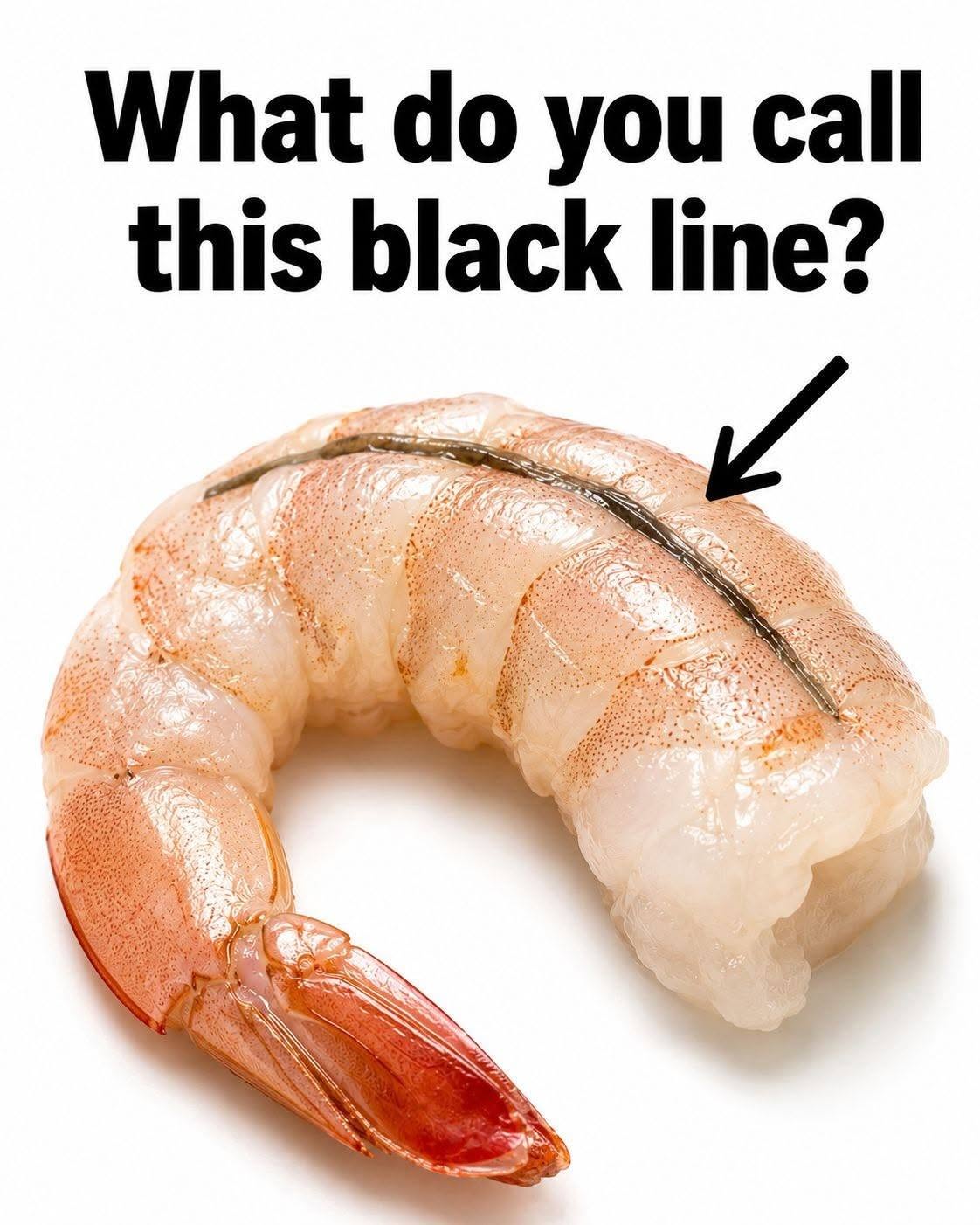
Step 3: Locate the dark line
Turn the shrimp so its curved back is facing upward.
Look for the thin dark line running from the head end toward the tail.
This is the digestive tract.
Sometimes it’s obvious. Sometimes it’s very faint.
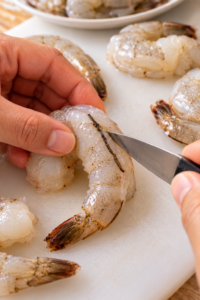
Step 4: Make a shallow cut
Using the tip of a small paring knife, make a shallow slit along the back.
You don’t need to cut deeply into the shrimp.
The goal is simply to expose the digestive tract enough to remove it.
Step 5: Lift the line
Use the tip of the knife to gently lift the dark line.
If you can grab it with your fingers or the knife tip, pull it away carefully.
It may come out in one continuous piece, but it can also break.
Step 6: Rinse only if needed
If the shrimp contain visible debris, rinse them briefly under cold running water.
However, avoid splashing water around the kitchen while washing raw seafood.
The FDA recommends preventing cross-contamination by keeping raw seafood separate from ready-to-eat foods and washing hands, cutting boards, utensils, and countertops appropriately after handling raw seafood. U.S. Food and Drug Administration
Step 7: Pat the shrimp dry
Use clean paper towels to gently dry the shrimp.
Dry shrimp are easier to season and sear because excess surface moisture can interfere with browning.
How to Devein Shrimp Without a Knife
If you’re uncomfortable using a knife, a shrimp deveining tool can make the job easier.
After removing the shell, run the curved end of the tool gently along the back of the shrimp.
The tool is designed to expose and remove the digestive tract in one motion.
This can be particularly useful when you’re preparing several pounds of shrimp for a party.
You can also use a toothpick in a pinch, especially with larger shrimp.
Insert it carefully just underneath the digestive tract and lift upward.
However, a sharp paring knife or dedicated deveining tool generally gives you more control.
How to Devein Shrimp With the Shell On
You don’t necessarily have to peel shrimp before deveining them.
To work with shell-on shrimp:
- Hold the shrimp firmly.
- Look for the dark line through the shell.
- Make a small incision along the back.
- Gently open the shell enough to reach the digestive tract.
- Pull the line out.
- Leave the shell intact if you’re cooking the shrimp that way.
Shell-on shrimp can be especially useful for grilling, roasting, or recipes where the shell adds flavor during cooking.
Should You Remove the Tail?
That’s entirely up to you.
Leaving the tail attached can make shrimp look more attractive when served.
It also gives diners something convenient to hold when eating shrimp with their hands.
Remove the tail if you’re making a dish where you want the shrimp completely ready to eat with a fork, such as:
- Shrimp pasta
- Shrimp fried rice
- Shrimp tacos
- Shrimp salad
- Shrimp bowls
- Stir-fries
For appetizers, leaving the tail attached is often a nice presentation choice.
Should You Remove Both Lines?
This is where shrimp preparation can become confusing.
The prominent dark line along the back is the digestive tract that people usually mean when they talk about deveining shrimp.
Some shrimp can also have a less noticeable line along the underside.
That underside structure is associated with the shrimp’s ventral nerve cord rather than the digestive tract.
Most home cooks don’t routinely remove it.
For ordinary cooking, the main focus is the visible digestive tract along the back.
Does Deveining Shrimp Change the Taste?
It can, particularly when the digestive tract is large or contains noticeable material, but the effect isn’t always dramatic.
Fresh, properly handled shrimp should have a mild smell and a clean seafood flavor.
The FDA notes that fresh shrimp should have a clear, pearl-like appearance with little or no odor. Strong sour, rancid, or ammonia-like odors are warning signs that seafood should not be eaten. U.S. Food and Drug Administration
Deveining is therefore more about cleanliness of presentation and removing the digestive tract than magically transforming the flavor of shrimp.