
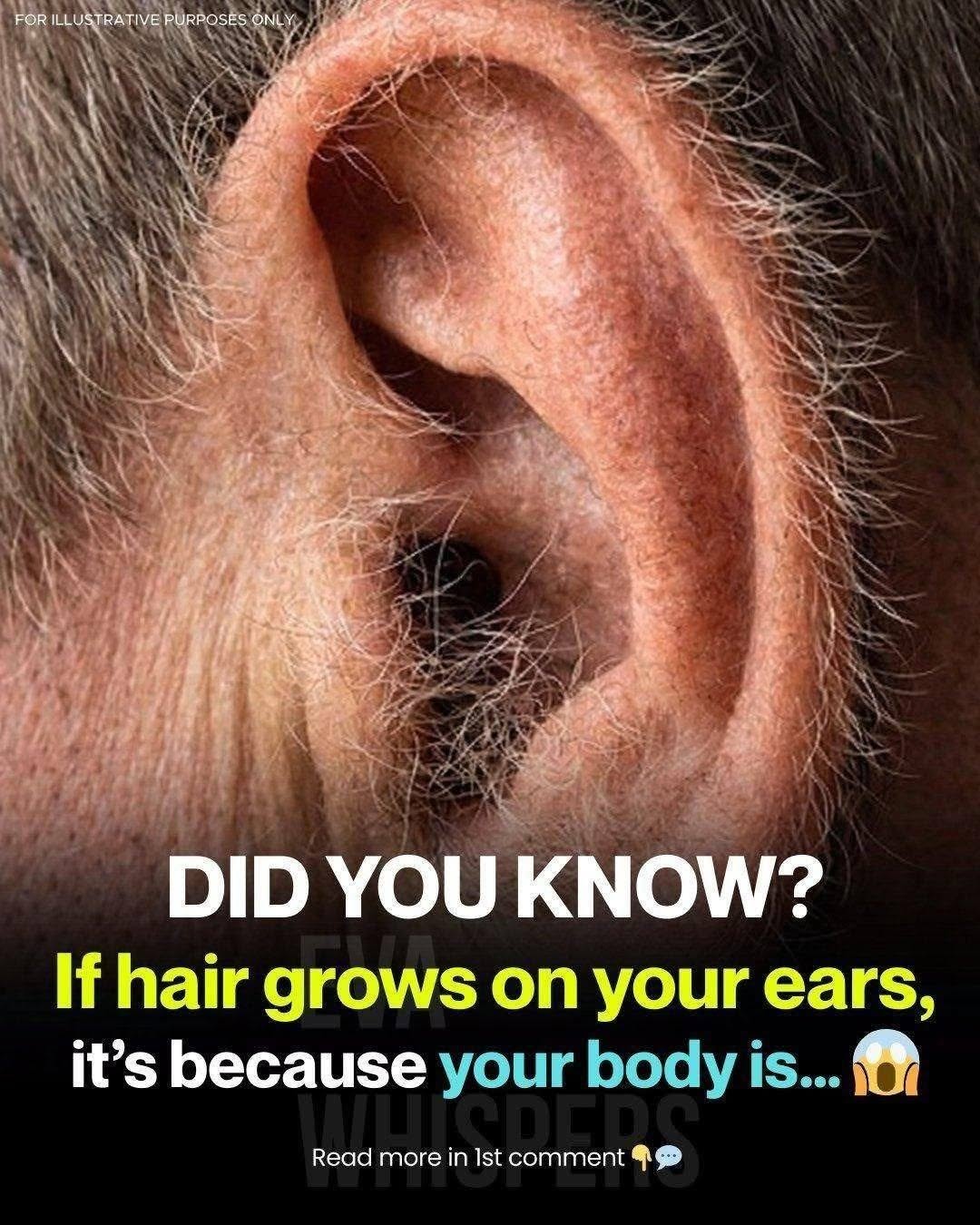
What Your Ear Hair Says About Your Health: What Doctors Really Know
Noticing more hair around the ears can be surprising, especially when it becomes more visible with age. Viral health posts sometimes suggest that ear hair is a warning sign of a serious health problem. But the reality is more nuanced.
Ear hair is usually a normal physical change, particularly as people get older. Hormones, genetics, and aging can all influence how much hair grows on different parts of the body.
So does ear hair really tell you something about your health?
Sometimes it can be associated with other changes, but ear hair by itself is not a reliable medical test or diagnosis.
Understanding the difference can help you avoid unnecessary worry while still recognizing when a new or unusual change deserves medical attention.
Why Does Ear Hair Become More Common With Age?
Hair growth changes throughout life.
As people age, hair follicles can behave differently because of hormonal changes and genetic factors. Some areas of the body may lose hair, while other areas can develop more noticeable hair.
For some men, coarse hair may become more visible around the ears, nose, eyebrows, or other areas of the face.
This is generally related to normal aging and individual genetics.
The amount of ear hair can also vary considerably between people. Two people of the same age may have completely different patterns of hair growth.
That means there is no specific amount of ear hair that should automatically be considered abnormal.
Is Ear Hair a Sign of High Testosterone?
This is one of the claims frequently repeated online.
Androgen hormones, including testosterone and related hormones, influence hair growth. However, seeing hair around the ears does not allow someone to determine their testosterone level.
Hair follicles respond differently to hormones depending on genetics and the specific location of the follicle.
Someone can have noticeable ear hair without having unusually high testosterone.
Likewise, someone with very little ear hair can have completely normal hormone levels.
Therefore, ear hair should not be used as a substitute for a medical hormone test.
Does Ear Hair Mean You Have a Heart Problem?
Another popular internet claim connects ear hair with cardiovascular disease.
Some observational studies have investigated whether certain patterns of external ear characteristics, including diagonal earlobe creases and hair growth, might be associated with cardiovascular disease.
However, an association does not prove that ear hair causes heart disease.
More importantly, ear hair alone is not considered a diagnostic test for heart disease.
Your actual cardiovascular risk depends on established factors such as:
- Blood pressure
- Cholesterol levels
- Smoking
- Diabetes
- Physical activity
- Body weight
- Family history
- Age
- Diet
- Other medical conditions
If you’re concerned about your heart health, checking these factors with a healthcare professional is much more useful than examining your ear hair.
What About Diabetes?
Some online posts also claim that increased ear hair can reveal diabetes.
There isn’t a simple rule that says:
“Ear hair = diabetes.”
Diabetes is diagnosed using appropriate blood tests and medical evaluation, not by looking at hair growth.
However, aging, genetics, hormonal changes, and metabolic health can overlap in many ways, which may explain why different physical characteristics sometimes appear together in observational research.
If you have risk factors for diabetes or symptoms such as increased thirst, frequent urination, unexplained weight changes, or persistent fatigue, a blood glucose test is much more informative.
Can Ear Hair Be Related to Hormonal Changes?
Yes, hormones influence hair follicles.
Androgens can affect the thickness, length, and growth cycle of body hair.
As people age, hormonal changes can alter hair growth patterns.
This is one reason why someone who barely noticed ear hair in their younger years may see more noticeable hairs later in life.
But increased ear hair doesn’t tell you exactly which hormone is responsible.
If hair growth suddenly becomes dramatically different, particularly alongside other symptoms, a healthcare professional can determine whether further evaluation is appropriate.
When Is Ear Hair Completely Normal?
In many cases, there is nothing medically concerning about ear hair.
It can simply be:
- Genetic
- Age-related
- Hormonal
- More noticeable because the hair has become thicker or darker
- A normal variation between individuals
If the hair has gradually increased over many years and there are no other concerning symptoms, it is generally not a reason to panic.
You can simply trim it if you don’t like the appearance.
When Should You Talk to a Doctor?
The important issue isn’t simply having ear hair.
Instead, pay attention to sudden or unusual changes.
Consider speaking with a healthcare professional if a new physical change occurs together with other symptoms such as unexplained weight loss, severe fatigue, major hormonal changes, unusual skin changes, or other persistent health problems.
A doctor can look at the entire picture rather than trying to diagnose a condition from one physical characteristic.
Should You Remove Ear Hair?
If the hair bothers you cosmetically, there are several options.
Trimming
Carefully trimming visible outer-ear hair is one of the simplest approaches.
Use a tool specifically designed for trimming facial or ear hair and avoid pushing anything deep into the ear canal.
Electric Ear-Hair Trimmers
Small electric trimmers can be useful for visible hair around the outer ear.
Follow the manufacturer’s instructions and clean the device regularly.
Professional Grooming
If you’re uncomfortable trimming the area yourself, a professional barber or stylist may be able to help with visible outer-ear hair.
The goal should be to remove only the hair that is cosmetically bothersome rather than aggressively cleaning inside the ear.