
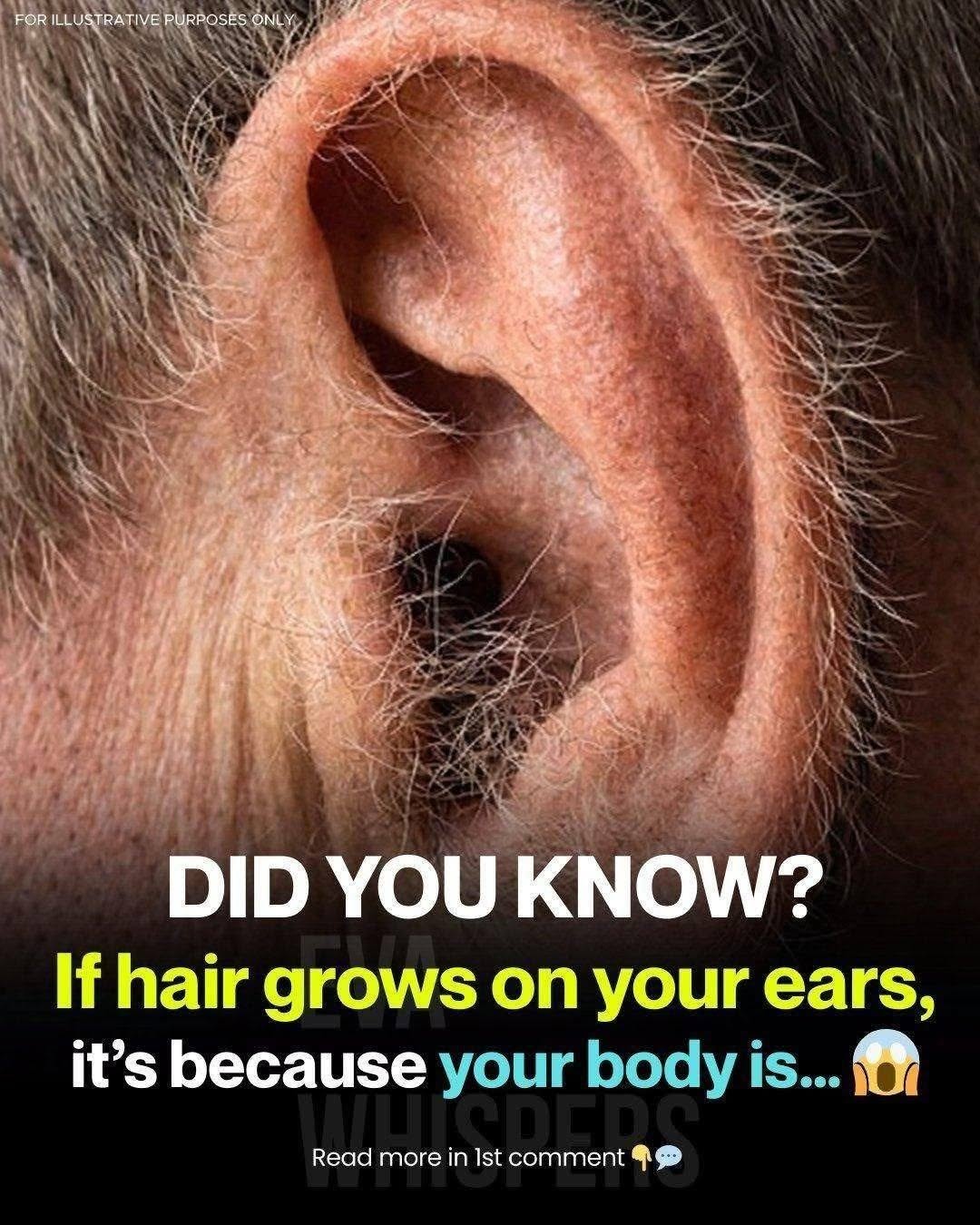
Common Myths About Ear Hair
Myth 1: Ear hair means you have high testosterone.
Not necessarily. Hair growth is influenced by hormones, but ear hair cannot determine testosterone levels.
Myth 2: Ear hair proves you have heart disease.
False. Some research has examined associations between external ear characteristics and cardiovascular disease, but ear hair is not a diagnostic test.
Myth 3: Ear hair means you’re unhealthy.
Not at all. It is often a normal feature of aging and genetics.
Myth 4: You should remove all ear hair.
Not necessarily. Visible outer-ear hair can be trimmed for cosmetic reasons, but there is no medical requirement to remove every hair.
Myth 5: More ear hair means a shorter life.
There is no reliable evidence that the amount of ear hair can predict an individual’s life expectancy.
What If Ear Hair Appears Suddenly?
A sudden change in hair growth deserves more attention than gradual age-related growth.
If you notice a dramatic change in body hair together with other symptoms, mention it to a healthcare professional.
The doctor may consider your medications, hormonal status, age, genetics, and other health factors.
Don’t try to diagnose the cause from social media.
What About Medications?
Some medications can influence hair growth.
If you notice significant changes after starting a new medication, don’t stop taking it on your own.
Instead, ask your doctor or pharmacist whether increased hair growth is a known side effect.
This is particularly important if the change is sudden or accompanied by other symptoms.
The Bottom Line
So, what does ear hair say about your health?
Usually, not as much as viral posts suggest.
Visible ear hair is commonly associated with aging, genetics, and normal differences in hair growth. Hormones influence hair follicles, but ear hair alone cannot tell you whether your hormone levels are normal or whether you have a particular disease.
Some research has explored associations between external ear characteristics and cardiovascular or metabolic conditions, but these observations should not be turned into diagnoses.
The best approach is simple:
Don’t panic because you have ear hair.
If you don’t like it, carefully trim the visible hair.
If you experience sudden changes or other persistent symptoms, speak with a healthcare professional.
And if you’re genuinely concerned about your heart, blood sugar, hormones, or general health, use appropriate medical tests rather than relying on a viral health graphic.
For general information about hearing and ear health, the National Institute on Deafness and Other Communication Disorders provides reliable educational resources.