
The Truth About the Viral Dishwashing Image
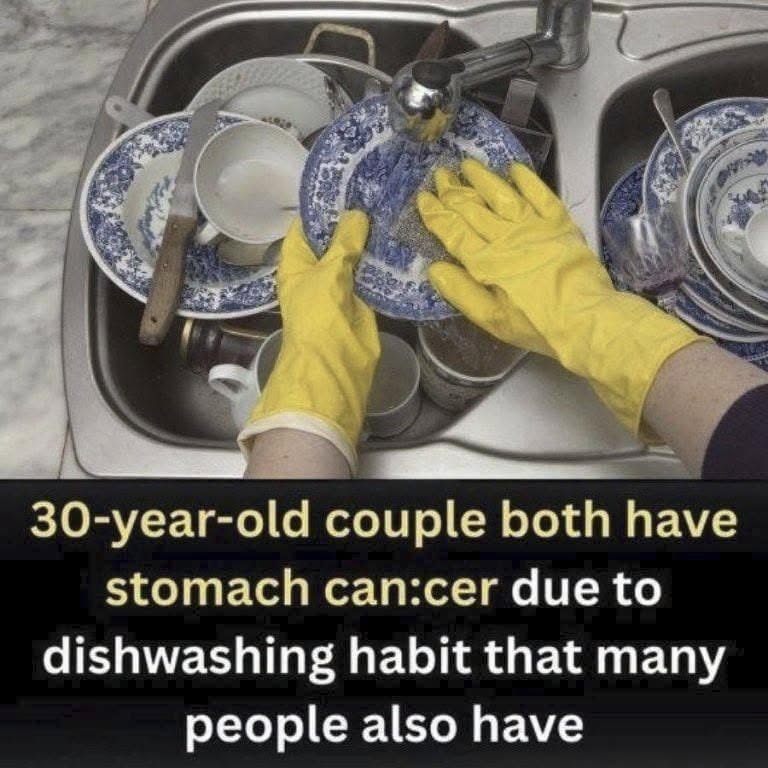
The photograph accompanying this article makes a very strong claim:
“30-year-old couple both have stomach cancer due to dishwashing habit.”
That statement should not be accepted as a medical fact simply because it appears on an image.
There is no information in the image establishing:
- The couple’s medical diagnoses
- Their medical histories
- Their H. pylori status
- Their family history
- Their smoking history
- Their diet
- Their occupational exposures
- Their genetic risk
- The actual cause of their cancer
Without that information, it is impossible to conclude that dishwashing caused their disease.
The image may be designed to generate fear and engagement rather than provide evidence-based health information.
What Should You Actually Change in Your Dishwashing Routine?
You don’t need to stop washing dishes because of this viral claim.
Instead, follow sensible household hygiene practices.
Use cleaning products correctly
Read the label and follow the manufacturer’s instructions.
Don’t mix cleaning products
Some combinations of household chemicals can create dangerous fumes.
Rinse dishes appropriately
Follow the instructions for the detergent or dishwasher being used.
Protect your skin
If dish soap irritates your hands, wear suitable gloves.
Keep detergents away from children
Store concentrated cleaning products safely.
Replace dirty kitchen sponges
Don’t allow cleaning tools to remain permanently wet and contaminated with food residue.
Wash your hands
Especially after handling raw meat, poultry, eggs, or other potentially contaminated foods.
These habits make sense for household hygiene—but they shouldn’t be confused with proven stomach cancer prevention.
Frequently Asked Questions
Does washing dishes cause stomach cancer?
There is no established evidence that ordinary dishwashing causes stomach cancer. Recognized risk factors include H. pylori, smoking, certain dietary patterns, medical conditions, genetics, and family history. Institut National du Cancer
Can dish soap cause cancer?
Routine use of dish soap according to its intended purpose has not been established as a cause of stomach cancer. Concentrated cleaning products can still be harmful if swallowed or misused.
Is the viral story about the 30-year-old couple true?
The image alone does not provide enough evidence to verify the story or determine what caused any illness. A cancer diagnosis cannot be attributed to dishwashing simply from a photograph or social-media caption.
Can dirty dishes cause stomach cancer?
Dirty dishes can contribute to food contamination and illness, but ordinary dirty dishes are not an established direct cause of stomach cancer.
Can a kitchen sponge cause stomach cancer?
Kitchen sponges can harbor microorganisms, so proper cleaning and replacement are sensible. However, using a kitchen sponge is not an established cause of stomach cancer.
What is the biggest known risk factor for stomach cancer?
Chronic H. pylori infection is one of the most important established risk factors for stomach cancer. Institut National du Cancer
Does salt increase stomach cancer risk?
High intake of salted foods and excessive sodium consumption are associated with increased stomach cancer risk. Institut National du Cancer
Does smoking increase stomach cancer risk?
Yes. Smoking is an established risk factor for stomach cancer. Institut National du Cancer
Can stomach cancer happen in young adults?
Yes, although the risk generally increases with age. A diagnosis in a young adult should not automatically be attributed to one household habit.
Should I stop washing dishes because of this claim?
No. There is no evidence that normal dishwashing causes stomach cancer. Continue washing dishes safely and follow the instructions for household cleaning products.
If you’re interested in more practical ways to protect your health through everyday habits, you can also read our [healthy lifestyle tips] for simple, evidence-based ideas you can use at home.
Final Thoughts
The viral claim linking dishwashing habits and stomach cancer is much stronger than the available evidence supports.
Washing dishes is an ordinary household activity. There is no established evidence that simply washing plates, using dish soap, or wearing rubber gloves causes stomach cancer.
What deserves much more attention are the genuine risk factors: chronic H. pylori infection, smoking, diets high in salted or poorly preserved foods, certain stomach conditions, obesity, family history, genetic syndromes, and other established factors. Institut National du Cancer
That doesn’t mean household hygiene is unimportant. Safe food preparation, clean dishes, proper handwashing, and responsible use of cleaning products are all worthwhile habits.
But fear should be based on evidence—not on a dramatic caption attached to a photograph.
If you’re concerned about your personal risk of stomach cancer, especially because of persistent digestive symptoms or a strong family history, speaking with a healthcare professional is far more useful than trying to identify the cause from a viral image.
For reliable information, the National Cancer Institute’s guide to stomach cancer risk factors provides evidence-based information about what is actually known about stomach cancer.