
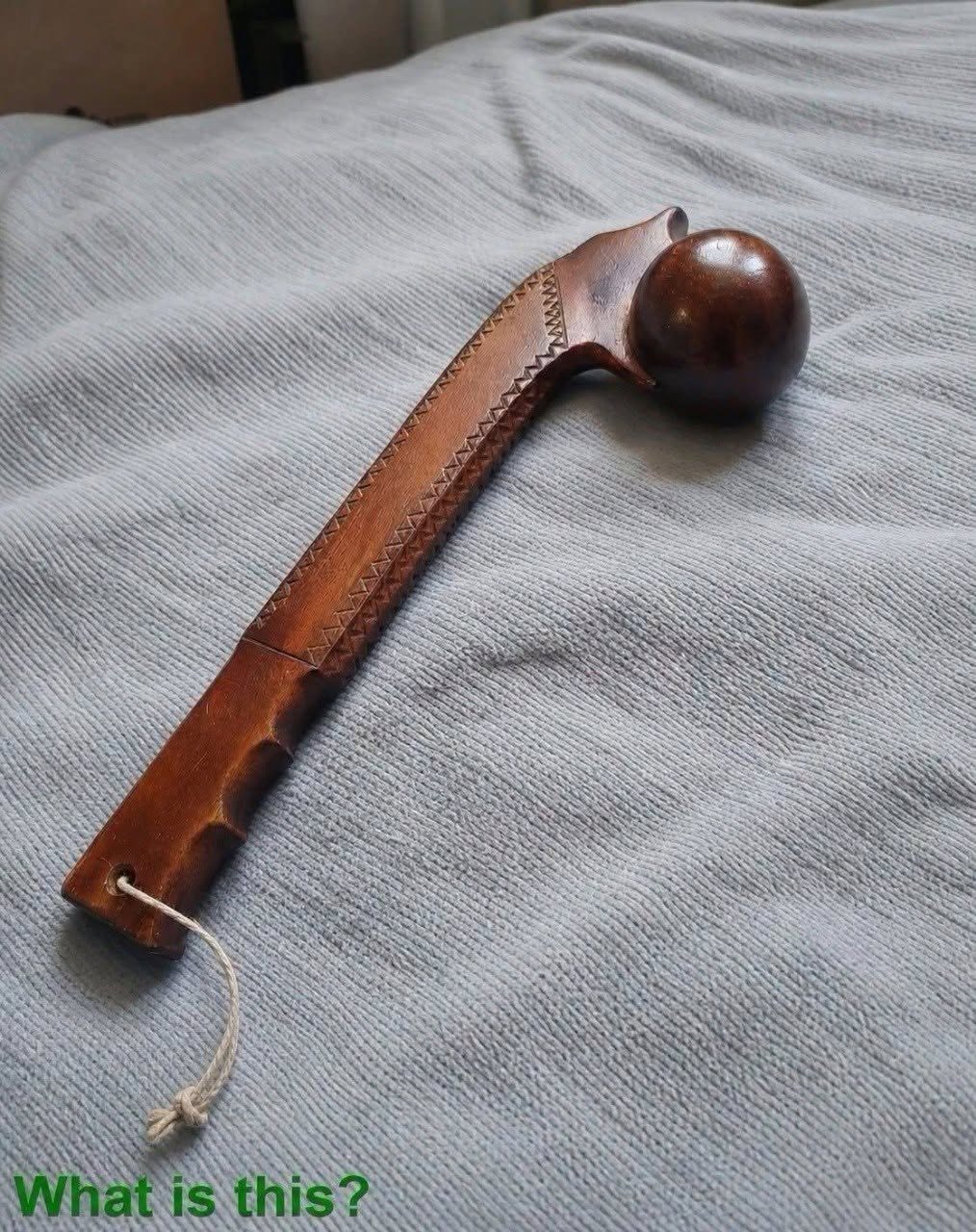
Inspect Without Taking It Apart
Look carefully for transitions between materials, but do not remove the leather or loosen the stitching. The covering may be original to the object and could conceal fragile wood.
Disassembly could permanently damage it and eliminate important evidence.
Write Down Its History
Ask the owner or family:
- Who acquired it?
- Where was it obtained?
- Approximately when was it acquired?
- Was it purchased, inherited, or received as a gift?
- Are there receipts, letters, photographs, or related objects?
- Was a maker’s or community name ever mentioned?
Write down the information while it is still available. Clearly separate facts from family guesses.
How to Store It
Until the object is professionally evaluated:
- Keep it in a dry, stable indoor environment.
- Avoid direct sunlight.
- Keep it away from radiators, fireplaces, and air-conditioning vents.
- Do not place heavy objects on it.
- Support the head and handle when moving it.
- Avoid hanging it from the old cord.
- Keep it away from children and pets.
- Wear clean, dry hands when handling it.
- Do not wrap it tightly in plastic.
Sharp swings in heat and humidity can cause wood to crack and leather to shrink, stiffen, or develop mould.
If active mould, insects, loose powder, or serious cracking appears, contact a professional conservator rather than applying a home treatment.
For more practical preservation advice, read our complete guide to cleaning and storing antique wooden objects
Who Can Identify It Professionally?
The best options include:
- A museum specialising in Indigenous North American art
- A qualified tribal museum or cultural centre
- An auction house with a documented Indigenous-art department
- An accredited appraiser experienced in ethnographic material
- A professional objects conservator
- A university anthropology or material-culture department
A general antique dealer may provide an initial opinion, but specialised cultural knowledge is essential before assigning a community, date, or value.
Whenever possible, consult Indigenous-led institutions or knowledgeable representatives from the cultural community to which an object may belong.
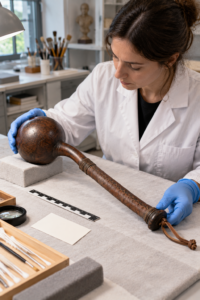
Can It Legally Be Sold?
The legal and ethical situation depends on the object’s country, provenance, cultural status, age, and method of acquisition.
Some cultural objects may be protected by national, tribal, provincial, state, or federal rules. Items containing feathers, ivory, certain animal materials, human remains, or sacred and funerary components can raise additional restrictions.
A wooden club is not automatically illegal to own or sell, but ownership does not guarantee that every transfer or description is appropriate.
Before selling it:
- Establish provenance.
- Obtain a specialist identification.
- Confirm that no protected materials are present.
- Check relevant national and local laws.
- Avoid presenting it as an Indigenous antique without evidence.
- Contact the relevant cultural institution if it may have ceremonial importance.
Do not invent a dramatic history to increase its price. Accurate attribution protects the buyer, seller, maker, and cultural community.
How Much Could It Be Worth?
A photograph is not enough to provide a responsible valuation.
Value may depend on:
- Confirmed maker
- Cultural attribution
- Age
- Provenance
- Condition
- Rarity
- Artistic quality
- Materials
- Documentation
- Whether it is antique or contemporary
- Current collector demand
- Legal and ethical eligibility for sale
A recent decorative reproduction might have modest market value. A signed work by a recognised contemporary Indigenous artist could have meaningful artistic and monetary value. A well-documented historical object could be significantly more valuable, but it may also require greater cultural and legal care.
Never rely only on an online listing price. Sellers can ask any amount, and an asking price does not show what comparable objects actually sold for.