Vitamin E and Stroke Risk: What Older Adults Should Know
A bottle of vitamin supplements can look harmless, especially when the label promises antioxidant support, immune support, or better overall health. But when it comes to high-dose supplements, more is not automatically better.
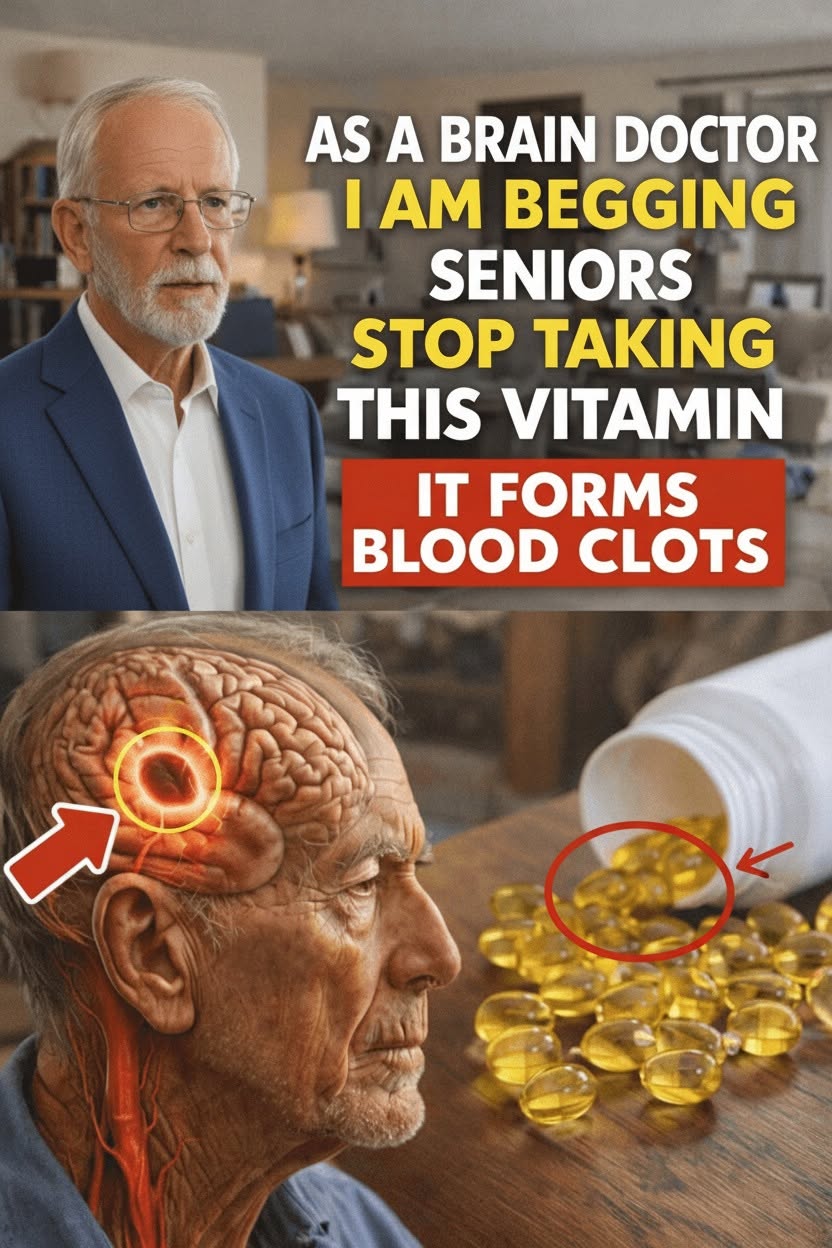
The image circulating online with a warning about vitamins and stroke risk raises an important question: Can vitamin E supplements affect stroke risk in older adults?
The answer requires more nuance than a simple social-media warning.
Vitamin E is an essential nutrient that the body needs for normal function. It is naturally present in foods such as nuts, seeds, vegetable oils, and green leafy vegetables. The body uses vitamin E as an antioxidant and for other important biological functions. ODs
However, vitamin E supplements are different from getting vitamin E naturally from food. High supplemental doses can affect blood clotting and may increase the risk of bleeding. The National Institutes of Health Office of Dietary Supplements notes that clinical trials have found an increased risk of hemorrhagic stroke with certain supplemental vitamin E regimens. ODs
That does not mean that everyone should stop taking vitamin E or that vitamin E itself “forms blood clots.” In fact, the evidence points in the opposite direction for high supplemental doses: vitamin E can interfere with clotting and increase bleeding risk.
This distinction is especially important for older adults, people taking blood-thinning medicines, and anyone considering a high-dose supplement.
What Is Vitamin E?
Vitamin E is not technically one single compound.
It refers to a family of related fat-soluble compounds, including tocopherols and tocotrienols. Alpha-tocopherol is the form recognized as meeting human vitamin E requirements. ODs
Vitamin E has several roles in the body.
It functions as an antioxidant, helping protect cells from oxidative damage. It also participates in immune function and other biological processes.
The nutrient is naturally found in foods including:
- Almonds
- Sunflower seeds
- Hazelnuts
- Peanuts
- Vegetable oils
- Spinach
- Other green leafy vegetables
For most healthy people, obtaining nutrients through a varied diet is preferred over taking large doses of individual supplements.
The American Heart Association similarly emphasizes a food-first approach and recommends getting vitamins and minerals from a varied, healthy diet whenever possible. www.heart.org
Why Are People Talking About Vitamin E and Stroke Risk?
The concern comes largely from research involving high-dose vitamin E supplements, not ordinary amounts of vitamin E found naturally in foods.
Some clinical trials have reported an increased risk of hemorrhagic stroke among people taking supplemental vitamin E.
A hemorrhagic stroke happens when a blood vessel in the brain ruptures and causes bleeding.
This is different from an ischemic stroke, which occurs when a blood vessel supplying the brain becomes blocked.
That distinction is essential when discussing vitamin E and stroke risk.
The available evidence does not mean that vitamin E causes all strokes.
Instead, certain high-dose supplemental regimens have been associated with an increased risk of bleeding, including bleeding in the brain. ODs
Does Vitamin E Cause Blood Clots?
No. The statement in the viral image that vitamin E “forms blood clots” is misleading.
According to the NIH Office of Dietary Supplements, high doses of vitamin E supplements can increase bleeding risk because vitamin E can interfere with platelet aggregation and blood-clotting processes. ODs
In other words, the concern is not that vitamin E makes blood clot too easily.
The concern is that large supplemental amounts can make it harder for blood to clot normally.
That distinction matters.
Someone reading the viral image could easily come away with the opposite understanding of what the research actually says.