

Surprising Beetroot Benefits: What Happens to Your Body?
Beetroot may look like a simple root vegetable, but its deep red color comes from a collection of natural plant compounds that have attracted plenty of scientific interest.
From salads and roasted vegetables to smoothies and beetroot juice, this colorful food can be an easy way to add variety and nutrients to your diet. Some of the most interesting research focuses on the nitrates naturally found in beetroot and how they may influence nitric oxide production and blood vessel function.
But there is an important distinction between saying beetroot is a nutritious food and claiming that it can treat or prevent disease. The evidence supports some promising effects, particularly around blood pressure, but beetroot is not a replacement for medical treatment or a balanced diet.
Beetroot Salad: 7 Easy Steps for a Vibrant Side
So, what actually happens when you eat beetroot regularly?
Here are the most interesting beetroot benefits, what the research suggests, and a few surprising changes you may notice afterward.
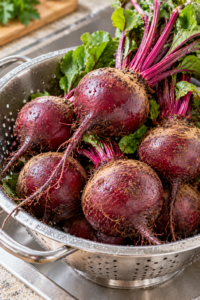
What Makes Beetroot So Interesting?
Beetroot contains several naturally occurring compounds, including dietary nitrates, betalains and other plant compounds.
Its intense red-purple color is largely associated with betalain pigments. It also provides dietary fiber and a range of vitamins and minerals.
The USDA’s FoodData Central database is one useful reference for checking the nutritional composition of foods such as raw beets. FoodData Central
One reason beetroot has received so much attention is its nitrate content.
Dietary nitrate can be converted in the body through several steps that ultimately contribute to nitric oxide availability. Nitric oxide plays an important role in blood-vessel relaxation and circulation.
That doesn’t mean eating beetroot automatically produces dramatic health changes. Individual responses vary, and studies have used different amounts, preparations and durations.
Beetroot Benefits and Blood Pressure
One of the better-studied potential benefits of beetroot involves blood pressure.
Beetroot and beetroot juice can provide substantial amounts of dietary nitrate. Research suggests that nitrate can contribute to nitric oxide production, which may influence blood-vessel function.
A systematic review and meta-analysis of randomized trials in people with hypertension found that nitrate-rich beetroot juice was associated with a modest reduction in systolic blood pressure compared with control interventions. The review included seven studies and 218 participants, with interventions lasting between three and 60 days. PubMed Central (PMC)
Another meta-analysis involving randomized clinical trials found that beetroot juice supplementation was associated with average reductions in both systolic and diastolic blood pressure, although the studies varied considerably in dose and duration. PubMed Central (PMC)
That sounds promising, but it is important not to overstate the finding.
Beetroot should be viewed as one nutritious food that may support a heart-healthy eating pattern—not as a natural substitute for prescribed blood-pressure medication.
If you take blood-pressure medication or already have low blood pressure, speak with your healthcare professional before regularly consuming large amounts of concentrated beetroot juice.
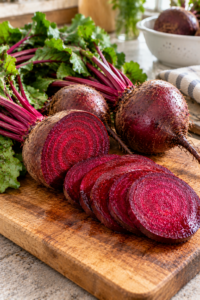
Could Beetroot Support Circulation?
The nitrate-to-nitric-oxide pathway is also why beetroot is frequently discussed in relation to circulation.
Nitric oxide helps regulate the diameter of blood vessels. When blood vessels relax appropriately, blood can move through them more easily.
This is one reason researchers have investigated beetroot products in studies involving vascular function and exercise.
However, the effects aren’t identical in everyone.
Factors such as age, baseline blood pressure, diet, the amount of nitrate consumed and the form of beetroot may influence the response.
A recent systematic review specifically examining older adults found that beetroot supplementation can increase nitrate and nitrite levels, but concluded that evidence for meaningful cardiovascular benefits in older adults remains preliminary because studies are relatively small and heterogeneous. PubMed
So the sensible takeaway is simple: beetroot contains compounds that may support normal vascular function, but more research is needed to determine how much this translates into long-term health outcomes.
Beetroot Can Add Fiber to Your Diet
Another benefit that can easily get overlooked is fiber.
Whole beetroot contains dietary fiber, which can contribute to overall digestive health and help make meals more satisfying.
Fiber is important because it supports normal bowel function and forms part of a balanced diet rich in vegetables, fruits, legumes and whole grains.
Whole beetroot is therefore different from a small concentrated shot of beetroot juice.
Juicing can make it easier to consume a large amount of beetroot quickly, but some of the fiber is lost during juice production.
If your goal is simply to add more vegetables and fiber to your diet, eating whole cooked or raw beetroot is an excellent option.