
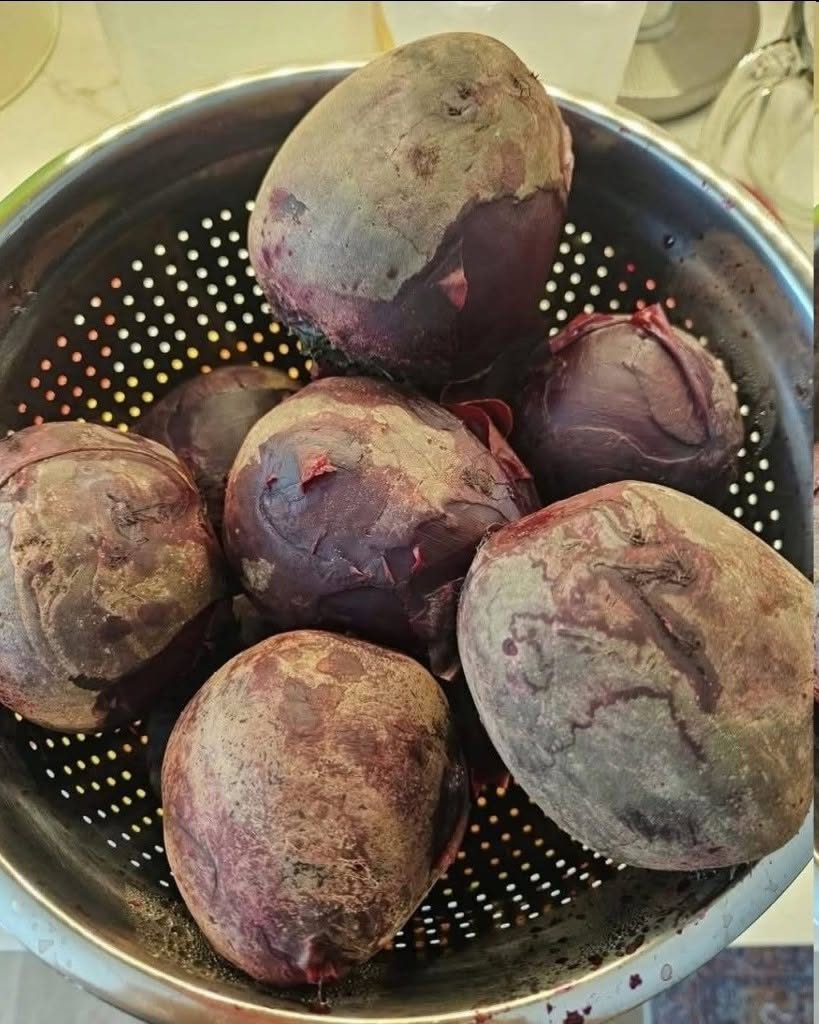
Easy Ways to Eat More Beetroot
If you’re not sure how to incorporate beetroot into your meals, start with simple preparations.
Roasted beetroot
Cut peeled beetroot into wedges, toss lightly with olive oil and seasonings, then roast until tender.
Beetroot salad
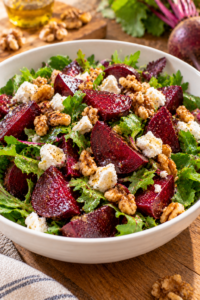
Combine cooked beetroot with greens, goat cheese, walnuts and a simple vinaigrette.
Beetroot hummus
Blend cooked beetroot with chickpeas, tahini, lemon juice and garlic for a colorful dip.
Beetroot smoothie
Blend cooked or raw beetroot with fruit, yogurt or another preferred smoothie base.
Beetroot grain bowl
Add roasted beetroot to quinoa or another grain with leafy greens, beans, seeds and a simple dressing.
Pickled beetroot
Pickled beetroot can add acidity and sweetness to sandwiches and salads.
Just remember that pickled products can contain significant amounts of added sodium or sugar depending on the recipe.
Are Beet Greens Edible?
Yes.
The leafy tops of beetroot are edible and can be prepared similarly to other leafy greens.
They can be sautéed with olive oil and garlic, added to soups or incorporated into vegetable dishes.
If you buy beetroot with the greens attached, don’t automatically throw them away.
The USDA has added beet greens to its more recent FoodData Central Foundation Foods data, reflecting their nutritional value as a food ingredient. FoodData Central
How Much Beetroot Should You Eat?
There isn’t one universal daily amount that everyone needs.
Studies examining beetroot juice and blood pressure have used a wide range of amounts and durations, which is one reason it isn’t appropriate to take a research dose and present it as a general recommendation for everyone. PubMed Central (PMC)
For everyday eating, the simplest approach is to treat beetroot like other vegetables.
Add a reasonable portion to meals and vary the types of vegetables you eat throughout the week.
You don’t need to eat enormous quantities to have a nutritious diet.
Common Mistakes About Beetroot Benefits
Mistake 1: Thinking beetroot cures high blood pressure
Research suggests beetroot, particularly nitrate-rich beetroot juice, may modestly lower blood pressure in some people.
That is very different from saying it cures hypertension.
If you have high blood pressure, follow your healthcare professional’s treatment plan.
Mistake 2: Believing beetroot detoxes your body
Your liver and kidneys already perform important detoxification functions.
Beetroot can be part of a nutritious diet, but there is no need to market it as a miracle detox food.
Mistake 3: Assuming red urine means something is wrong
After eating beetroot, temporary red or pink urine can be completely harmless.
But persistent or unexplained red urine deserves medical attention. Cleveland Clinic
Mistake 4: Thinking juice is always healthier than whole beetroot
Juice can provide concentrated nitrate, but whole beetroot contains fiber and requires more chewing.
Neither needs to be treated as universally superior.
Mistake 5: Eating huge quantities because “natural” means risk-free
Even nutritious foods can be unsuitable in large quantities for people with particular medical conditions.
People prone to certain kidney stones or those taking blood-pressure medication should discuss high amounts of beetroot juice with a healthcare professional. Cleveland Clinic
Who Should Be More Careful With Beetroot?
For most people, beetroot is a perfectly reasonable vegetable.
Still, certain people should take a more individualized approach.
People with a history of kidney stones
If you’ve been diagnosed with calcium oxalate kidney stones or another condition involving oxalate, ask your healthcare provider about your diet.
People with low blood pressure
Because beetroot’s dietary nitrate may influence blood pressure, people who already have low blood pressure should be cautious with large amounts of concentrated beetroot products.
People taking blood-pressure medication
Don’t use beetroot juice as a replacement for medication.
If you’re considering regularly consuming concentrated beetroot juice, discuss it with your healthcare professional.
People with unexplained red urine
If red or pink urine continues when you haven’t eaten beetroot or other pigment-rich foods, seek medical advice rather than assuming it’s harmless.
Frequently Asked Questions
What are the main beetroot benefits?
Potential benefits include providing dietary fiber and plant compounds, while nitrate-rich beetroot products may modestly support blood pressure and vascular function in some people. Evidence varies depending on the form and amount consumed. PubMed Central (PMC)
Does beetroot lower blood pressure?
Research suggests beetroot juice can modestly lower systolic blood pressure in some adults, particularly in controlled studies. It should not replace prescribed treatment. PubMed Central (PMC)
Why does beetroot turn urine red?
The pigment betanin can pass into urine in some people, creating a temporary pink or red appearance known as beeturia. Cleveland Clinic
Is beetroot good for digestion?
Whole beetroot provides dietary fiber, which contributes to a healthy digestive system. It should be considered part of an overall fiber-rich diet rather than a guaranteed treatment for digestive problems.
Can beetroot cause kidney stones?
Beetroot contains oxalates. Most people do not need to avoid it, but people who are prone to certain kidney stones may be advised to limit high-oxalate foods. Cleveland Clinic
Is beetroot juice better than eating beetroot?
Not necessarily. Beetroot juice can provide concentrated nitrate, while whole beetroot provides fiber and requires more chewing. They serve different purposes.
Can I eat beetroot every day?
For most people, beetroot can be included regularly as part of a varied diet. There’s no requirement to eat it every day, however, and variety is more important than focusing heavily on one food.
Are beet greens edible?
Yes. Beet greens can be cooked like other leafy greens and used in soups, sautés and vegetable dishes.
Final Thoughts
The most interesting beetroot benefits aren’t about a miracle cure or a single food transforming your health overnight.
They’re about what beetroot contributes to an overall nutritious eating pattern.
It provides fiber and colorful plant compounds, while its natural nitrate content has been studied for potential effects on blood pressure and vascular function. Research is encouraging in some areas, but it also has limitations, and results aren’t identical for everyone. PubMed Central (PMC)
And then there’s the funny surprise many beetroot lovers eventually discover: your urine or stool can temporarily turn pink or red.
That can look alarming, but after eating beetroot, it is often simply the result of its natural pigments. Cleveland Clinic
So instead of thinking of beetroot as a miracle ingredient, think of it as what it really is: a colorful, versatile vegetable that can add fiber, nutrients and interesting plant compounds to your meals.