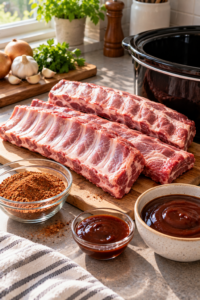
Slow Cooker BBQ Ribs with a Sticky, Caramelized Finish
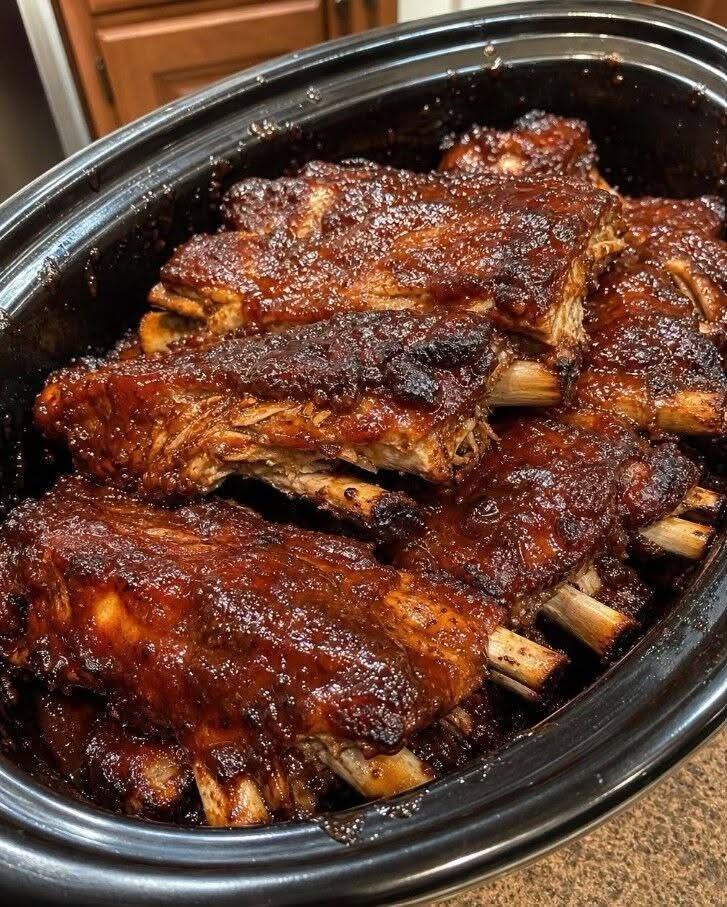
The ribs in the photo are coated in a thick, glossy barbecue sauce, with browned edges and bones visible beneath the meat. They are piled into a slow cooker, ready to bring to the table. It is the kind of dinner that looks as though it took all day to watch over, even though most of the cooking can happen while you get on with something else.
These slow cooker BBQ ribs are inspired by that image. Pork ribs cook gently until tender, then get a fresh coating of sauce and a brief finish under the broiler, or grill in the UK, for the dark, sticky surface shown in the photo. The final step takes only a few minutes, but it makes a noticeable difference: slow cooking softens the meat, while high heat gives the sauce color and a little texture.
The photograph does not include a recipe or confirm the exact ingredients used. The version below is an original, practical recipe designed to produce a similar result. It uses pork baby back ribs, a simple seasoning mix, and your favorite barbecue sauce. The instructions also explain how to avoid ribs that fall apart before you can glaze them, how to check doneness, and how to store leftovers safely.
Why You’ll Love This Recipe
The slow cooker handles the long cooking time. Once the ribs are seasoned and arranged in the pot, you can leave them to cook with the lid on. There is no need to tend a grill or repeatedly turn the meat.
The recipe is also flexible about the barbecue sauce. Choose a smoky, sweet, tangy, or spicy sauce according to what you enjoy. Because its flavor becomes prominent in the finished dish, using one you already like is the simplest route to ribs you will want to make again.
A short finish under the broiler gives slow cooker BBQ ribs the appetizing glaze visible in the reference image. You can serve them directly from the slow cooker if you prefer, but that final burst of heat deepens the sauce’s color and helps it cling to the meat.
Finally, this is a convenient meal for sharing. Cut the racks into sections before cooking so they fit the pot, then portion them into individual ribs just before serving. Add a couple of straightforward sides, and dinner is ready.
What Makes These Ribs Special?
The key is to treat tenderness and browning as two separate jobs. Moist, gentle heat in the slow cooker makes the ribs tender. A broiler provides the browned edges that a covered slow cooker cannot create on its own.
This method lets you decide how soft you want the meat. Check the ribs toward the early end of the cooking range. They should be tender enough for a knife to slip between the bones, but sturdy enough to transfer to a baking sheet if you plan to broil them. If you prefer meat that nearly falls off the bone, allow more time and lift the sections very carefully.
The sauce goes on in two stages. Some flavors the ribs during cooking; a reserved portion goes on after cooking for a brighter, more generous glaze. Keep the sauce intended for the final coating separate from utensils that touch raw meat.
Ingredients
For the ribs
- 3 pounds (about 1.4 kg) pork baby back ribs, approximately 2 racks
- 1 tablespoon brown sugar
- 2 teaspoons smoked paprika
- 1 teaspoon garlic powder
- 1 teaspoon onion powder
- 1 teaspoon fine salt
- ½ teaspoon freshly ground black pepper
- ¼ teaspoon cayenne pepper, optional
- ¼ cup (60 ml) water or unsalted broth
For the barbecue glaze
- 1¼ cups (300 ml) barbecue sauce, divided
Equipment: A slow cooker large enough to fit the rib sections, a small bowl, a rimmed baking sheet, foil for easier cleanup, tongs, and a food thermometer.
Servings: About 6
Preparation time: About 20 minutes
Slow-cooking time: Approximately 6–8 hours on LOW or 3–4 hours on HIGH
Optional broiling time: Approximately 3–5 minutes
Cooking times are guides. The thickness of the ribs, the size of the slow cooker, and the way the ribs fit inside it can affect when they become tender.
Which ribs should you buy?
This recipe uses pork baby back ribs. They are relatively compact and usually fit a home slow cooker once cut into sections. Pork spare ribs can also work, but they are larger and may need more time. Keep checking for tenderness rather than assuming the cooking time will be identical.
Look at your slow cooker before shopping if its capacity is small. You can cut a rack into two- or three-rib sections so the pieces fit without being tightly packed. Stacking some sections is fine, but avoid forcing in so much meat that you cannot close the lid properly.
The image shows cooked, sauced ribs, but it does not establish the cut or even confirm the type of meat. Choosing baby back pork ribs here makes the recipe specific and repeatable.