
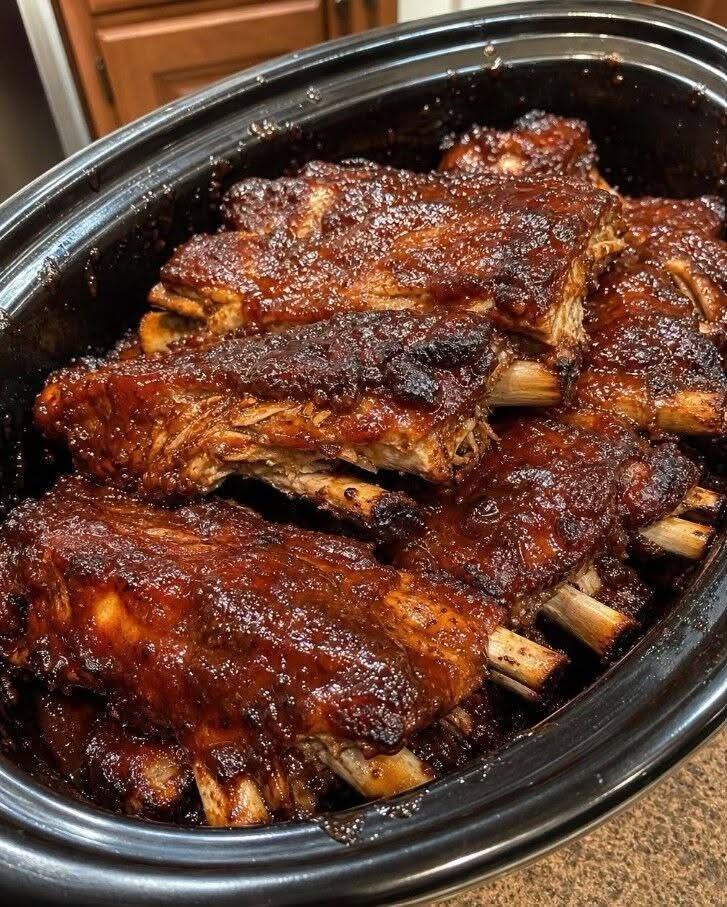
How to Make Slow Cooker BBQ Ribs
Step 1: Prepare the ribs
Remove the ribs from their packaging and pat them dry with paper towels. Place them on a clean work surface.
If there is a thin membrane on the bone side, slide the tip of a blunt knife under one edge. Grip the loosened membrane with a paper towel and peel it away. Some ribs are sold with it already removed, so check before spending time trying to find it.
Cut each rack into sections that will fit comfortably inside your slow cooker. Depending on the pot, sections of three or four ribs are usually easy to arrange and move later. Wash your hands and clean any work surfaces and utensils that touched raw pork before handling other foods.
Step 2: Mix the seasoning
In a small bowl, combine the brown sugar, smoked paprika, garlic powder, onion powder, salt, black pepper, and optional cayenne.
Rub the mixture over both sides of the rib sections. You are looking for an even coating, not a thick crust. Press seasoning into the meat side and use whatever remains on the bone side.
If your barbecue sauce is particularly salty, you may want to choose a lower-sodium sauce. Taste the sauce before adding extra salt to the finished ribs.
Step 3: Arrange the slow cooker
Pour the water or unsalted broth into the bottom of the slow cooker. It provides a little moisture at the start of cooking; the ribs will release juices as they cook. You do not need to submerge them.
Place the rib sections in the pot. They can stand with the meat facing outward around the sides, or lie in loose layers if that is a better fit for your cooker. Keep the lid clear so it seals properly.
Spoon ½ cup (120 ml) of the barbecue sauce over the ribs. Reserve the remaining ¾ cup (180 ml) in a separate, clean container for glazing later. If you use a spoon to touch the raw ribs, do not put it back into the reserved sauce.
Step 4: Cook until tender
Cover the slow cooker and cook on LOW for about 6–8 hours or HIGH for about 3–4 hours. Begin checking at the earlier end of the range.
The meat should feel tender when you insert a knife between the bones. It may have pulled back a little from the ends of the bones. If you intend to broil the ribs, aim to remove them when they are tender but can still be lifted in sections without breaking apart.
Use a food thermometer in the thickest meaty part, avoiding the bone. The USDA lists 145°F (63°C), followed by a three-minute rest, as the safe minimum for whole cuts of pork. Ribs cooked to the tenderness expected in this recipe will generally cook beyond that minimum; the temperature confirms safety, while texture tells you whether they have softened enough for the dish. See the USDA’s safe minimum internal temperature chart. Food Safety and Inspection Service
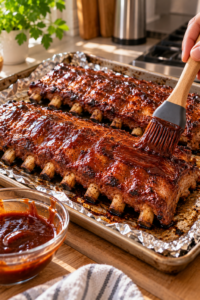
Step 5: Transfer and glaze
Line a rimmed baking sheet with foil and turn on the broiler. In the UK, use the oven’s grill setting.
Lift the rib sections out of the slow cooker carefully and arrange them meat-side up on the sheet. Slow-cooked ribs can be fragile, so support larger sections from beneath with a wide spatula if tongs start to pull them apart.
Brush the ribs with the reserved barbecue sauce. Use enough to cover the meat well, holding back a little if you would like extra sauce for serving. The sauce you reserved should have stayed separate from the raw pork throughout preparation.
Step 6: Broil for a sticky finish
Broil the ribs for approximately 3–5 minutes, watching them closely. Barbecue sauces often contain sugar and can move from glossy to burnt quickly. Rotate the baking sheet if one side colors faster than the other.
Remove the ribs when the sauce is bubbling and darker in spots. Let them stand for a few minutes before cutting between the bones. You can add a final light brush of clean, reserved sauce if desired.
This step produces the deep-colored finish that makes slow cooker BBQ ribs look especially inviting. It is optional for tenderness but worthwhile when you want the look of the pictured dish.
How to Tell When the Ribs Are Ready
A thermometer and a tenderness check answer different questions. The thermometer tells you whether the pork has reached a safe internal temperature. The texture tells you whether the ribs have cooked long enough to be pleasantly tender.
For this recipe, insert a knife into the meat between two bones. If it meets strong resistance, put the lid back on and cook longer. If the sections bend when lifted but still hold together, they are well suited to broiling. If the meat separates from the bones as soon as you touch it, it is very tender; transfer it gently or skip the baking-sheet finish and serve it straight from the pot.
The bones should not be used as the place for your thermometer reading. Position the probe in the thickest available meat and check more than one section if the pieces differ in size.
Do not rely on the darkness of the barbecue sauce as a sign that the ribs are cooked. Sauce color depends on its ingredients, and it can look dark long before the pork reaches the texture you want.
Seven Tips for Better Slow Cooker BBQ Ribs
1. Thaw frozen ribs before slow cooking
Start with properly thawed meat. The USDA advises thawing meat or poultry before putting it in a slow cooker, since frozen pieces can take too long to heat through. Thaw ribs in the refrigerator rather than on the counter. Food Safety and Inspection Service
2. Cut the racks before they go into the pot
Smaller sections fit more easily and are simpler to lift when tender. Cut between bones rather than trying to bend a rack sharply into a cooker that is too small.
3. Do not add too much liquid
The ribs release juices as they cook. A modest amount of water or broth is enough to get this recipe started. Filling the pot with liquid will make the sauce thinner and give you a different result.
4. Reserve clean sauce for the finish
Set aside the final glazing sauce before handling the raw ribs. This gives you a thick, fresh coating after slow cooking and avoids using sauce contaminated by raw pork as a finishing sauce.
5. Keep the lid on
Each time you remove the lid, you release heat and interrupt the cooking process. Check the ribs when they are approaching the early end of the time range rather than lifting the lid repeatedly.
6. Watch the broiler continuously
The glaze can darken fast. Stay beside the oven during the final few minutes and remove the ribs as soon as they reach the color you like.
7. Move tender ribs with support
Use a wide spatula beneath a rib section if tongs alone tear it. If the meat is already falling from the bones, arrange it on a platter and spoon on the reserved sauce instead of trying to broil intact sections.
Common Mistakes to Avoid
Putting frozen ribs straight into the slow cooker: Thaw them in the refrigerator first, following USDA slow-cooker guidance. Food Safety and Inspection Service
Overfilling the pot: The lid should close securely. If two full racks do not fit, cook a smaller batch or use a larger cooker.
Expecting the slow cooker to brown the sauce: A covered slow cooker creates moist heat. Use the optional broiler step for browned, sticky edges.
Judging doneness by time alone: Start with the suggested range, then check the thickest section for safe temperature and the meat for tenderness.
Using raw-meat sauce at the table: If a brush or spoon has touched uncooked pork, do not dip it into sauce you intend to serve without cooking. Reserve the finishing sauce in its own clean container at the beginning.
Leaving ribs under the broiler unattended: A sugary glaze can scorch in moments. Keep a close eye on it.
Trying to lift a whole rack once it is very soft: Cooking in sections makes transferring and serving much easier.
Variations and Substitutions
Use spare ribs
Pork spare ribs can replace baby back ribs if they fit your cooker. They are a different cut and may need additional time to become tender. Use the same doneness checks rather than following the clock rigidly.
Make the sauce spicier
Choose a spicy barbecue sauce or increase the cayenne slightly in the seasoning mix. Add heat gradually; it is easy to offer hot sauce at the table but difficult to undo an overly spicy batch.
Add a smoky note
Smoked paprika gives the ribs a mild smoky character even though they are cooked indoors. A barbecue sauce with a smoky flavor can build on that without changing the cooking method.
Use a less sweet sauce
Some barbecue sauces are considerably sweeter than others. If you prefer a sharper finish, choose a tangier sauce and taste it before adding the brown sugar rub. The recipe’s cooking method remains the same, but the flavor will reflect the bottle you choose.
Skip the broiler
If the meat is already falling apart or you do not want to turn on the oven, spoon or brush the reserved sauce over the cooked ribs and serve. They will be tender and flavorful, though they will have a softer surface than the photo shows.