
How to Store Tomatoes: 7 Easy Ways to Keep Them Fresh
Knowing how to store tomatoes correctly can help preserve their flavour, texture, and appearance while reducing unnecessary food waste. Tomatoes are delicate fruits: they continue to ripen after harvest, bruise easily, release moisture, and can become soft or mouldy when stored in unsuitable conditions.
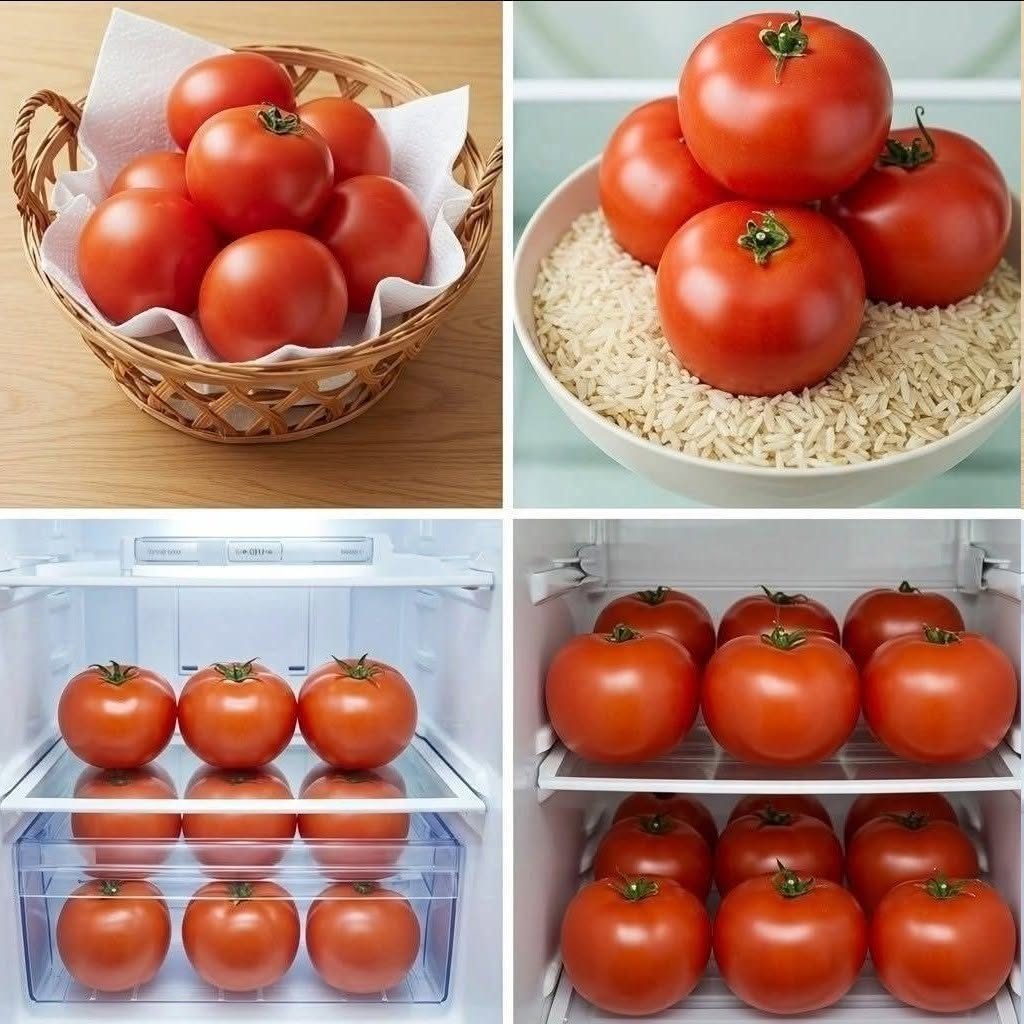
The supplied image shows several popular storage ideas: placing tomatoes in a paper-lined basket, setting them over uncooked rice, and keeping them on refrigerator shelves or in a produce drawer. Some of these methods can help in specific situations, while others are unnecessary or may reduce quality.
Fresh Tomatoes and Their Health Benefits
The best storage method depends on the tomato’s condition. Firm, unripe tomatoes benefit from room-temperature storage. Fully ripe tomatoes can remain on the counter briefly if they will be used soon, but refrigeration can slow further deterioration. Cut tomatoes must be covered and refrigerated promptly.
You do not need to bury tomatoes in rice to keep them fresh. A dry, ventilated container, careful handling, and the correct temperature are more important.
Why Tomato Storage Matters
Tomatoes continue to change after you bring them home. Their colour deepens, their flesh softens, and their aroma develops as they ripen.
Leaving every tomato on the counter regardless of ripeness can lead to:
- Soft or leaking fruit
- Mould around the stem
- Split skin
- Fermented odours
- Fruit flies
- Premature food waste
Refrigerating every tomato immediately can also be less than ideal. Cold temperatures slow ripening and may temporarily reduce aroma and alter texture, particularly in tomatoes that are still firm and under-ripe.
Learning how to store tomatoes means responding to their ripeness rather than applying one rule to every tomato.
How to Tell Whether a Tomato Is Ripe
A ripe tomato generally has:
- An even colour appropriate for its variety
- A noticeable tomato aroma near the stem
- Smooth skin without major cracks
- A slight yield when pressed gently
- Firm flesh without hard green areas
- No leaking liquid or sunken mouldy spots
Different varieties have different mature colours. Some heirloom tomatoes remain green, purple, striped, orange, or yellow when ripe. Colour alone is not always a reliable test.
Handle tomatoes gently. Pressing repeatedly can bruise the flesh and shorten storage life.
Seven Effective Ways to Store Tomatoes
1. Keep Unripe Tomatoes at Room Temperature
Firm tomatoes that have not developed their full colour should generally remain at room temperature.
Place them in a single layer on a plate, tray, or shallow basket. Keep them away from direct sunlight, radiators, ovens, and other sources of heat.
A moderate indoor temperature supports gradual ripening. An extremely hot kitchen can make tomatoes soften too quickly, while a very cold room may slow the process considerably.
Check the tomatoes daily and remove any fruit that develops a damaged or mouldy area.
2. Store Them in a Single Layer
Piling tomatoes deeply in a bowl creates pressure on the fruit at the bottom. Bruised areas may soften and leak before the upper tomatoes show any problem.
Arrange tomatoes in a single layer whenever possible. A shallow basket, rimmed plate, cardboard produce tray, or wide container works well.
If you must create a second layer, place a clean paper towel or soft cloth between the layers and avoid stacking heavy tomatoes over smaller ones.
3. Position Tomatoes Stem-Side Down
The stem scar is a delicate area where the fruit was attached to the plant. Placing whole tomatoes stem-side down can reduce direct air exposure around that area and may help protect it from moisture loss and contamination.
This method is most suitable for intact tomatoes stored at room temperature for a short period.
Do not apply tape, wax, or household coatings unless you are following a professionally tested food-storage method.
4. Refrigerate Fully Ripe Tomatoes When Necessary
A ripe tomato that will be eaten within a day may remain at a cool room temperature. If you cannot use it promptly, refrigeration can slow additional softening and spoilage.
Place ripe tomatoes in a clean container or produce drawer where they will not be crushed by heavier food.
For improved flavour, remove refrigerated whole tomatoes approximately 30–60 minutes before serving. Allowing them to warm slightly can make their aroma more noticeable.
Refrigeration does not repair a tomato that is already mouldy or decomposing. Inspect the fruit before storing it.
5. Refrigerate Cut Tomatoes Promptly
Once a tomato has been cut, its moist interior is exposed to hands, utensils, surfaces, and airborne contamination.
Cover cut tomatoes tightly or place them in a sealed food-storage container. Refrigerate them promptly at 40°F (4°C) or below and use them as soon as practical.
Do not leave sliced or chopped tomatoes at room temperature for an extended period, especially in a hot kitchen or outdoor setting.
The official FoodSafety.gov cold-storage guidance recommends keeping refrigerated foods at 40°F (4°C) or below and explains that short home-storage limits help prevent food from spoiling or becoming unsafe.
6. Use Paper Towels Only to Control Excess Moisture
A clean paper towel can be useful when a container develops condensation or when the tomatoes are slightly damp.
Line a shallow container loosely, arrange the dry tomatoes in one layer, and replace the paper if it becomes wet.
Do not wrap each tomato tightly in damp paper. Trapped moisture and poor airflow can encourage softening and mould.
Paper towels are not a substitute for discarding damaged produce or refrigerating cut tomatoes correctly.
7. Check Stored Tomatoes Every Day
Storage advice cannot compensate for a forgotten tomato that leaks underneath the others.
Inspect the batch daily and use the ripest fruit first. Remove tomatoes that show:
- Fuzzy mould
- Leaking liquid
- Deep sunken areas
- Fermented or unpleasant odours
- Extensive splitting with deterioration
- Slimy surfaces
- Severe collapse
One damaged tomato can release moisture and expose neighbouring fruit to spoilage organisms.