
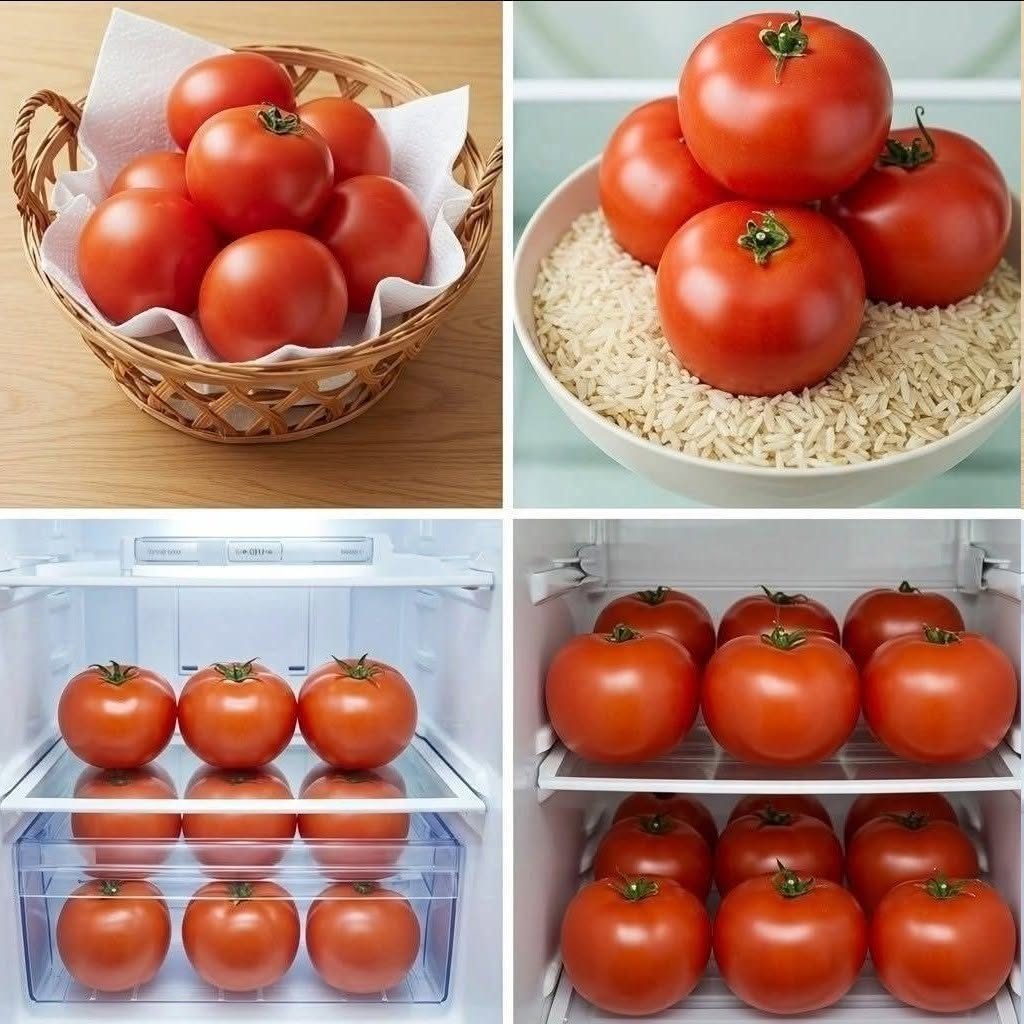
How to Ripen Tomatoes Faster
To speed ripening, place firm tomatoes in a paper bag with a ripe banana or apple. These fruits release ethylene gas, which can encourage ripening.
Fold the bag loosely rather than sealing it airtight. Check it at least once daily because warmth and trapped moisture can cause rapid deterioration.
Remove each tomato as soon as it reaches the desired ripeness.
How to Slow Ripening
To slow ripening:
- Keep tomatoes away from bananas, apples, avocados, and other ethylene-producing fruit.
- Move fully ripe tomatoes into the refrigerator.
- Store them in a single layer.
- Keep the surface dry.
- Avoid warm, sunny areas.
- Inspect and use the softest tomatoes first.
Can You Freeze Tomatoes?
Yes. Freezing is useful when you have more ripe tomatoes than you can use.
Wash and dry the tomatoes, remove the cores, and freeze them whole on a tray. Once firm, transfer them to freezer-safe containers.
You can also freeze chopped tomatoes in measured portions.
Thawed tomatoes become soft because freezing damages their cellular structure. They are best used in:
- Tomato sauce
- Soup
- Stew
- Chilli
- Curry
- Salsa that will be cooked
- Braised dishes
They are usually unsuitable for fresh salads after thawing.
For more preservation ideas, naturally link to your guide to freezing fresh vegetables.
Can You Store Tomatoes in an Airtight Container?
Whole uncut tomatoes stored at room temperature usually benefit from some airflow. A completely sealed container can trap moisture.
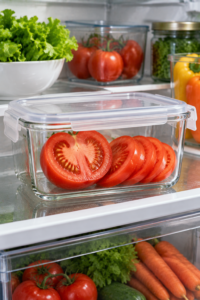
Cut tomatoes, however, should be covered or placed in a sealed container and refrigerated to protect them from contamination and drying.
The correct container therefore depends on whether the tomato is whole or cut.
Common Tomato-Storage Mistakes
Refrigerating Hard, Pale Tomatoes Immediately
Cold temperatures slow ripening. A very firm tomato may remain less flavourful if refrigerated before it has developed properly.
Leaving Very Ripe Tomatoes on a Warm Counter
Once a tomato is fully ripe, heat accelerates softening. Refrigerate it if it will not be used promptly.
Stacking Too Many Tomatoes
Weight damages the fruit at the bottom and makes spoilage harder to detect.
Storing Wet Tomatoes
Surface water and trapped condensation create conditions that favour deterioration.
Ignoring One Damaged Tomato
A leaking or mouldy tomato can affect surrounding produce. Check the entire batch regularly.
Assuming Rice Prevents Spoilage
Rice may absorb some surrounding moisture, but it does not control ripening, destroy microorganisms, or replace suitable refrigeration.
Leaving Cut Tomatoes Uncovered
Cut tomatoes dry out, absorb odours, and face increased contamination risk. Cover and refrigerate them.
How to Use Overripe Tomatoes
A soft tomato is not automatically spoiled. If it has no mould, slime, unpleasant smell, or serious deterioration, use it promptly in a cooked preparation.
Good options include:
- Fresh tomato sauce
- Roasted tomato soup
- Shakshuka
- Pasta sauce
- Curry
- Chilli
- Tomato jam
- Cooked salsa
- Braised vegetables
- Homemade pizza sauce
You can link “fresh tomato sauce” naturally to your relevant sauce recipe and “roasted tomato soup” to a soup article already published on your website.
When Should You Throw a Tomato Away?
Discard tomatoes with fuzzy mould, extensive slime, a strong fermented smell, deep rot, or liquid leaking from badly deteriorated flesh.
With a soft, high-moisture food such as a tomato, cutting away a visibly mouldy area may not remove contamination that has spread beneath the surface.
When safety is uncertain, discarding the tomato is more sensible than tasting it to check.
Frequently Asked Questions
What is the best way to store tomatoes?
Store firm, unripe tomatoes in a single layer at room temperature. Refrigerate fully ripe tomatoes that will not be used soon. Cover and refrigerate cut tomatoes.
Should tomatoes be refrigerated?
Unripe tomatoes are generally better left at room temperature. Refrigeration is useful for slowing deterioration once tomatoes are fully ripe.
Does storing tomatoes in rice keep them fresh?
There is no need to store whole tomatoes in uncooked rice. Proper ripeness management, dryness, airflow, and refrigeration when appropriate are more useful.
Should tomatoes be stored stem-side up or down?
For short-term room-temperature storage, positioning intact tomatoes stem-side down may help protect the stem scar and reduce moisture loss.
Can I wash tomatoes before storing them?
You can, but they must be dried thoroughly. Washing shortly before use is usually simpler and avoids storing wet produce.
How should I store half a tomato?
Place the cut tomato in a covered food-safe container and refrigerate it promptly. Use it as soon as practical.
How do I keep tomatoes from getting mouldy?
Keep them dry, avoid deep stacking, inspect them daily, remove damaged fruit, and refrigerate fully ripe tomatoes that will not be used immediately.
Can tomatoes be frozen whole?
Yes. Frozen tomatoes work well in cooked dishes, although they become soft after thawing.
Why do refrigerated tomatoes taste less flavourful?
Cold temperatures can temporarily reduce aroma and affect texture. Allowing a refrigerated whole tomato to warm before serving may improve its eating quality.
Can I store tomatoes next to bananas?
Bananas release ethylene and can accelerate tomato ripening. Store them together only when you want tomatoes to ripen faster.
Final Thoughts
Learning how to store tomatoes does not require an unusual trick. Begin by checking ripeness, keep firm tomatoes at room temperature, refrigerate ripe extras, and always refrigerate cut tomatoes.
A paper-lined basket can protect fruit and absorb small amounts of surface moisture, but the tomatoes should remain dry, ventilated, and easy to inspect. Uncooked rice is unnecessary and should not be treated as a food-safety solution.
The best approach is simple: buy an amount you can use, handle the tomatoes gently, check them daily, and use the ripest fruit first.