
Should You Store Tomatoes in Uncooked Rice?
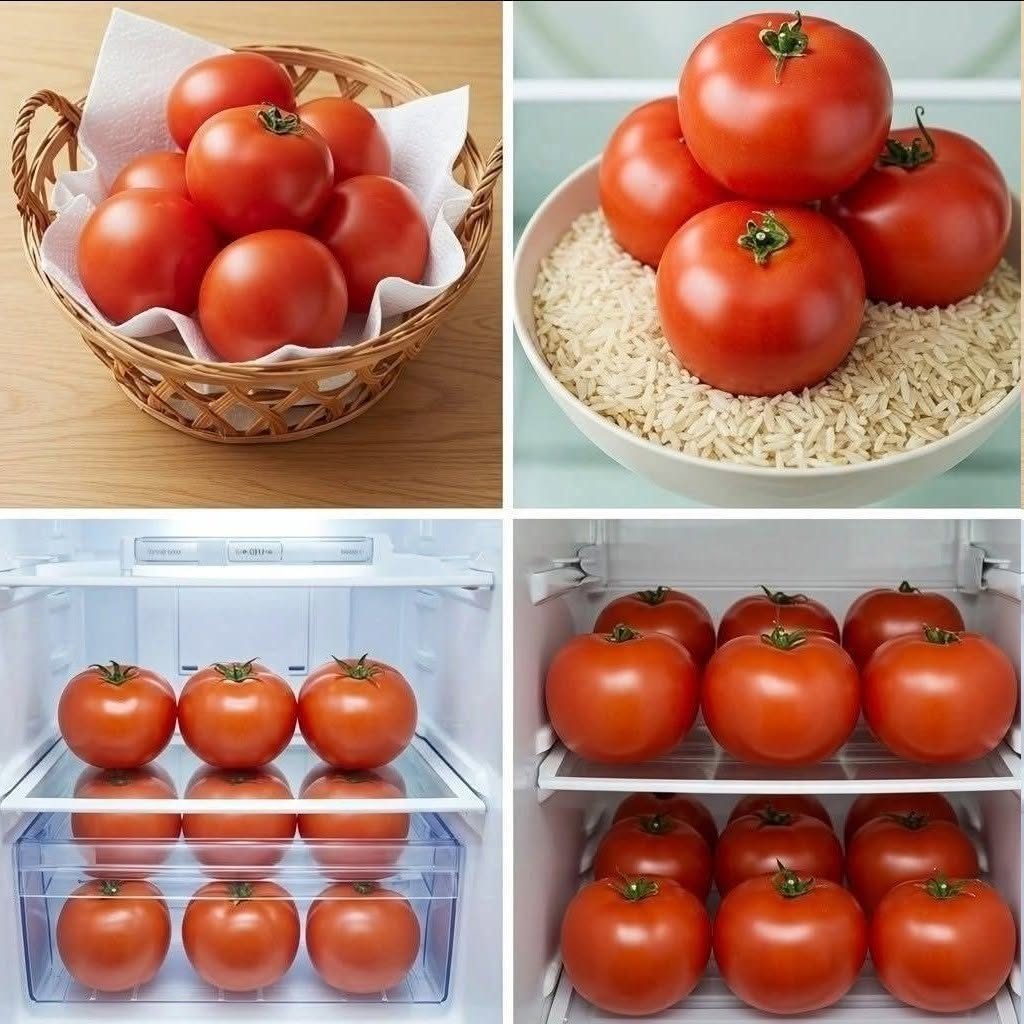
The supplied image shows tomatoes resting on a bowl of uncooked rice. The idea is presumably that rice absorbs moisture and keeps the tomatoes dry.
However, this is not necessary for ordinary tomato storage. Whole, dry tomatoes do not need to be placed in a bowl of rice.
Potential disadvantages include:
- Wasting rice that could otherwise be cooked
- Transferring dirt or microorganisms between the produce and rice
- Hiding the bottom of the tomato from inspection
- Providing no temperature control
- Creating a false sense that spoiled tomatoes remain safe
- Making it harder to notice leaks or mould
Rice cannot stop biological ripening. It also cannot make an overripe or mouldy tomato fresh again.
A clean, dry, well-ventilated tray is simpler and easier to inspect.
Should Tomatoes Be Washed Before Storage?
For ordinary home storage, it is generally practical to keep whole tomatoes dry and wash them under running water shortly before cutting or eating.
If you wash tomatoes before storage, dry them thoroughly. Remaining surface moisture can promote deterioration, especially when the fruit is placed in a closed container.
Do not wash produce with dish soap, bleach, disinfectant, or household cleaner. These products are not intended to be consumed and can leave residues.
Wash your hands, use a clean cutting board, and rinse the tomatoes under clean running water before preparation.
Counter or Refrigerator: Which Is Better?
The answer depends on ripeness and timing.
| Tomato condition | Recommended storage |
|---|---|
| Firm and under-ripe | Room temperature |
| Beginning to colour | Room temperature, checked daily |
| Fully ripe and needed today | Cool room temperature |
| Fully ripe but not needed soon | Refrigerator |
| Cut or sliced | Covered in refrigerator |
| Cooked tomato dish | Covered in refrigerator |
| Damaged or mouldy | Discard when unsafe or extensively spoiled |
Room-temperature storage supports ripening and flavour development. Refrigeration slows further change and can extend the useful life of ripe fruit.
The most practical system is to leave firm tomatoes out and move fully ripe extras into the refrigerator before they deteriorate.
Best Place on the Kitchen Counter
Choose a location that is:
- Dry
- Shaded
- Well ventilated
- Away from the cooker
- Away from direct sunlight
- Protected from crushing
- Easy to inspect every day
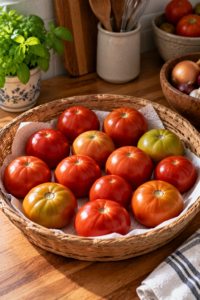
A decorative basket can work, but avoid deep baskets in which tomatoes are stacked under one another.
A paper-lined basket, like the one shown in the image, can protect tomatoes from a rough surface. Replace the liner if it becomes damp or stained.
Best Place in the Refrigerator
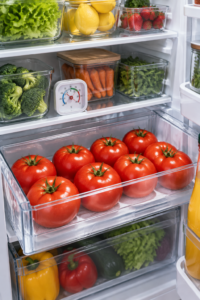
Store ripe whole tomatoes where they will not be crushed. A produce drawer or a shallow container on a stable shelf is suitable.
Avoid placing tomatoes:
- Beneath heavy containers
- Against the coldest rear wall if they are likely to freeze
- In a tightly sealed wet bag
- Next to leaking raw meat or poultry
- In an overcrowded drawer with damaged produce
Refrigerator temperature should remain at or below 40°F (4°C).
How Long Do Tomatoes Last?
Exact storage time varies with ripeness, variety, temperature, handling, and previous storage conditions.
As a practical guide:
- Firm, under-ripe tomatoes may need several days at room temperature to ripen.
- Fully ripe tomatoes may remain satisfactory for one or two days on a cool counter.
- Refrigeration may extend the useful life of ripe tomatoes by several additional days.
- Cut tomatoes should be refrigerated and used promptly.
- Very soft tomatoes should be cooked or used immediately if they show no signs of spoilage.
Always judge the actual fruit rather than relying only on a fixed number of days.
How to Store Different Types of Tomatoes
Cherry and Grape Tomatoes
Keep cherry tomatoes dry and in a shallow, ventilated container. Because they are small, one leaking tomato can quickly wet the others.
Inspect the bottom of the package and remove split fruit.
Roma Tomatoes
Roma or plum tomatoes have firm flesh and relatively low moisture. Store unripe ones at room temperature and refrigerate ripe extras if they will not be used soon.
Beefsteak Tomatoes
Large beefsteak tomatoes bruise easily. Keep them in a single layer and avoid placing weight on them.
Heirloom Tomatoes
Heirloom varieties often have thin skins, irregular shapes, and delicate flesh. Handle them gently and use them soon after ripening.
Green Tomatoes
Mature green tomatoes can continue ripening indoors. Keep them in a dry location and inspect them regularly.
Do not assume every green tomato is unripe; some varieties naturally remain green when mature.