
Practical Ways to Reduce Vehicle-Theft Risk
The bottle story may be unproven, but vehicle theft and theft from parked cars are real. Proven precautions are more valuable than concentrating on one viral scenario.
Always Take the Keys
Never leave a running vehicle unattended, even for a short time. This includes warming it up outside your home or stepping away to inspect a noise.
Lock Every Door
Lock the vehicle whenever you leave it, including when paying for fuel, returning a shopping cart, or checking a tire.
Close Windows and the Sunroof
A partially open window may make it easier to reach the lock or enter the vehicle.
Keep Valuables Out of Sight
Do not leave bags, phones, laptops, cash, keys, documents, or shopping visible. The trunk is safer, but move items before reaching the parking destination when possible so observers do not see where you placed them.
Park in a Visible Area
Choose a well-lit location near pedestrian activity or security cameras. Avoid parking beside large objects that block the vehicle from view.
Use Security Devices
Depending on the vehicle and local theft patterns, useful options may include:
- Steering-wheel locks
- Alarm systems
- Immobilizers
- Wheel locks
- Tracking devices
- Catalytic-converter protection
- Manufacturer security updates
The National Insurance Crime Bureau’s vehicle-theft guidance recommends layered protection, beginning with common-sense habits and adding visible warning devices, immobilizers, and tracking technology where appropriate.
Keep Your Information Current
Make sure your vehicle registration, insurance information, serial numbers, photographs, and vehicle identification number are recorded securely. This can help when reporting a theft.
Do not leave original ownership documents unnecessarily inside the vehicle.
Common Mistakes to Avoid
Assuming Every Bottle Proves Criminal Activity
The viral explanation is not supported as a widespread method. Stay aware, but do not accuse or confront someone without evidence.
Driving Over the Object Deliberately
Even a lightweight bottle can create an alarming sound or become caught. Remove visible obstructions before driving when it is safe to do so.
Leaving the Engine Running
This is the central risk described in the viral story and is easily avoided. Switch the engine off and keep the keys with you.
Getting Out in an Unsafe Location
If you feel threatened, remain in the locked vehicle. Move to a populated place or contact assistance.
Crawling Under the Vehicle
Do not place yourself under a vehicle that is supported only by its tires or an emergency jack. A deeply lodged object should be handled by a mechanic or roadside professional.
Sharing the Photograph With a False Claim
A frightening but unsupported caption can spread unnecessary panic. Explain that the alleged theft method is unverified while still offering practical safety advice.
Could the Bottle Damage the Car?
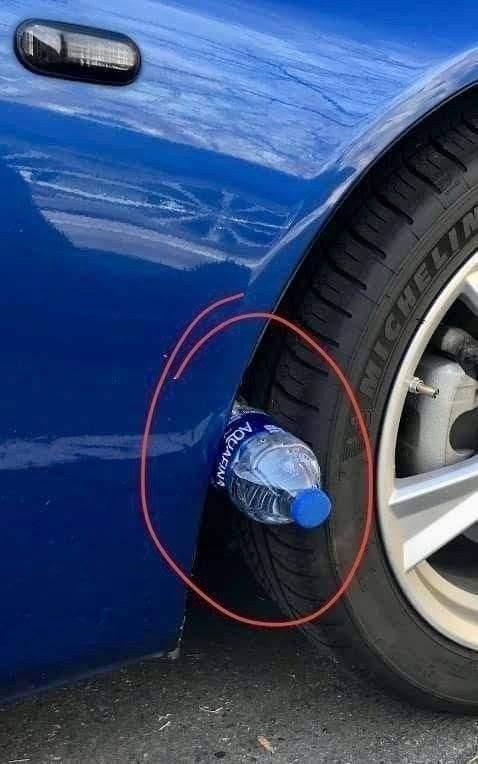
An empty plastic bottle will usually collapse when pressure is applied, so serious damage is unlikely. However, its position matters.
A bottle could potentially:
- Scratch paint or plastic trim
- Dislodge a loose wheel-arch liner
- Become trapped between rotating components
- Create a distracting sound
- Contain liquid that spills
- Hide another object or an existing problem
A full or rigid container may present a greater obstruction than an empty, thin bottle. Glass, metal, wire, or sharp objects require more caution.
If the bottle has already been crushed and the car drives normally without continued noise, major damage is unlikely. Inspect the tire and wheel well before continuing your trip.
Should You Contact the Police?
Finding an ordinary discarded bottle near a tire does not automatically require a police report.
Consider contacting security or law enforcement if:
- Someone appears to be watching or following you
- A person attempts to lure you away from the vehicle
- Multiple vehicles have been deliberately obstructed
- You find evidence of attempted entry or damage
- The object contains a threatening message or unknown substance
- You have relevant surveillance footage
- You feel that you are in immediate danger
Use the local non-emergency number when there is no immediate threat. Use the emergency number for your country when someone is in danger or a crime is actively occurring.
For readers in the United States and Canada, this may be 911. In the United Kingdom, emergency services can be reached on 999 or 112.
Frequently Asked Questions
Is a Water Bottle on Car Tire Definitely a Theft Trick?
No. There is insufficient evidence that it is a widespread or established theft method. It may be litter, a prank, a staged image, or deliberate interference. Remain cautious without treating the viral claim as confirmed fact.
Why Would Someone Put a Bottle Near a Tire?
Possible explanations range from accidental litter to deliberate noise-making. Without witnesses, security footage, or other evidence, it is usually impossible to know the reason.
Can I Drive Over the Bottle?
It is better to remove a visible obstruction safely before driving. This prevents noise, distraction, and the possibility of the bottle becoming trapped.
What Should I Do If I Feel Unsafe?
Stay inside the locked vehicle, avoid confrontation, and move to a busy, well-lit location if the vehicle can be driven safely. Contact security or emergency services if necessary.
Can a Plastic Bottle Puncture a Tire?
An ordinary thin plastic bottle is unlikely to puncture a healthy tire. However, its cap, unidentified contents, or another concealed sharp object could present a risk. Inspect the area before driving.
Should I Check All Four Wheels?
Yes. A short walkaround allows you to look for objects, low tires, leaks, broken lights, and body damage.
Should I Post the Image on Social Media?
You may share it as a general safety reminder, but avoid claiming that it proves thieves targeted the vehicle. Clearly distinguish verified advice from the unconfirmed viral story.
What If the Noise Continues After Removing the Bottle?
Stop driving and arrange a professional inspection. Continuing grinding, scraping, vibration, or pulling may indicate a mechanical issue unrelated to the bottle.
Final Thoughts
A Water Bottle on Car Tire can look suspicious, particularly when it appears deliberately wedged into the wheel arch. Nevertheless, the popular story describing it as a standard vehicle-theft method has not been supported by convincing evidence.
The right response is practical rather than panicked. Check your surroundings, secure the vehicle, take the keys, remove the obstruction only when safe, and inspect the wheel area before driving. If the location feels unsafe or the vehicle appears damaged, contact security, law enforcement, or roadside assistance.
The most effective protection comes from proven habits: lock the vehicle, keep valuables out of sight, park in visible locations, use appropriate security devices, and never leave a running car unattended.