
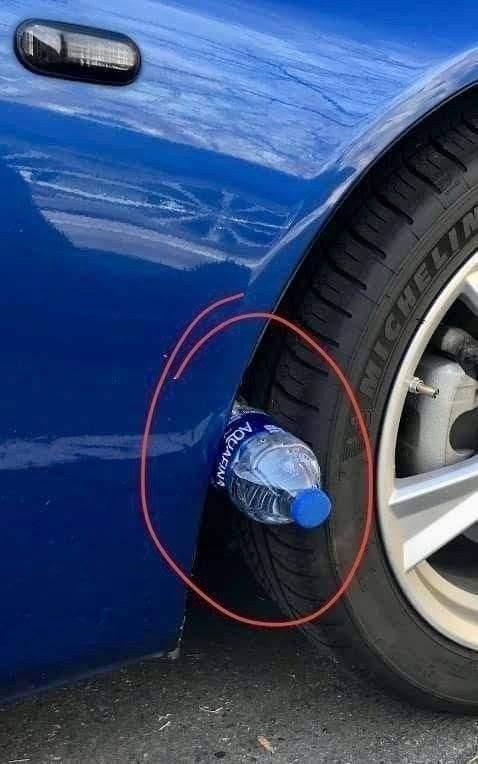
What Should You Do If You Find a Bottle Near Your Wheel?
1. Do Not Start Driving Immediately
If you notice a bottle, wire, fabric, chain, or another object near a tire, do not simply drive over it. An object could become caught in moving components or distract you once the vehicle begins moving.
Turn off the engine if it is running, place the vehicle in park, and apply the parking brake.
2. Look Around Before Getting Out
Observe the immediate area through your windows and mirrors. If the location feels unsafe or someone appears to be watching or approaching you, remain inside with the doors locked.
Call parking-lot security, roadside assistance, local law enforcement, or the appropriate emergency service if you believe you are in immediate danger.
Do not confront an unfamiliar person about the object.
3. Secure the Vehicle
Take the keys with you and lock the vehicle before inspecting the wheel. Do not leave your phone, handbag, wallet, or other valuables visible inside.
Even if the bottle has an innocent explanation, leaving a running vehicle unattended creates an unnecessary opportunity for theft.
4. Remove the Bottle Only When It Is Safe
Make sure the vehicle cannot move. Remove the bottle by hand only if it is easily accessible and you can do so without placing any part of your body beneath the vehicle.
Do not reach near hot, sharp, moving, or damaged components. If the object is tightly trapped or appears connected to another item, contact a professional.
Wear gloves if the bottle is dirty, broken, or contains an unknown substance. Do not open, smell, or touch unidentified contents.
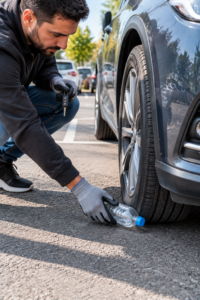
5. Inspect the Wheel Area
After removing the obstruction, look for:
- Cuts or bulges in the tire
- Visible loss of tire pressure
- Scratches or broken trim
- Loose wheel-arch lining
- Fluid beneath the vehicle
- Wire, cord, or fabric around the wheel
- Anything touching the brakes or suspension
- Other objects around the remaining tires
A plastic bottle alone is unlikely to cause major mechanical damage, but the inspection may reveal another problem.
6. Document Anything Suspicious
Take photographs from a safe position before moving the bottle if you believe it was deliberately placed. Note the location and approximate time.
If your vehicle is parked near businesses or residences, security cameras may have recorded the area. Do not delay reporting a genuine threat while trying to collect evidence yourself.
7. Leave the Area Safely
Once the wheel area is clear and no damage is visible, enter the vehicle, lock the doors, and leave normally.
If the vehicle feels unstable, a warning light appears, the tire looks damaged, or you continue hearing an unusual sound, stop in a safe location and request roadside assistance.
What If You Hear the Bottle After You Start Driving?
An unexpected crunch or scraping sound can be frightening, but abrupt reactions create additional danger.
Take these steps:
- Keep control of the steering wheel.
- Reduce speed gradually.
- Avoid sudden braking unless necessary.
- Activate your hazard lights if appropriate.
- Pull into a well-lit public location.
- Put the vehicle in park and switch off the engine.
- Take the keys and secure the vehicle before inspecting it.
Do not stop in a traffic lane or an isolated area simply because you heard a brief crunch. If the vehicle continues to handle normally, move to the nearest safe stopping place.
If you suspect someone is following you, remain inside the locked vehicle and drive to a police station, busy service station, or another populated location. Contact emergency services when there is an immediate threat.
Signs That Require More Than a Simple Inspection
A plastic bottle is usually easy to identify and remove. Other findings may need professional attention.
Do not drive the vehicle if you notice:
- A visibly flat or severely underinflated tire
- A large cut, bubble, or exposed tire cord
- A cable wrapped around the wheel
- Fluid leaking near the tire
- A burning smell or smoke
- A damaged brake component
- Loose wheel nuts
- Strong vibration after moving
- Grinding that continues after the object is removed
- Steering that suddenly pulls strongly to one side
Contact roadside assistance or a qualified mechanic. Driving with tire, brake, steering, or suspension damage can result in loss of control.