
Got Hibiscus Buds? 8 Things to Do in July for More Flowers
A tropical hibiscus covered in buds is an exciting sight—but summer heat can make those buds surprisingly vulnerable. A pot that dries out during a hot afternoon, an abrupt move into stronger sun, or a heavy midsummer pruning can interrupt the display just as it is getting started.
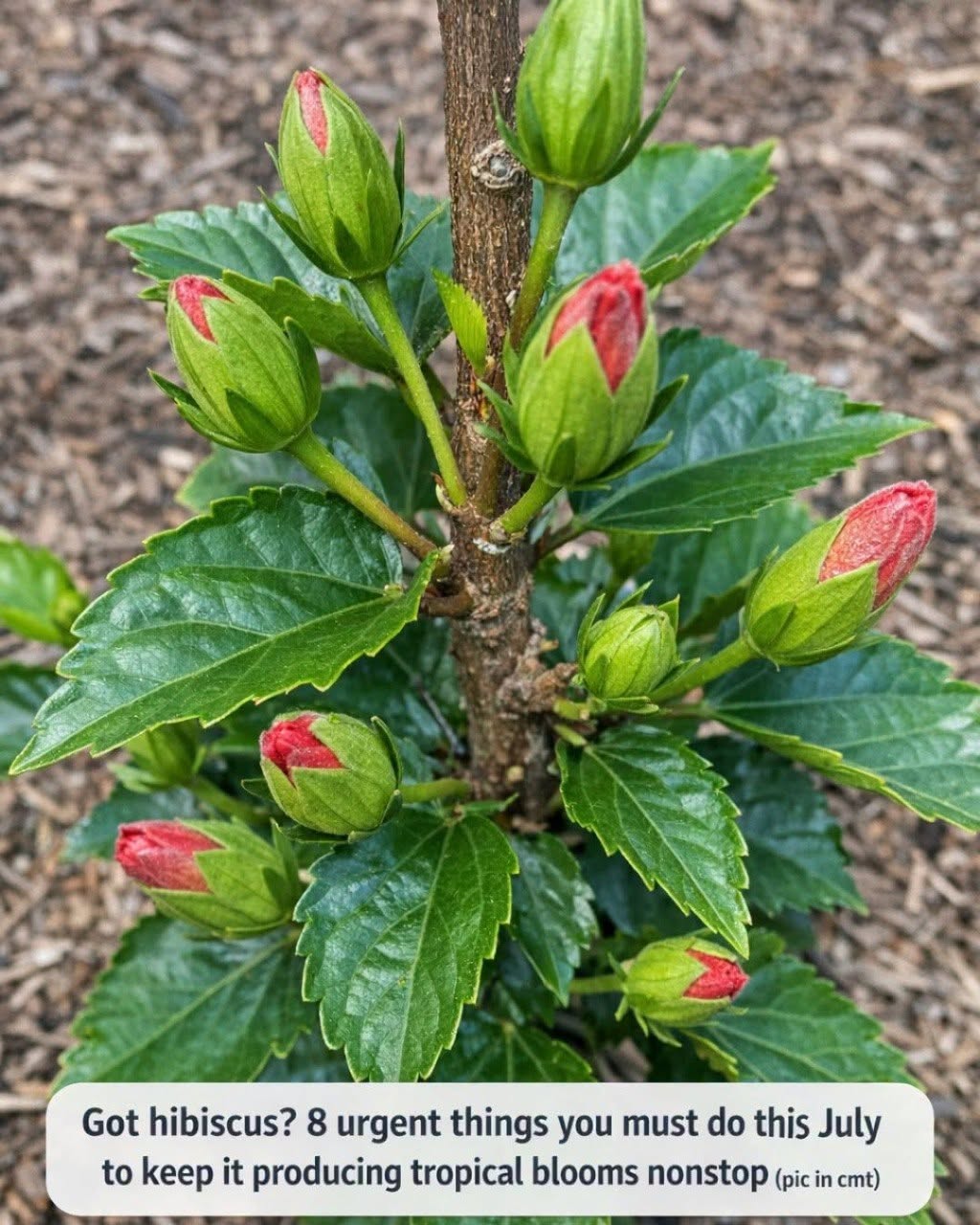
The plant in the photo appears consistent with a tropical hibiscus, with glossy leaves and developing pink flower buds. This guide is written for tropical hibiscus (Hibiscus rosa-sinensis) grown outdoors in summer, especially in a container. Hardy perennial hibiscus has different growth habits and seasonal care needs.
The headline in the image promises “nonstop” flowers. A healthy tropical hibiscus can produce flowers repeatedly during warm weather, but no care routine guarantees a bloom every day. Individual flowers are short-lived, often lasting only a day. The goal in July is to keep the plant healthy enough to continue making and opening new buds.
1. Check the Soil Before the Day Gets Hot
July watering is rarely a matter of following a fixed schedule. A small pot in sun and wind may dry much faster than a large container in a sheltered spot.
Check the soil in the morning. If the upper layer is beginning to dry, water thoroughly until water flows from the drainage holes. Empty any saucer that holds excess water. Aim for soil that stays relatively moist but not saturated, and do not let the plant dry out so far that it wilts. The University of Minnesota Extension recommends watering through the pot and allowing the excess to drain away.
During a heat wave, check a container again later in the day. Some potted plants need water more than once daily in hot, dry conditions; let the condition of the soil guide you.
Quick July task: Put a finger into the potting mix each morning, then water deeply when it needs it rather than giving the plant a small splash by habit.
2. Give It Bright Light Without an Abrupt Move
Tropical hibiscus needs plenty of light to bloom well. A plant kept in deep shade may grow attractive leaves but produce fewer flowers. Full sun can work well when the plant has been gradually accustomed to it.
If your hibiscus has been indoors or on a shaded porch, do not move it straight into intense July sun. Shift it into brighter conditions gradually. That transition helps reduce stress and the loss of developing buds.
In places with severe afternoon heat, a container can be positioned where it receives strong morning light and some protection later in the day. Watch the plant and its soil: a location that works in mild weather may become too demanding during a heat wave.
Quick July task: Look at the plant’s actual light exposure throughout the day, especially if it has stopped producing buds.
3. Keep the Pot Draining Freely
Hibiscus needs moisture, but roots sitting in water are a different problem. Make sure the container has drainage holes and that they are not blocked. After watering, excess water should be able to leave the pot.
If the surface dries quickly while the lower potting mix stays soggy, check the container before simply watering more often. A suitable, well-drained potting mix helps moisture reach the roots without remaining waterlogged. University of Minnesota Extension recommends a rich, well-drained growing medium for tropical hibiscus.
You do not need to repot a bud-covered hibiscus automatically in July. First check for straightforward problems: a blocked drainage hole, a pot standing in water, or potting mix that has become difficult to wet evenly.
Quick July task: After the next thorough watering, confirm that water exits the bottom of the container.
4. Feed Consistently, Following the Label
A container-grown hibiscus uses nutrients as it grows and flowers, while regular watering can carry some nutrients out of the pot. Moderate, consistent feeding is more useful than applying an extra-large dose because you want instant blooms.
University of Minnesota Extension recommends a balanced fertilizer at half the label strength every two to three weeks for hibiscus placed outdoors for summer. Illinois Extension advises monthly feeding. Those schedules differ, so choose a suitable product, follow its label, and avoid combining multiple feeding schedules.
More fertilizer does not necessarily mean more flowers. If a plant is struggling with dry soil, poor drainage, or unsuitable light, address that condition rather than treating fertilizer as a cure for every problem.
Quick July task: Check when you last fertilized and use the product label to plan the next application.
5. Protect Developing Buds from Sudden Stress
The promising buds in the image are worth watching closely. If buds turn yellow or drop before opening, look at the plant’s recent conditions. Has the pot dried out? Has it been moved? Are temperatures unusually high? Is it receiving much less light than before?
University of Minnesota Extension identifies temperature extremes, inconsistent watering, and low light among the possible causes of bud drop. It also notes that abrupt changes in growing conditions can affect hibiscus foliage and buds.
Try to keep conditions reasonably steady. Water according to the soil, introduce major light changes gradually, and move a pot out of an exceptionally harsh position if it repeatedly wilts despite attentive watering.
Quick July task: If buds are dropping, review the last week of watering, weather, and changes in location before adding any treatment.