
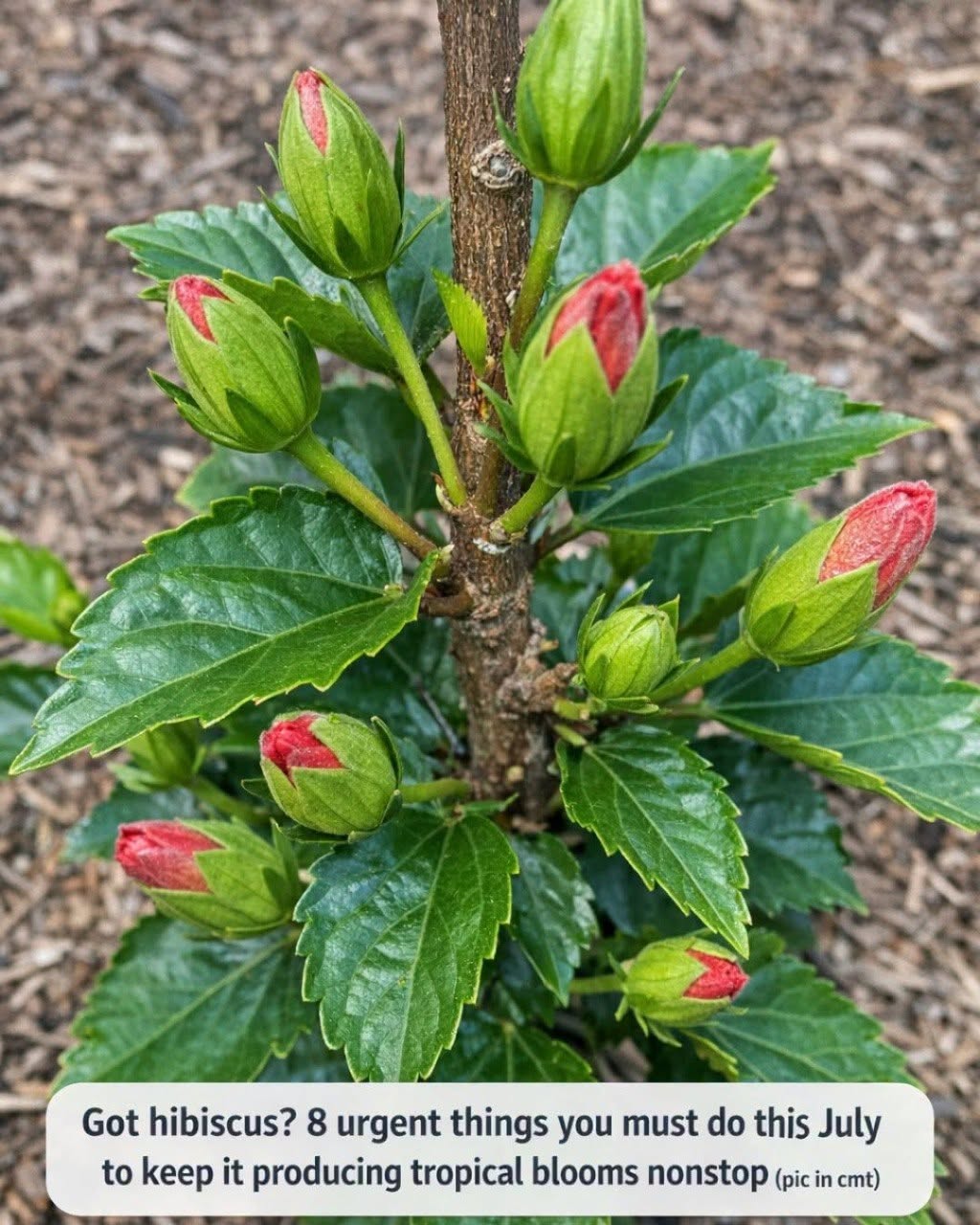
6. Inspect Buds and Leaves for Pests
A quick inspection can catch a problem before it spreads through the plant. Look closely at tender growth, the undersides of leaves, and the stems below the flower buds. Aphids may gather on new growth, while spider mites can be harder to see.
University of Minnesota Extension lists aphids and spider mites among common hibiscus pests. It advises keeping foliage clean and, when treatment is necessary, using a product labeled for hibiscus while following its directions.
Do not assume every dropped bud means insects are present. Watering and temperature stress can cause similar concerns. Find the pest—or clear evidence of damage—before choosing a treatment.
Quick July task: Turn over several leaves and inspect a few buds every time you water.
7. Avoid Heavy Pruning While It Is Setting Buds
July is usually a poor time to give a bud-filled tropical hibiscus a dramatic haircut if your main goal is flowers in the coming weeks. Pruning removes stem tips, and those tips may carry developing buds.
You can tidy up damaged growth and remove spent flowers if you like, but save substantial reshaping for a more suitable time. University of Minnesota Extension recommends pruning in late winter to encourage a bushier plant and cautions that heavier pruning removes flower buds, delaying the next display.
If your hibiscus has become too large for its space, you can still prune it; simply expect a pause while it grows new flowering shoots.
Quick July task: Look for buds before cutting any healthy stem.
8. Adjust the Routine to Your Weather, Not the Calendar Alone
“July care” means different things in different gardens. A coastal UK patio, a humid US garden, and a dry Canadian balcony can give a potted hibiscus very different amounts of sun, heat, wind, and rain. Even two pots beside each other may need different watering if one is smaller or more exposed.
Use the eight steps as a checklist, then respond to what the plant is showing you. During hot, windy spells, focus on moisture and root protection. During rainy periods, pay closer attention to drainage. When the plant is growing well but producing few buds, reassess its light.
Tropical hibiscus is also not frost hardy. If you live where autumn brings frost, plan to move a container indoors before the first frost rather than treating it as a hardy garden perennial.
Why Are the Buds Opening One at a Time?
That is normal. Tropical hibiscus flowers are brief, but a healthy plant can continue producing new ones during warm weather. A plant with several buds at different stages may look as though it is flowering continuously even though each flower lasts only a short time.
Do not judge the plant by one quiet day. Look instead for new growth and developing buds over the following weeks.
July Hibiscus Care Checklist
- Check potting mix each morning and water thoroughly when needed.
- Make sure excess water drains from the pot.
- Give the plant plenty of light, introducing stronger sun gradually.
- Feed moderately according to your fertilizer label.
- Watch for bud drop after heat, drying, or a change in location.
- Inspect new growth and leaf undersides for pests.
- Avoid cutting off healthy, bud-bearing stems.
- Adapt watering and placement to your local weather.
Final Thoughts
The buds in the photo show a hibiscus preparing to flower. The most useful July care is steady and practical: keep the roots appropriately moist, provide ample light, check drainage, feed sensibly, and catch stress or pests early. Those steps give the plant good conditions for more blooms over the summer, without promising flowers it cannot produce on command.