
Watch Your Salt Intake
If you regularly consume large amounts of salty processed food, reducing your sodium intake may help reduce fluid retention in some people.
Good everyday choices include:
- Fresh vegetables
- Fresh fruit
- Beans
- Whole grains
- Unsalted nuts
- Fresh meat or fish
- Home-cooked meals
You don’t necessarily need to eliminate salt completely.
The goal is to avoid excessive intake.
If you have heart, kidney, or other medical conditions, ask your healthcare provider what sodium intake is appropriate for you.
Stay Active During Long Trips
Long car journeys and flights can contribute to foot and ankle swelling.
When traveling for long periods:
- Get up when it is safe
- Walk around periodically
- Move your ankles
- Avoid sitting completely still for hours
- Wear comfortable clothing
- Drink fluids normally
MedlinePlus notes that long airplane flights and car rides can contribute to swelling in the feet and ankles. MedlinePlus
People with a history of blood clots may need additional precautions, so they should discuss travel plans with their healthcare provider.
Should You Use Compression Socks?
Compression or support stockings can help some people with certain types of leg swelling, particularly problems related to circulation.
MedlinePlus lists support stockings among measures that may help reduce swelling. MedlinePlus
However, compression isn’t appropriate for every cause of swelling.
If you have unexplained swelling, significant pain, suspected infection, or possible circulation problems, ask a healthcare professional before choosing compression garments.
Don’t Take Water Pills on Your Own
You may have heard that diuretics, sometimes called “water pills,” can get rid of swollen feet.
These medications increase urine production and can be useful for certain medical conditions.
But they are not a general-purpose treatment for unexplained swelling.
Using them without medical guidance can affect:
- Sodium
- Potassium
- Blood pressure
- Kidney function
- Fluid balance
MedlinePlus notes that diuretics may be prescribed depending on the cause, but treatment should focus on the underlying condition. MedlinePlus
If you repeatedly have swollen feet, finding the cause is more important than simply trying to remove fluid.
Can Drinking More Water Reduce Swelling?
This is more complicated than many social-media posts suggest.
Swelling usually means excess fluid is accumulating in tissues, but that doesn’t mean you should drastically restrict fluids or force yourself to drink enormous amounts.
The appropriate fluid intake depends on your health.
For someone who is otherwise healthy, normal hydration is important.
For someone with certain heart, kidney, or liver conditions, fluid recommendations may be different.
If you have a medical condition that affects fluid balance, follow your healthcare provider’s advice rather than following generic online hydration rules.
Does Weight Affect Swollen Feet?
Being overweight can contribute to leg and foot swelling.
The NHS lists being overweight among common factors associated with edema. nhs.uk
Weight can also influence circulation and put additional stress on the lower limbs.
If weight is contributing to swelling, gradual long-term lifestyle changes may help.
Avoid crash diets or extreme methods marketed as ways to “drain” the body.
A sustainable eating pattern, regular activity, adequate sleep, and appropriate medical care are safer approaches.
Can Thyroid Problems Cause Swollen Feet?
Yes, thyroid disorders can be associated with swelling.
The NHS lists thyroid problems among possible causes of edema. nhs.uk
But swollen feet alone cannot diagnose a thyroid problem.
Other symptoms and, when appropriate, blood tests are needed to determine whether thyroid function is involved.
Can Liver Problems Cause Swollen Feet?
Yes.
Liver disease, particularly conditions involving cirrhosis, can contribute to fluid accumulation and swelling.
MedlinePlus lists liver problems among possible causes of edema. MedlinePlus
If someone with known liver disease develops new or worsening swelling in the legs or abdomen, medical evaluation is important.
Can an Infection Cause a Swollen Foot?
Yes.
An infection can cause localized swelling, especially when accompanied by:
- Redness
- Warmth
- Pain
- Tenderness
- Fever
The NHS lists infection as a possible cause of swelling and recommends urgent assessment when the swollen area is red or hot or when fever is present. nhs.uk
A foot infection should be taken particularly seriously in people with diabetes.
The NHS specifically advises people with diabetes and swollen feet, ankles, or legs to seek medical advice. nhs.uk
What If Your Feet Swell Only at Night?
Some people notice swelling more clearly in the evening.
This can happen because you’ve spent the day upright.
Gravity encourages fluid toward the lower limbs, making swelling more noticeable around the ankles and feet.
If the swelling disappears overnight and returns after standing during the day, circulation and prolonged standing may be contributing.
However, recurring swelling should still be discussed with a healthcare professional if it is significant, worsening, or unexplained.
What If Your Feet Are Swollen in the Morning?
Morning swelling deserves a different look.
If your feet are already significantly swollen when you wake up, particularly if the swelling persists throughout the day or affects other parts of your body, it may be worth discussing with a healthcare provider.
Swelling can have many causes, so timing alone cannot identify the problem.
Your doctor may ask:
- When did the swelling begin?
- Is it one foot or both?
- Does it improve during the day?
- Does elevation help?
- Are you taking any medications?
- Do you have heart, kidney, liver, or thyroid problems?
- Have you recently traveled?
- Have you injured your foot?
- Are you experiencing shortness of breath?
These details help narrow down the possible causes.
How Doctors Investigate Swollen Feet
If you see a doctor about persistent edema, the evaluation will depend on your symptoms and medical history.
A healthcare professional may examine:
- Your feet
- Ankles
- Legs
- Skin
- Veins
- Heart
- Lungs
- Abdomen
MedlinePlus notes that possible investigations can include blood tests, urine testing, an ECG, chest imaging, or Doppler ultrasound depending on the suspected cause. MedlinePlus
The goal isn’t simply to make the swelling disappear.
It’s to understand why it is happening.
Why You Shouldn’t Diagnose the Cause From a Photo
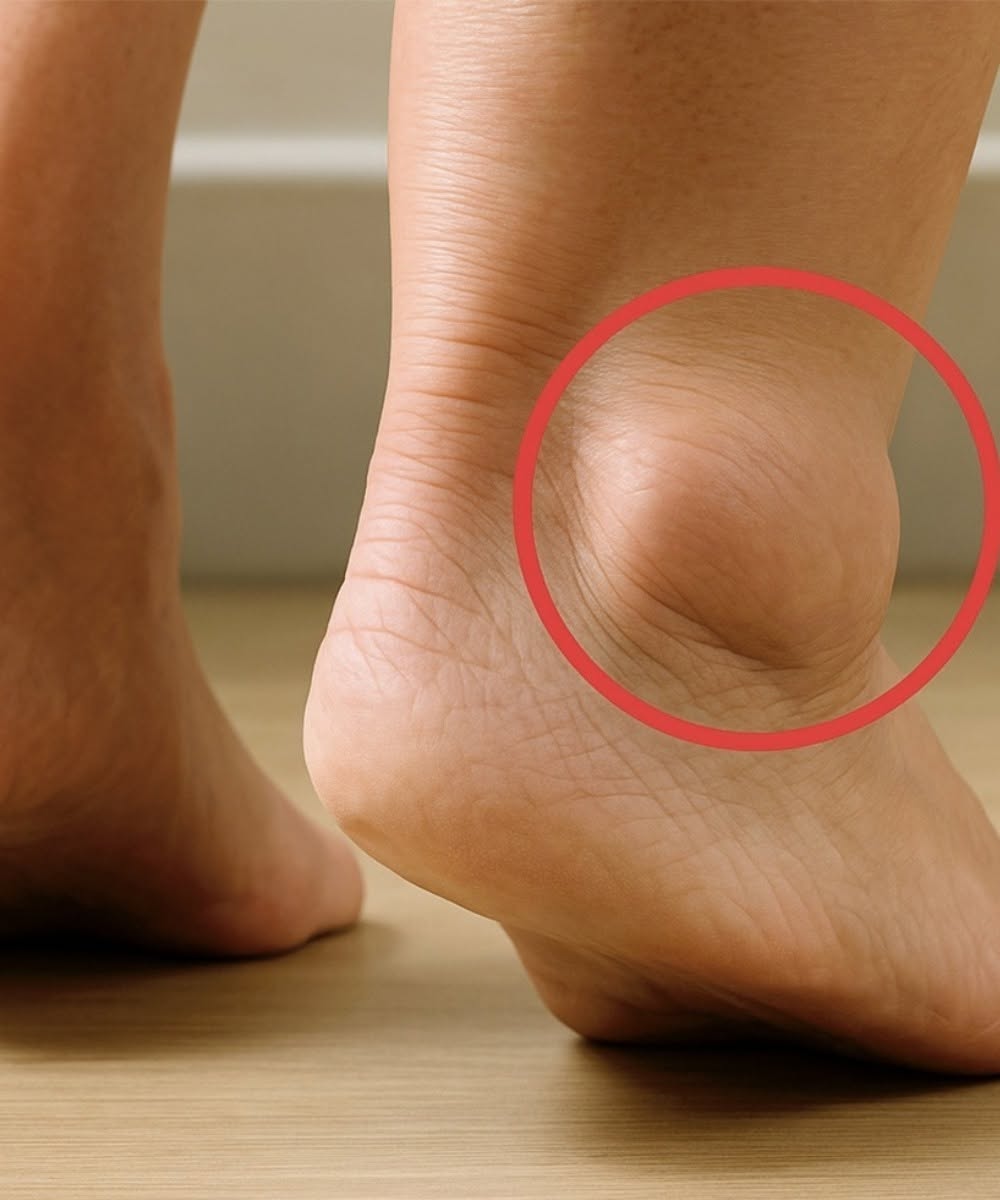
A photograph can show that an ankle or foot looks swollen, but it cannot determine why.
For example, a similar-looking swollen ankle could result from:
- Standing too long
- An injury
- Venous insufficiency
- Infection
- Medication
- Kidney disease
- Heart disease
- A blood clot
The appearance alone isn’t enough.
This is particularly important with viral health images that claim a swollen ankle is proof of one specific disease.
Medical diagnosis requires symptoms, history, physical examination, and sometimes testing.
Frequently Asked Questions
Are swollen feet always a sign of a serious disease?
No. Swelling can occur after prolonged standing or sitting, during hot weather, after eating a lot of salt, during pregnancy, or because of certain medications. nhs.uk
What is the most common cause of swollen feet?
There isn’t one single cause. Temporary swelling commonly occurs after prolonged standing or sitting, while other cases may be related to salt, medications, veins, pregnancy, injury, or medical conditions. MedlinePlus
Why is only one foot swollen?
One-sided swelling can result from injury, infection, inflammation, or a blood clot. Sudden unexplained swelling in one foot or leg deserves prompt medical assessment. nhs.uk
Should I worry if both feet are swollen?
Not necessarily. Both feet can swell after prolonged standing, sitting, heat, salt intake, or pregnancy. However, persistent or worsening swelling should be evaluated, especially if you have heart, kidney, or vein problems. MedlinePlus
Can salt cause swollen feet?
Yes. Excess sodium can contribute to fluid retention and edema in some people. MedlinePlus
Can standing all day cause swollen feet?
Yes. Prolonged standing is a common reason for swelling around the feet and ankles. nhs.uk
Can sitting too long cause swollen feet?
Yes. Remaining in the same position for a long time can contribute to swelling, especially during long journeys. MedlinePlus
Does elevating your legs help swollen feet?
It can help with some types of mild swelling. MedlinePlus recommends elevating the legs above heart level while lying down as one possible measure. MedlinePlus
Should I massage swollen feet?
Don’t assume massage is appropriate for every type of swelling. If swelling is sudden, painful, one-sided, warm, or unexplained, seek medical advice rather than trying to massage it away.
Can swollen feet be caused by heart problems?
Yes. Heart failure can cause fluid to accumulate in the legs and feet. Swelling accompanied by shortness of breath or chest symptoms requires prompt medical attention. MedlinePlus
Can kidney problems cause swollen feet?
Yes. Kidney disease can interfere with fluid balance and contribute to edema. MedlinePlus
Can liver disease cause swollen feet?
Yes. Liver disease, including cirrhosis, can cause fluid accumulation and swelling. MedlinePlus
Can medication cause swollen feet?
Yes. Several medications can contribute to edema, including some blood-pressure medicines, hormones, antidepressants, steroids, and anti-inflammatory drugs. MedlinePlus
When should I worry about swollen feet?
Seek urgent medical attention if swelling is sudden, severe, painful, affects one leg, becomes red or hot, or occurs with fever. nhs.uk
When is swollen feet an emergency?
Swelling accompanied by difficulty breathing, significant chest pain or pressure, coughing up blood, fainting, or severe lightheadedness can be an emergency. nhs.uk
Can pregnancy cause swollen feet?
Yes. Mild swelling is common during pregnancy, but sudden or significant swelling should be discussed with a healthcare professional because it can sometimes be associated with pregnancy complications. MedlinePlus
Can hot weather cause swollen feet?
Yes. Mild lower-leg edema can become more noticeable in warm weather, particularly after standing or walking for long periods. MedlinePlus
What can I do for mild swollen feet?
Try gentle movement, leg elevation, comfortable shoes, avoiding prolonged sitting or standing, and reducing excessive salt intake. MedlinePlus
Should I take a diuretic for swollen feet?
Don’t take a diuretic without medical advice. Treatment depends on the cause of the swelling, and these medicines can affect fluid and electrolyte balance. MedlinePlus
Final Thoughts
Swollen feet are common, but they shouldn’t always be dismissed as a harmless part of getting older or simply having a long day.
Sometimes the explanation is straightforward: too much time standing, sitting, travel, heat, salt, pregnancy, or a medication side effect. In these situations, the swelling may improve with movement, rest, leg elevation, and appropriate lifestyle changes. MedlinePlus
But swelling can also be associated with problems involving the veins, kidneys, liver, heart, thyroid, infections, or blood clots.
The most important clues are how quickly the swelling appeared, whether one or both feet are affected, whether the area is painful or warm, and whether other symptoms are present.
A particularly important warning sign is sudden unexplained swelling in one leg. And if swelling occurs with chest pain, severe breathing difficulty, coughing up blood, fainting, or significant lightheadedness, seek emergency medical care immediately. nhs.uk
For reliable information about causes and warning signs, the NHS guide to swollen ankles, feet and legs and the MedlinePlus information on foot, leg, and ankle swelling are useful medical references. nhs.uk
The bottom line is simple: swollen feet are a symptom, not a diagnosis. Don’t assume they automatically mean heart disease, kidney disease, or another serious condition—but don’t ignore persistent, sudden, painful, or unexplained swelling either.