
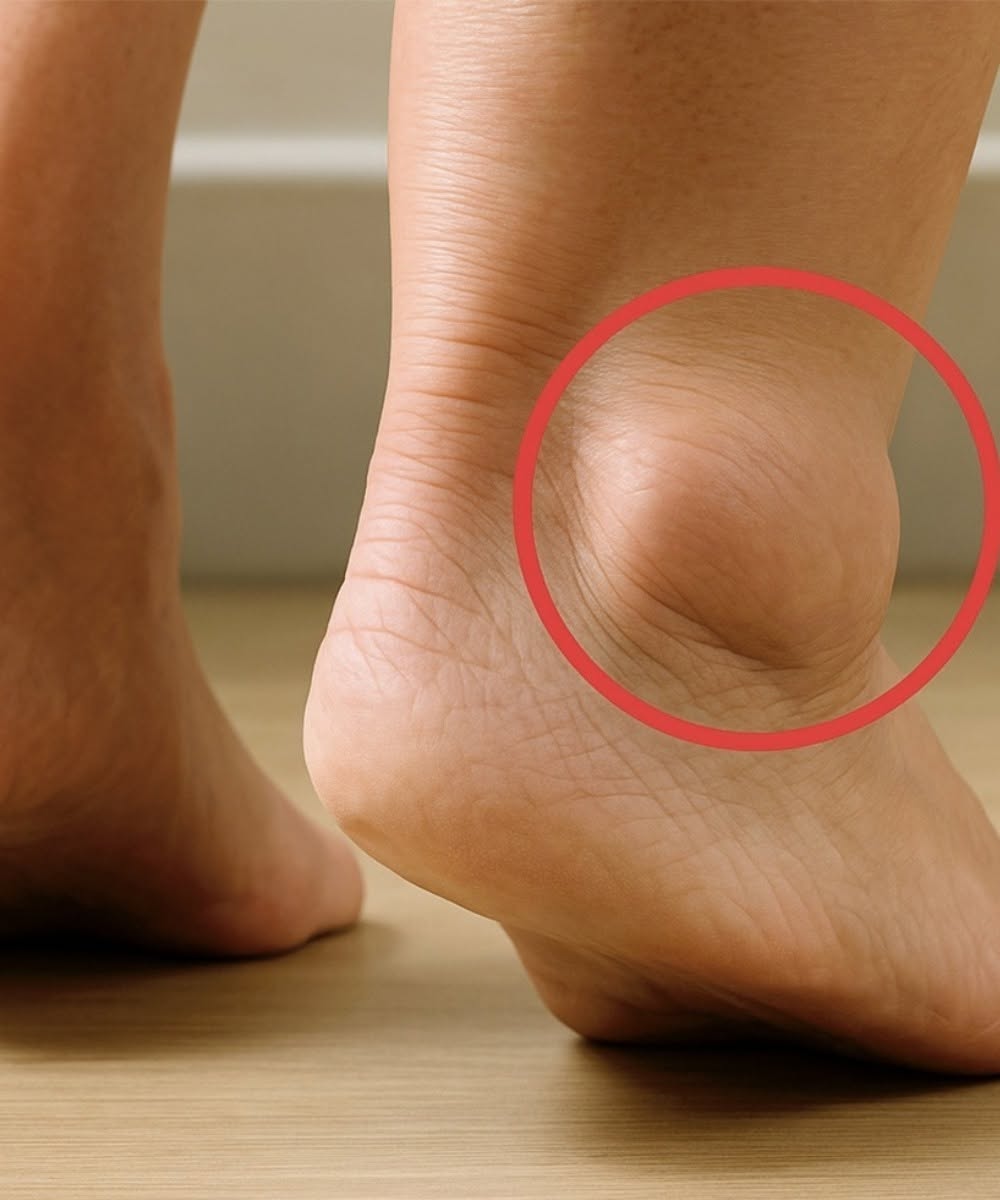
8. Heart Problems Can Cause Swollen Feet
Swelling in the lower legs can sometimes occur when the heart isn’t pumping blood effectively.
When circulation is impaired, fluid can accumulate in tissues, including the feet and ankles.
MedlinePlus lists heart failure among conditions that can cause swelling of the feet and legs. MedlinePlus
Swelling becomes more concerning when it appears alongside symptoms such as:
- Shortness of breath
- Unusual fatigue
- Difficulty breathing when lying down
- Rapid weight gain from fluid
- Persistent cough
- Chest discomfort
MedlinePlus notes that lower-leg swelling can occur with heart problems and that fluid buildup can also affect the lungs. MedlinePlus
If swelling occurs with significant breathing difficulty or chest pain, seek emergency medical attention.
9. A Blood Clot Can Cause Sudden Swelling
One of the causes that deserves particular attention is a deep vein thrombosis, commonly called DVT.
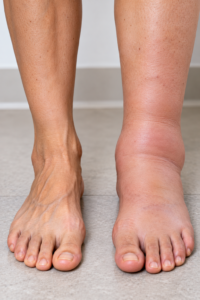
A blood clot in a deep vein can cause swelling, often affecting one leg.
Warning signs can include:
- Sudden swelling
- Pain or tenderness
- Warmth
- Redness or discoloration
- Swelling that affects one leg rather than both
The NHS recommends urgent medical assessment for unexplained swelling affecting one ankle, foot, or leg, particularly when the swelling is sudden, painful, red, or warm. nhs.uk
Mayo Clinic similarly advises prompt medical attention for unexplained painful swelling, particularly when it affects only one leg. Mayo Clinic
A blood clot can become life-threatening if part of the clot travels to the lungs.
That’s why sudden one-sided swelling shouldn’t simply be treated at home without considering the possibility of a clot.
Why One Swollen Foot Is Different From Both Feet Swelling
This is an important clue.
If both feet gradually become swollen after a long day, common causes such as prolonged standing, heat, salt, medication effects, or fluid retention may be considered.
If one foot or leg suddenly becomes swollen, particularly when there is pain, warmth, or redness, the situation deserves more urgent attention.
The NHS specifically recommends urgent medical advice for unexplained swelling affecting one ankle, foot, or leg. nhs.uk
This doesn’t mean every swollen foot is a blood clot.
Injury, infection, inflammation, insect bites, and other problems can also cause localized swelling.
The point is that sudden one-sided swelling shouldn’t be ignored.
How to Tell If Swelling May Be Edema
One simple observation is whether the swollen area leaves a temporary indentation when gently pressed.
This is known as pitting edema.
MedlinePlus describes pitting edema as a dent that remains briefly after pressure is applied to the skin. MedlinePlus
However, don’t repeatedly press a painful or inflamed area.
The presence or absence of a dent cannot tell you exactly what caused the swelling.
It is simply one feature healthcare professionals may consider when evaluating edema.
When Swollen Feet May Be Harmless
Swelling is more likely to be temporary when:
- It appears after a long day standing
- Both feet are affected similarly
- It improves after rest
- It improves after gentle movement
- There is no significant pain
- There is no redness or warmth
- You recently traveled
- The weather is unusually hot
- You recently ate a particularly salty meal
Even then, persistent swelling should not automatically be dismissed.
If it keeps returning, becomes worse, or has no obvious explanation, it’s worth discussing with a healthcare professional.
When Swollen Feet Need Medical Attention
You should seek medical advice if your swelling:
- Is unexplained
- Keeps returning
- Gets progressively worse
- Doesn’t improve after a few days
- Is painful
- Affects only one leg
- Appears suddenly
- Is associated with redness or warmth
- Occurs with fever
- Is accompanied by swelling elsewhere in the body
The NHS recommends medical assessment for persistent or worsening swelling and urgent assessment for severe, painful, sudden, red, or hot swelling. nhs.uk
When Swollen Feet Are an Emergency
Some combinations of symptoms should never be ignored.
Call emergency services if swelling is accompanied by:
- Severe shortness of breath
- Difficulty breathing
- Chest pain
- Chest pressure
- Coughing up blood
- Fainting
- Severe lightheadedness
- Sudden severe weakness
The NHS lists breathing difficulty, chest tightness or pain, coughing up blood, and faintness among symptoms requiring immediate emergency action because they can indicate a serious condition such as a pulmonary embolism. nhs.uk
Mayo Clinic also recommends immediate medical care when unexplained leg swelling occurs with trouble breathing or chest pain. Mayo Clinic
Don’t drive yourself if you are experiencing a medical emergency.

What Can You Do at Home for Mild Swelling?
If the swelling is mild and you don’t have concerning symptoms, several simple measures may help.
Elevate Your Legs
Lie down and place your legs on pillows so they’re raised.
MedlinePlus recommends elevating the legs above heart level while lying down as one measure that may help reduce swelling. MedlinePlus
Don’t force yourself to elevate your legs if doing so makes you short of breath.
If lying down makes breathing difficult, seek medical advice instead. MedlinePlus
Move More Frequently
If you’ve been sitting for a long time, get up periodically and walk around.
Gentle movement helps encourage normal circulation.
The NHS recommends gentle exercise such as walking to improve blood flow and advises avoiding prolonged periods of sitting or standing. nhs.uk
If your foot is swollen because of an acute injury, however, follow appropriate medical advice rather than exercising through significant pain.
Avoid Very Tight Shoes
Swollen feet need room.
Choose:
- Comfortable shoes
- Wide toe boxes
- Soft materials
- Low heels
- Adjustable fasteners
The NHS recommends wide, comfortable shoes with a low heel and soft sole for people experiencing swelling. nhs.uk
Avoid footwear that compresses the swollen area.